

Probe cites history of overweight flights, inadequate oversight in crash that killed 10 off Alaska
Advertisement
Read this article for free:
or
Already have an account? Log in here »
To continue reading, please subscribe:

Digital Subscription
One year of digital access for only $205*
- Enjoy unlimited reading on winnipegfreepress.com
- Read the E-Edition, our digital replica newspaper
- Access News Break, our award-winning app
- Play interactive puzzles
*First annual payment billed as $205.00 + GST for one year. This annual subscription will automatically renew at $233.00 + GST every 52 weeks (10% off the regular annual price of $259.35). Offer available to new and qualified returning subscribers only. Cancel any time.
To continue reading, please subscribe:
Add Free Press access to your Brandon Sun subscription for only an additional
$1 for the first 4 weeks*
- Enjoy unlimited reading on winnipegfreepress.com
- Read the E-Edition, our digital replica newspaper
- Access News Break, our award-winning app
- Play interactive puzzles
*Your next Brandon Sun subscription payment will increase by $1.00 and you will be charged $17.95 plus GST for four weeks. After four weeks, your payment will increase to $24.95 plus GST every four weeks.
Read unlimited articles for free today:
or
Already have an account? Log in here »
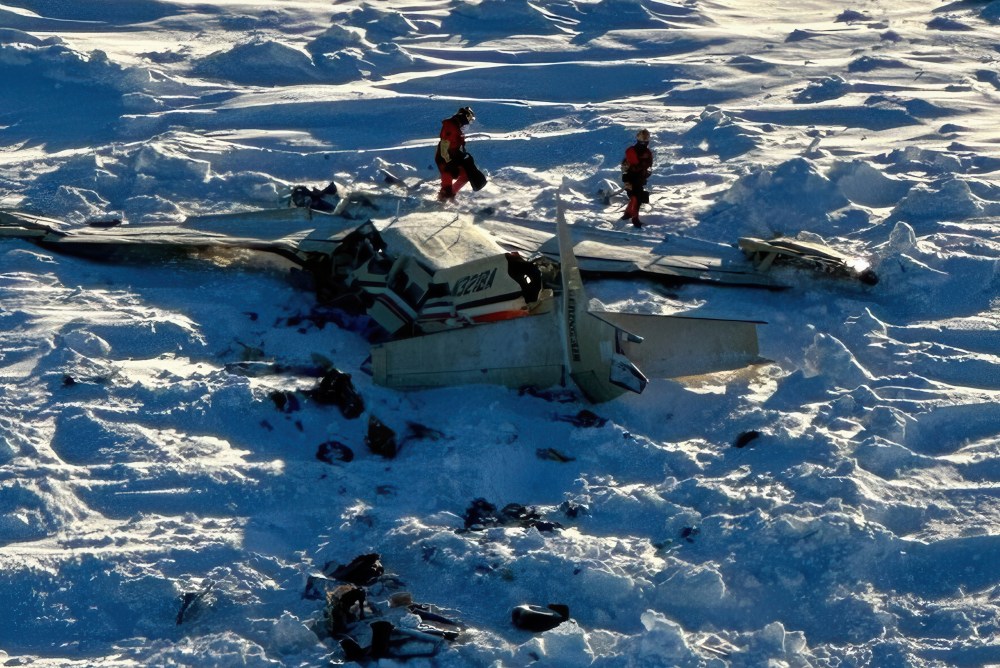
JUNEAU, Alaska (AP) — The operator of a commuter plane that crashed on sea ice off Alaska last year, killing all 10 people on board, had a history of overweight flights, according to federal investigators.
The National Transportation Safety Board, in a report released Thursday, also found the Federal Aviation Administration’s oversight of the company, Bering Air, was inadequate.
Both were contributing factors to the February 2025 crash, which was one of Alaska’s deadliest plane crashes this century. The NTSB also determined the pilot did not monitor and maintain adequate airspeed, likely because he was trying to manage the plane’s ice protection system while preparing to approach the airport in Nome. And it said the plane was overweight for a trip into icy conditions. The airport itself had temporarily closed its runways for de-icing, the agency said.
The Associated Press sent a message seeking comment to Bering Air. The FAA released a statement in response to questions stating it “takes NTSB recommendations seriously and will carefully review them.”
Recommendations made by the NTSB to the FAA include calling for pilot training on preventing and recovering from loss of control in flight for many charter and air taxi operators. The NTSB also raised prior recommendations, such as expanded use of flight data monitoring programs and broader load manifest requirements.
The NTSB said it found a pattern of underreported weights on Bering Air flight manifests and flights operating above weight limits.
The agency said the FAA failed to recognize the air carrier’s “increased operational complexity and rapid growth” after the pandemic and bankruptcy of its largest competitor as factors warranting increased oversight. The report said the FAA’s oversight “failed to identify and address the routine operation of overweight flights.”

Jennifer Homendy, the NTSB chair, in a statement said the tragedy “was not the result of a single failure, but a series of preventable breakdowns that eroded critical safety margins.”
The plane was flying as part of a regularly scheduled commuter flight from the community of Unalakleet to Nome, a 150-mile (240-kilometer) trip. Authorities have said that the aircraft went missing about 30 miles (50 kilometers) southeast of Nome. The wreckage was recovered from a drifting ice floe.