

US economy grows at a sluggish 1.5% in second-quarter with inflation remaining stubbornly high
Advertisement
Read this article for free:
or
Already have an account? Log in here »
To continue reading, please subscribe:

Digital Subscription
One year of digital access for only $205*
- Enjoy unlimited reading on winnipegfreepress.com
- Read the E-Edition, our digital replica newspaper
- Access News Break, our award-winning app
- Play interactive puzzles
*First annual payment billed as $205.00 + GST for one year. This annual subscription will automatically renew at $233.00 + GST every 52 weeks (10% off the regular annual price of $259.35). Offer available to new and qualified returning subscribers only. Cancel any time.
To continue reading, please subscribe:
Add Free Press access to your Brandon Sun subscription for only an additional
$1 for the first 4 weeks*
- Enjoy unlimited reading on winnipegfreepress.com
- Read the E-Edition, our digital replica newspaper
- Access News Break, our award-winning app
- Play interactive puzzles
*Your next Brandon Sun subscription payment will increase by $1.00 and you will be charged $17.95 plus GST for four weeks. After four weeks, your payment will increase to $24.95 plus GST every four weeks.
Read unlimited articles for free today:
or
Already have an account? Log in here »
WASHINGTON (AP) — The U.S. economy expanded at a sluggish 1.5% pace from April through June as rising imports weighed on growth, yet consumers continued to spend. And the Federal Reserve’s favored measure of inflation grew more slowly last month. But it remained above the central bank’s 2% target at a time when Americans are frustrated about the high cost of living ahead of the midterm elections, now less than 100 days away.
Growth in U.S. gross domestic product — the nation’s output of goods and services — decelerated from 2.1% in the first three months of 2026, the Commerce Department reported Thursday, coming in below economists’ expectations. But consumer spending — which accounts for about 70% of U.S. economic activity — increased at a 3.2% annual clip, up from 0.5% in the January-March period.
A measure of the economy’s underlying strength – which strips out volatile government spending and trade numbers – looked good, expanding at a 3.9% annual pace, up from 1.7% from January through March.
Business investment, excluding housing, rose at an 8.4% pace, down from 10.6% from January through March but strong, reflecting a surge in investment in artificial intelligence.
Imports are subtracted from the economic figures because GDP is only supposed to count what is produced in the United States. Imports rose at an 11.5% pace, partly on a surge in shipments of computer chips and other products that support AI investment. The imports shaved 1.5 percentage off second-quarter GDP growth.
“The consumer rescued the quarter,” said Olu Sonola, head of U.S. economics at Fitch Ratings. “AI investment remains a powerful growth story, but the import surge underpinning the buildout is a reminder that an AI boom does not automatically translate into an equally large boost to U.S. GDP.”
The Commerce Department also said Thursday that its personal consumption expenditures (PCE) price index, the one favored by the Fed, rose 3.7% last month from June 2025 , down from a 4.1% year-over-year increase in May. Excluding volatile food and energy prices, so-called core consumer prices were up 3.3% from a year earlier, little-changed from 3.4% increase in May. Prices actually fell 0.1% from May to June on a 9.2% drop in the price of gasoline and other energy products.

The PCE prices were about in line with economists’ expectations. But the year-over-year increase in prices has been stuck above the Fed’s 2% target for more than five years, and some Fed officials are getting impatient with progress against inflation.
The Fed on Wednesday chose to leave its benchmark interest rate unchanged for the fifth straight meeting. But three regional Fed presidents dissented, saying they wanted to raise rates to combat elevated inflation.
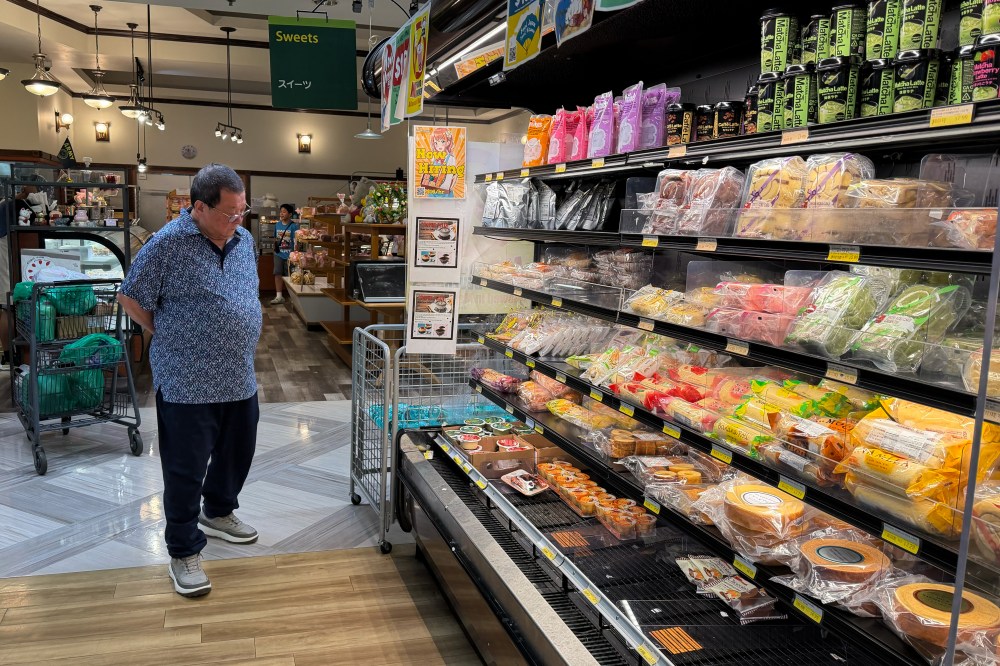
The American economy has been surprisingly resilient in the face of the Iran war and the spike in energy prices it caused. The job market has bounced back this year from a lackluster 2025, giving consumers the wherewithal to spend. Employers are adding an average 92,000 jobs a month this year, compared with fewer than 10,000 a month in 2025 when high interest rates and President Donald Trump’s erratic use of tariffs discouraged businesses from hiring.
Higher costs have frustrated Americans ahead of November’s midterm elections, which will determine whether President Donald Trump’s Republicans keep full control of Congress
A new AP-NORC poll found that the public is souring on the Iran war. And about 7 in 10 U.S. adults — 72% — say it’s “extremely” or “very” important for the U.S. to prevent domestic oil and gas prices from rising, up from 67% in March.