

Watching while we work
Transparency key as employee surveillance tools grow more sophisticated

Advertisement
Read this article for free:
or
Already have an account? Log in here »
To continue reading, please subscribe:

Digital Subscription
One year of digital access for only $205*
- Enjoy unlimited reading on winnipegfreepress.com
- Read the E-Edition, our digital replica newspaper
- Access News Break, our award-winning app
- Play interactive puzzles
*First annual payment billed as $205.00 + GST for one year. This annual subscription will automatically renew at $233.00 + GST every 52 weeks (10% off the regular annual price of $259.35). Offer available to new and qualified returning subscribers only. Cancel any time.
To continue reading, please subscribe:
Add Free Press access to your Brandon Sun subscription for only an additional
$1 for the first 4 weeks*
- Enjoy unlimited reading on winnipegfreepress.com
- Read the E-Edition, our digital replica newspaper
- Access News Break, our award-winning app
- Play interactive puzzles
*Your next Brandon Sun subscription payment will increase by $1.00 and you will be charged $17.95 plus GST for four weeks. After four weeks, your payment will increase to $24.95 plus GST every four weeks.
Read unlimited articles for free today:
or
Already have an account? Log in here »
For many employees, the idea that their employer might be tracking how long they spend at their keyboard, how often they move their mouse, or whether they are actively working throughout the day feels unsettling. For many employers, however, workplace surveillance is increasingly viewed as another management tool, particularly as hybrid and remote work become more common. The recent news that TD plans to monitor certain employees’ activity during the workday has reignited a conversation that has been quietly growing for several years: where is the line between legitimate oversight and excessive monitoring?
The reality is that workplace surveillance is nothing new. Employers have long monitored attendance, reviewed security camera footage, tracked company vehicles using GPS, audited expense reports, and reviewed internet usage on company-owned devices. What has changed is the sophistication of the technology. Today’s software can record login times, monitor application usage, track keystrokes, capture screenshots, analyze email activity, and even generate reports ranking employees based on their perceived productivity.
This naturally raises an important question. Does increased surveillance actually make people work harder?
Magnific
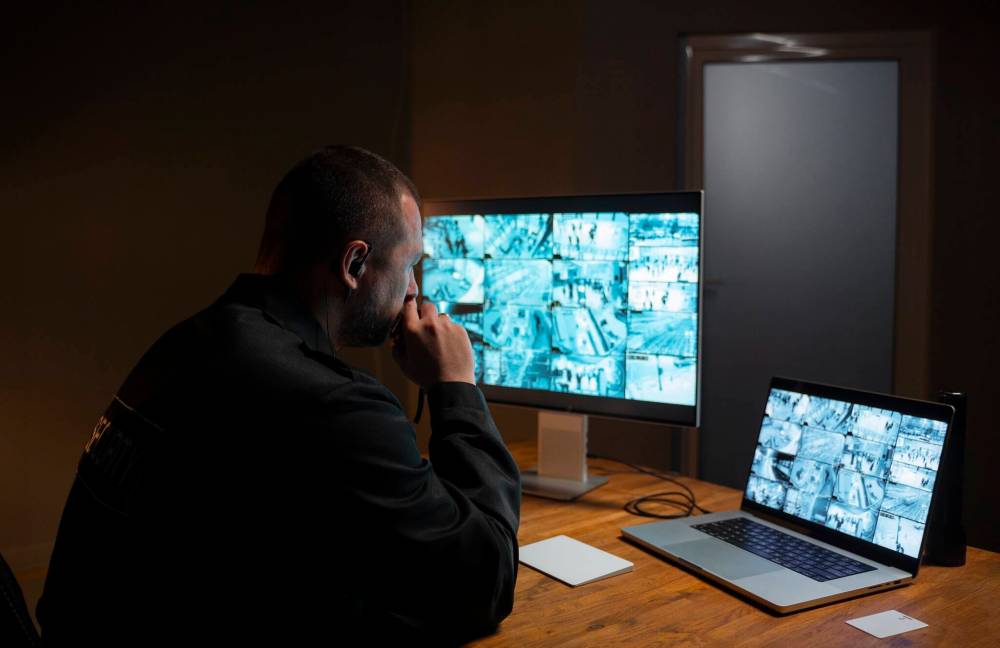
Monitoring the workplace can help reduce obvious time theft or discourage employees from spending excessive time on personal activities during working hours but may not translate into increased productivity.
The answer is not nearly as straightforward as many organizations hope.
There is certainly evidence that employees modify their behaviour when they know they are being observed. Psychologists have long studied what is often referred to as the Hawthorne Effect, where individuals temporarily change their behaviour simply because they know someone is watching. In some workplaces, monitoring can reduce obvious time theft or discourage employees from spending excessive time on personal activities during working hours.
However, increased activity does not necessarily translate into increased productivity.
Many surveillance tools measure activity rather than output. A person who spends eight uninterrupted hours moving between applications may appear highly productive according to monitoring software, while another employee who spends thirty minutes quietly thinking through a complex problem before producing an excellent solution may appear inactive. Creative work, strategic planning, relationship building, coaching employees and solving difficult problems rarely produce the kind of digital activity that surveillance software is designed to capture.
This creates a significant risk that organizations begin rewarding visible busyness instead of meaningful results.
Employees are remarkably adaptable. If they know their mouse movement is being tracked, some will keep the mouse moving. If keyboard activity is measured, they will continue typing. If applications are monitored, they may leave unnecessary programs open simply to appear active. None of these behaviours improve performance. They simply improve surveillance scores.
The larger issue is often not whether monitoring works, but what it communicates.
Trust remains one of the strongest predictors of employee engagement. When organizations introduce surveillance without a clear explanation or business justification, employees may interpret it as a signal that leadership assumes people are not working unless they are constantly being watched. That perception can gradually erode trust, even among high-performing employees who have consistently demonstrated strong results.
Ironically, organizations often invest significant time trying to build cultures of accountability, autonomy and innovation while simultaneously implementing systems that suggest employees cannot be trusted to manage their own work. Those messages can feel contradictory.
That does not mean employers should never monitor workplace activity. Organizations have legitimate reasons to oversee how company resources are being used. Financial institutions, health-care providers, law firms and organizations handling sensitive information often have regulatory, cybersecurity or fraud prevention obligations that require monitoring. Employers also have responsibilities to protect confidential information, investigate misconduct, ensure compliance with workplace policies and safeguard company assets.
The key distinction lies in why monitoring is taking place and how it is implemented.
Transparency matters. Employees should understand what information is being collected, why it is being collected, who has access to it and how it will be used. Hidden monitoring or vague policies create uncertainty and suspicion. Clear communication, on the other hand, allows employees to understand the organization’s expectations and the legitimate business reasons behind its practices.
Employers should also ask themselves whether the information they are collecting is actually useful. Just because technology allows an organization to collect vast amounts of data does not mean it should. Every additional metric requires interpretation, administration and judgment. Collecting data that managers neither understand nor use meaningfully adds complexity without improving performance.
One of the unintended consequences of excessive monitoring is the pressure it places on managers. Good management has never been about collecting more data. It has always been about having regular conversations, setting clear expectations, providing feedback and addressing concerns early. Software may identify patterns, but it cannot replace effective leadership.
Employees also deserve to know how monitoring data will influence employment decisions. Will it be used as one factor among many during performance reviews? Will it trigger coaching conversations? Could it lead to discipline? If employees only discover these answers after concerns arise, the organization has missed an important opportunity to build trust.
The rise of artificial intelligence is adding another layer to this discussion. Increasingly, workplace software is not simply collecting information but analyzing it. Some systems identify productivity trends, flag unusual behaviour or predict potential performance concerns. While these capabilities may help organizations identify operational issues, they also increase the importance of ensuring that human judgment remains central to employment decisions. Data can provide useful information, but it rarely tells the complete story.

The most successful organizations are unlikely to be those with the most sophisticated surveillance technology. They will be the ones that establish clear expectations, hire capable people, provide meaningful support and measure success based on outcomes rather than constant activity.
For employees, the recent attention surrounding TD’s announcement may prompt understandable questions about what their own employer can monitor. In many workplaces, employees should assume that activities conducted on company-owned devices, networks and systems may be subject to monitoring, particularly where policies clearly explain those practices. Understanding those policies is becoming an increasingly important part of digital workplace literacy.
Ultimately, workplace surveillance is neither inherently good nor inherently bad. Like most management tools, its effectiveness depends on how thoughtfully it is used. Technology can help organizations protect information, meet regulatory obligations, and identify genuine concerns. It cannot create engagement, build trust or inspire people to do their best work.
Those outcomes still depend on something much older than any monitoring software: good leadership. When employees feel trusted, understand what success looks like, and know they will be evaluated fairly, they are generally motivated by more than simply avoiding being caught. They are motivated by pride in their work, respect for their colleagues and confidence in their organization. No software has yet found a way to measure those qualities, but they remain some of the strongest drivers of performance.
Tory McNally, CPHR, BSc., vice-president, professional services at TIPI Legacy HR+ (formerly Legacy Bowes), is a human resource consultant, relationship builder and problem solver. She can be reached at tmcnally@tipipartners.com.
Tory McNally, CPHR, BSc., vice-president, professional services at TIPI Legacy HR+ (formerly Legacy Bowes), is a human resource consultant, strategic thinker and problem solver. Read more about Tory.
Our newsroom depends on a growing audience of readers to power our journalism. If you are not a paid reader, please consider becoming a subscriber.
Our newsroom depends on its audience of readers to power our journalism. Thank you for your support.
Tory McNally, CPHR, BSc., vice-president, professional services at TIPI Legacy HR+ (formerly Legacy Bowes), is a human resource consultant, strategic thinker and problem solver. Read more about Tory.
Our newsroom depends on a growing audience of readers to power our journalism. If you are not a paid reader, please consider becoming a subscriber.
Our newsroom depends on its audience of readers to power our journalism. Thank you for your support.
Advertisement Advertise With Us
Advertisement Advertise With Us