

TSX down more than 50 points despite commodity gains, while U.S. markets slide
Advertisement
Read this article for free:
or
Already have an account? Log in here »
To continue reading, please subscribe:

Digital Subscription
One year of digital access for only $205*
- Enjoy unlimited reading on winnipegfreepress.com
- Read the E-Edition, our digital replica newspaper
- Access News Break, our award-winning app
- Play interactive puzzles
*First annual payment billed as $205.00 + GST for one year. This annual subscription will automatically renew at $233.00 + GST every 52 weeks (10% off the regular annual price of $259.35). Offer available to new and qualified returning subscribers only. Cancel any time.
To continue reading, please subscribe:
Add Free Press access to your Brandon Sun subscription for only an additional
$1 for the first 4 weeks*
- Enjoy unlimited reading on winnipegfreepress.com
- Read the E-Edition, our digital replica newspaper
- Access News Break, our award-winning app
- Play interactive puzzles
*Your next Brandon Sun subscription payment will increase by $1.00 and you will be charged $17.95 plus GST for four weeks. After four weeks, your payment will increase to $24.95 plus GST every four weeks.
Read unlimited articles for free today:
or
Already have an account? Log in here »
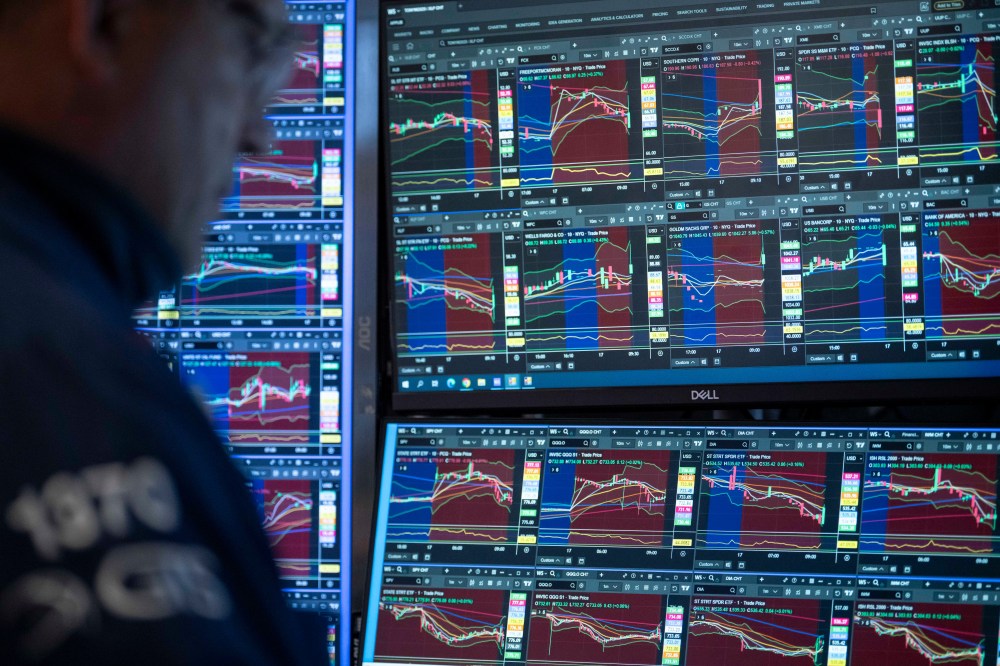
TORONTO – Canada’s main stock index finished in negative territory, as gains from higher commodity prices were offset by broader losses, while U.S. markets were negative.
“Energy is a big reason why the TSX is doing a bit better as we’re seeing oil prices currently up two per cent on the day, meaning that the energy sector in Canada is in the green,” said Étienne Bergeron, an economist at iA Financial Group.
“As we know, it’s a larger part of the index, so that’s why the TSX is outperforming the S&P 500.”
He said the entire commodity complex saw strength on Monday.
The September crude oil contract was up US$2.10 at US$84.50 per barrel.
Bergeron said gold prices had seen a “big correction over the spring” but have seen gains more recently. The December gold contract was up US$36.40 at US$4,473.70 an ounce.
The S&P/TSX composite index was down 62.35 points at 36,667.92.
“It’s good to mention that this is the middle of August and it’s one of those weeks where there’s lower liquidity and volume than usual, so it’s always important to take that into account,” said Bergeron.
Canadian investors also sifted through the latest inflation report for July.
Statistics Canada said Monday that the annual rate of inflation rose to three per cent last month, up from 2.8 per cent in June and a tick above economists’ expectations. Global energy volatility was primarily to blame for the increase.
Economists argue the latest data was mild enough that the Bank of Canada can focus on looming trade risks rather than fears of spreading price hikes.
Bergeron said the figure itself is likely not enough to spur a hike at the Bank of Canada’s Sept. 2 meeting, but it could start conversations within the central bank about higher interest rates.
Separately, the U.S. government announced a plan last month to hit Canada with a 50 per cent tariff on hundreds of categories of goods worth a total of roughly US$20 billion. The tariffs are slated to take effect on Wednesday.
Bergeron said the markets were “pretty much ignoring” the deadline.
“These are tariffs that will have more impact on a very sectoral basis and some also on a geographic basis in Canada. But overall, it’s not a market mover,” he said.
In New York, the Dow Jones industrial average was down 272.63 points at 53,459.78. The S&P 500 index was down 40.70 points at 7,745.06, while the Nasdaq composite was down 84.25 points at 26,644.91.
U.S. stocks edged further from their record heights on Monday after rising oil prices cranked up the pressure on inflation and financial markets.
Wall Street has run to records despite high inflation in large part because profits are booming for U.S. companies.
Those in the S&P 500 index are on track to deliver growth of roughly 50 per cent for earnings per share in the spring from a year earlier, according to FactSet. That’s much better than analysts expected and would be the best since five years ago, when the economy was erupting out of the chasm created by the COVID-19 pandemic.

The Canadian dollar traded for 72.12 cents US compared with 72.07 cents US on Friday.
This report by The Canadian Press was first published Aug. 17, 2026.
—With files from The Associated Press
Companies in this story: (TSX: GSPTSE, TSX: CADUSD)
Note to readers:This is a corrected story. A previous version erroneously stated that the oil price was down on the day. In fact, it was up.