

Internalizing costs to protect margins

Advertisement
Read this article for free:
or
Already have an account? Log in here »
To continue reading, please subscribe:

Digital Subscription
One year of digital access for only $205*
- Enjoy unlimited reading on winnipegfreepress.com
- Read the E-Edition, our digital replica newspaper
- Access News Break, our award-winning app
- Play interactive puzzles
*First annual payment billed as $205.00 + GST for one year. This annual subscription will automatically renew at $233.00 + GST every 52 weeks (10% off the regular annual price of $259.35). Offer available to new and qualified returning subscribers only. Cancel any time.
To continue reading, please subscribe:
Add Free Press access to your Brandon Sun subscription for only an additional
$1 for the first 4 weeks*
- Enjoy unlimited reading on winnipegfreepress.com
- Read the E-Edition, our digital replica newspaper
- Access News Break, our award-winning app
- Play interactive puzzles
*Your next Brandon Sun subscription payment will increase by $1.00 and you will be charged $17.95 plus GST for four weeks. After four weeks, your payment will increase to $24.95 plus GST every four weeks.
Read unlimited articles for free today:
or
Already have an account? Log in here »
An industry initiative tracking costs of cow-calf production is raising a question that runs counter to the independent streak running through ranching culture.
Does it make more sense for cow-calf producers feed their herds with hay they’ve grown themselves or buy it from someone else?
Recent data suggests on many farms buying hay is the more economical choice. But is the most efficient choice today the most practical long-term?
It’s a question big business was wrestling with a few decades ago, says a policy note released earlier this year by Al Mussell, an agricultural economist with AgriFood Economic Systems based in Guelph, Ont. Many corporate leaders in the 1980s and ’90s concluded outsourcing the components of their production process that could readily be made by someone else was the way to drive efficiency and profits.
For example, cars are now manufactured in a central plant using components sourced from a host of suppliers from multiple countries.
This de-integration forced each segment of the value chain to stand on its own as a profit centre; inefficient suppliers were forced to streamline their own processes or be driven out. The approach was also popular with shareholders who found it easier to follow the money.
In an era in which liberalized trade was the mantra, the notion that every country or every business needed to be standalone was tossed aside in the name of letting the most efficient producers supply goods and services.
Back on the farm, the Canadian Cow-Calf Cost of Production Network didn’t set out to convince ranchers to change how they source winter feed for their herds. The point of this ongoing benchmarking exercise is to provide insights into different options so ranchers can better manage production costs.
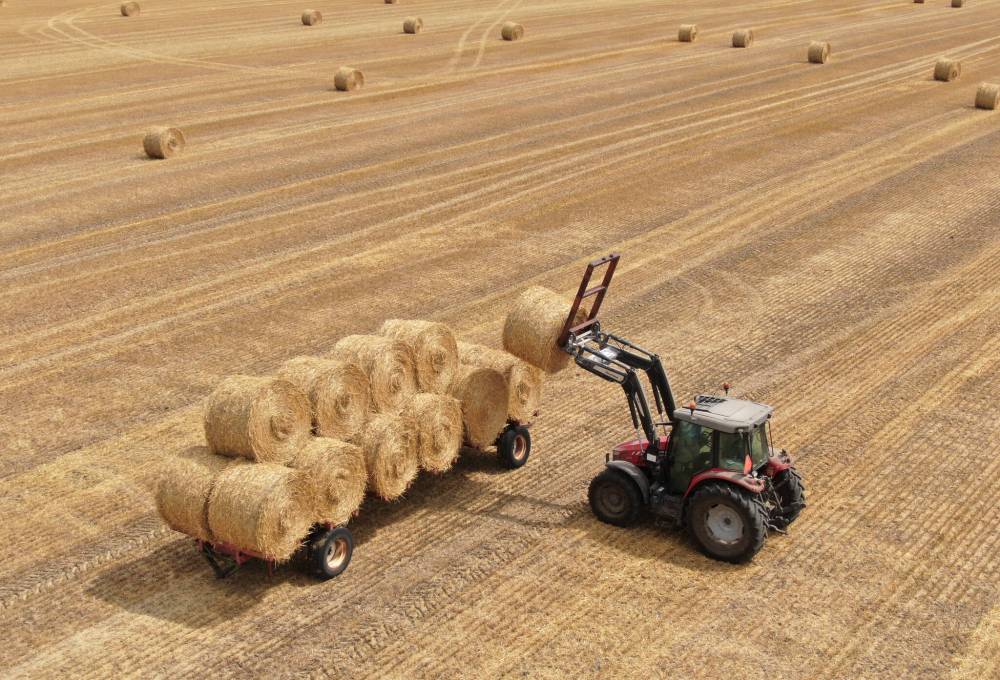
However, when the network examined producers’ annual costs for feed, it found it was costing nearly half the producers in the study group more to grow their own hay than the going market price.
Factors such as overhead, machinery costs and unpaid labour make up nearly half of the cost of the homegrown hay, but they are internalized costs that are harder to track. Ranchers start their tractor and make hay when the sun shines; they don’t necessarily clock their dawn-to-dusk hours.
The network analyzed production costs for other sources of feed as well, such as corn silage and corn for grazing, and found that although these options are the most cost-efficient source of feed for ranchers, they require more by way of cash outlays.
Whereas hay lands are typically sown to perennial forages, corn is planted annually, which means buying seed and fertilizer. Seventy per cent of the production costs for corn silage are cash compared to just over 50 per cent for hay, a summary of the report produced by Canfax says. “This means silage can be more demanding on working capital, even though the total cost per tonne is lower.”
Likewise, with rising fertilizer prices, a rancher might generate more yield growing silage, but at a cost that outweighs the efficiency gain.
Mussell says the corporate outsourcing model worked well when the world was trading more freely, markets were less volatile and the global traders were more interested in following the rules.

As illustrated by the ‘give me what I want, or else’ tariff threats, deadlines and last-minute reprieves from the Trump administration, those days are gone. One of the biggest risks companies face in the current operating environment is a supply chain that is disrupted by war or broken by tariffs.
While outsourcing and consolidation in agribusiness won’t come to a “screeching halt,” companies may rethink their strategy, Mussell says. “Owning assets and conducting activities internally is a natural hedge against systematic risks.”
It’s no different for farmers, who have no control over the price they pay for what they buy or the price they receive for what they sell. Internalizing their costs, where practical, is the one strategy they have for protecting their margins.
There’s no doubt ranchers benefit from knowing their real costs of production. But if Mussell is right, they won’t be selling off their haying equipment any time soon.
Laura Rance-Unger is editor emeritus for Glacier FarmMedia. She can be reached at lrance@farmmedia.com
Laura Rance is editorial director at Farm Business Communications.
Our newsroom depends on a growing audience of readers to power our journalism. If you are not a paid reader, please consider becoming a subscriber.
Our newsroom depends on its audience of readers to power our journalism. Thank you for your support.
Laura Rance is editorial director at Farm Business Communications.
Our newsroom depends on a growing audience of readers to power our journalism. If you are not a paid reader, please consider becoming a subscriber.
Our newsroom depends on its audience of readers to power our journalism. Thank you for your support.
Advertisement Advertise With Us
Advertisement Advertise With Us