‘Menu of options’ Manitoba to follow Ottawa on tariff impact supports
Read this article for free:
or
Already have an account? Log in here »
To continue reading, please subscribe:

Digital Subscription
One year of digital access for only $205*
- Enjoy unlimited reading on winnipegfreepress.com
- Read the E-Edition, our digital replica newspaper
- Access News Break, our award-winning app
- Play interactive puzzles
*First annual payment billed as $205.00 + GST for one year. This annual subscription will automatically renew at $233.00 + GST every 52 weeks (10% off the regular annual price of $259.35). Offer available to new and qualified returning subscribers only. Cancel any time.
To continue reading, please subscribe:
Add Free Press access to your Brandon Sun subscription for only an additional
$1 for the first 4 weeks*
- Enjoy unlimited reading on winnipegfreepress.com
- Read the E-Edition, our digital replica newspaper
- Access News Break, our award-winning app
- Play interactive puzzles
*Your next Brandon Sun subscription payment will increase by $1.00 and you will be charged $17.95 plus GST for four weeks. After four weeks, your payment will increase to $24.95 plus GST every four weeks.
Read unlimited articles for free today:
or
Already have an account? Log in here »
The Manitoba government is considering a “menu of options” for tariff-hit businesses as some companies watch sales fall off a cliff.
MIKE DEAL / FREE PRESS Manitoba Business Minister, Jamie Moses.
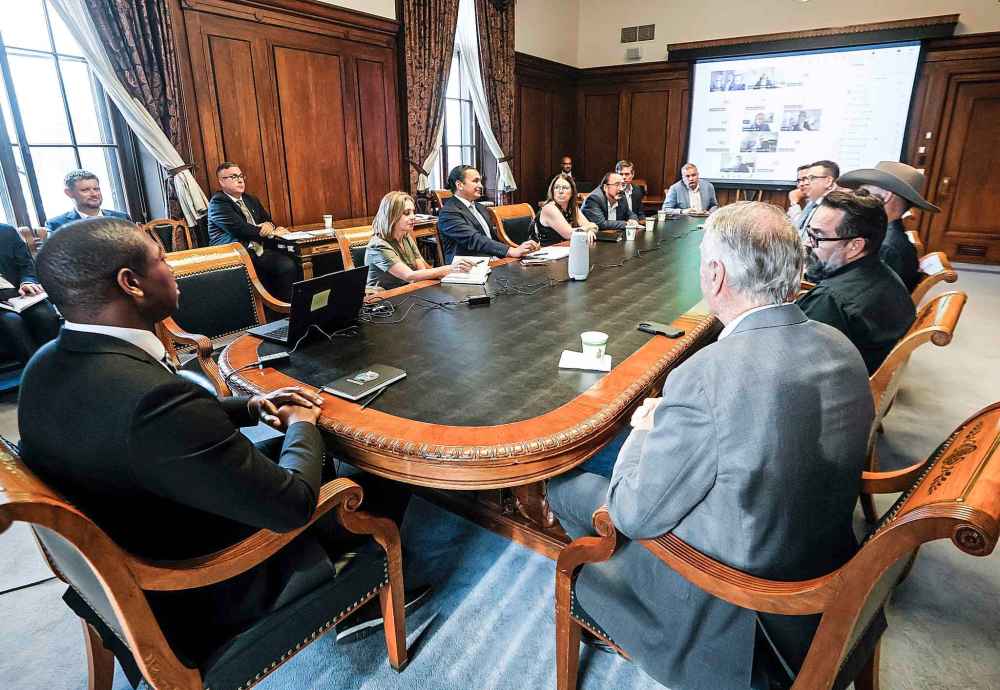
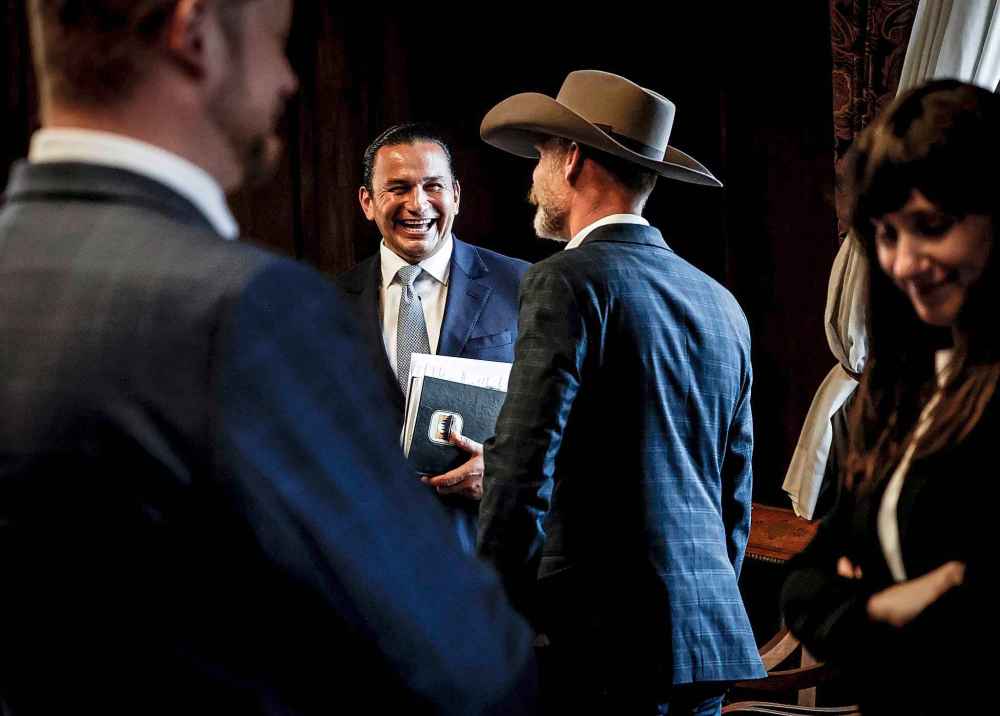
Business Minister Jamie Moses convened with the province’s U.S. Trade Council on Monday — two days after 50 per cent tariffs rolled out on US$20-billion worth of Canadian exports to the United States.
Tax deferrals and loans are on the “menu of options” the province is considering, Moses said before the meeting. More details should come later this week, he added.
He’s waiting for a federal announcement: the feds are expected to share details Tuesday about supports for tariff-impacted companies.
“We’ll have more to say on that at the right moment,” Moses said, adding he’s meeting with federal Internal Trade Minister Dominic LeBlanc, and discussing trade impacts on Manitoba, later this week.
“We’ll also be listening to our business community and the workers across the province who are being impacted by (U.S. President) Donald Trump’s tariffs,” Moses said.
Roughly $663 million worth of Manitoba goods are affected by the latest 50 per cent tariffs. It accounts for 5.1 per cent of the province’s overall U.S. exports, according to a government spokesperson.
Canada declared retaliatory counter tariffs on U.S. imports, effective Sept. 8, as bilateral trade talks broke down.
It’s unclear how many Manitoba businesses will be impacted.
Osee Podolsky is questioning where his honey will go once it’s harvested. His roughly 20-person business in Ethelbert, Podolski Honey Farms, ships nearly all of its honey to the United States.
Fifty per cent tariffs on raw honey have become “an effective roadblock.”
“It feels just totally isolated and out of our control,” Podolsky said.
His company sends 500 to 1,000 honey barrels south annually. It transported some goods last week — about 30 to 40 per cent of orders — but production is still ongoing, he said.
“If there isn’t a demand for honey and the majority of beekeepers are sitting on an excess of inventory, then the prices will plummet,” Podolsky said.
“Profitability is very low in this industry — we can’t afford to lose any more value for the price of honey.”
Prolonged tariffs could lead to honey sellers leaving the industry, Podolsky predicted. He’s worried his U.S. customers will find new producers over time.
SUPPLIED Podolski Honey Farms oversees roughly 300 colonies for honey production in Ethelbert, Manitoba.
His business ships in bulk to honey packers. Now, it’s making a virtual storefront on its website to sell smaller orders nationally. An “overwhelming” number of Canadians have contacted Podolsky to buy honey over the past week.
“As long as they’re buying Canadian honey, they’re helping all Canadian beekeepers,” he said.
Governments should work to reduce internal trade barriers as the Canada-U.S. trade dispute continues, said Chuck Davidson, president of the Manitoba Chambers of Commerce.
He’s part of Manitoba’s U.S. Trade Council, alongside other private sector and labour organization leaders, and entrepreneurs. The group met at the Manitoba Legislative Building on Monday.
“I don’t think we want across-the-board supports that you had during the (COVID-19) pandemic,” Davidson said, noting industries are impacted differently. “I think it’s really important that government listens to what the individual needs of businesses are.”
Having some form of tailored approach for impacted businesses would be ideal, Davidson said.
The Manitoba chambers, Winnipeg Chamber of Commerce and Business Council of Manitoba released a joint statement Monday proclaiming their support for Ottawa’s decision to back away from the U.S. trade deal last week. The entities are the province’s largest business organizations.

“Obviously, the key thing that the U.S. is looking for in these negotiations is any kind of fracture that they can find,” Davidson said. “We need to really have a unified Team Canada approach on this.”
Moses also called for unity Monday, deeming it “our greatest strength.” He encouraged Manitobans to buy Canadian products.
SUPPLIED Podolski Honey Farms ships most of its honey in barrels to the United States.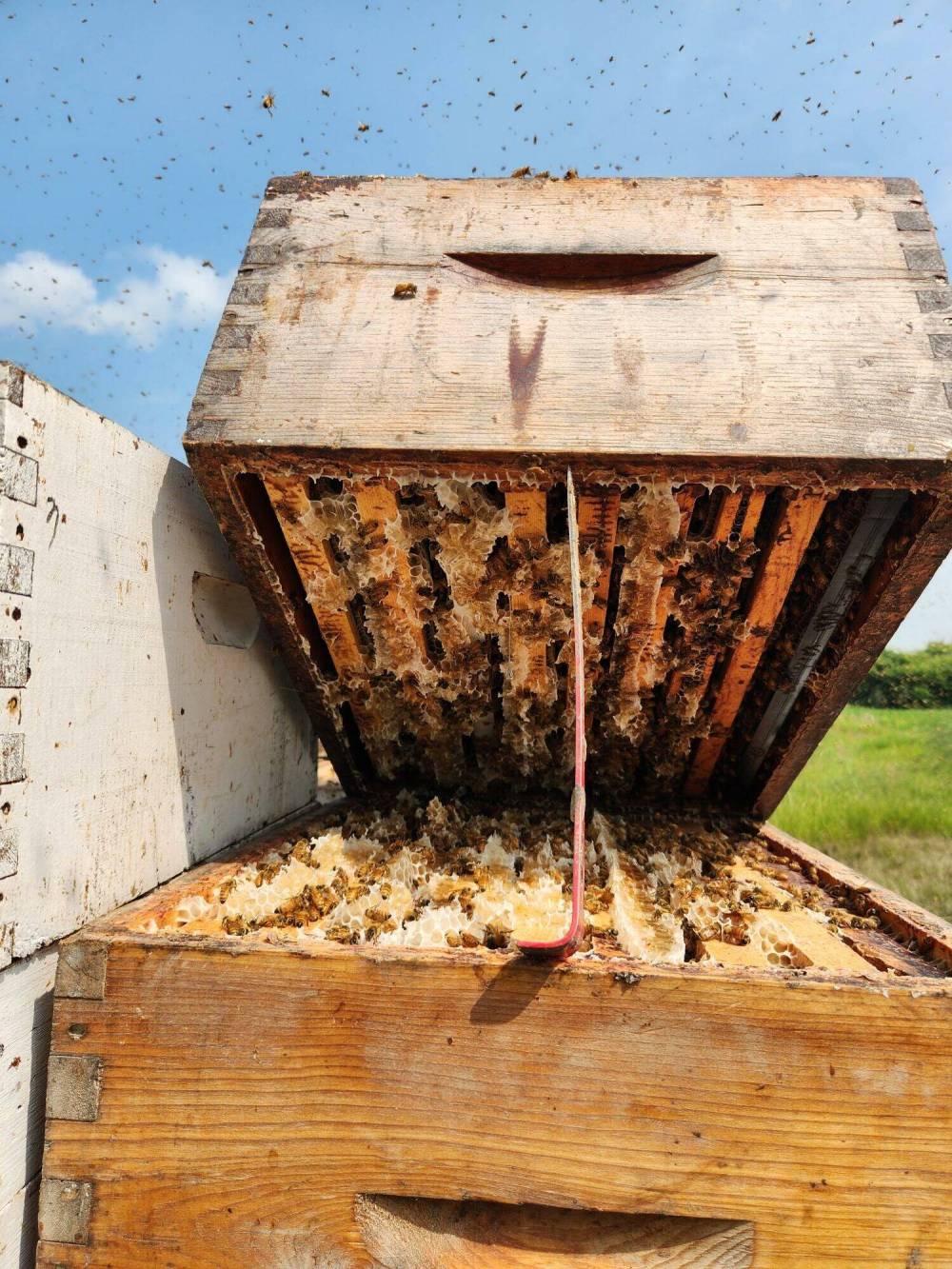
Any Canadian countermeasures should be “carefully targeted” to maximize pressure on the United States while minimizing harm to Canadian manufacturers, Dennis Darby, the Canadian Manufacturers & Exporters’s president, wrote in a statement.
A wide range of Manitoba manufacturing firms will be hit by the 50 per cent tariffs, Darby said. The sector already faced levies on U.S.-bound steel, autos and aluminum.
CME doesn’t have data on Manitoba manufacturers’ tariff-related layoffs. The full effects might be delayed as existing orders finish and companies “assess whether they can remain competitive” under the new tariff regime, Darby wrote.
National manufacturing employment dropped 0.9 per cent — or by 17,000 jobs — month-over-month in June. (Manufacturing sales in Manitoba increased year-over-year by 7.6 per cent in June, Statistics Canada data show.)
Noah Klassen is bracing for new tariff cost increases as he runs Ark Carpentry. His custom wood furniture stays in Manitoba; still, he’s felt tariff impacts as he buys tools and hardware — pressure he must pass to customers, he said.
“One increase can have a ripple effect,” Klassen said, adding he’s noticed more hesitation among possible customers when he raises prices.
It’s hard to plan for the company’s future, he continued. Ark Carpentry expanded in Grande Pointe roughly a year ago. “Stability and predictability” in trade would be ideal, Klassen said.
gabrielle.piche@winnipegfreepress.com


Gabrielle Piché reports on business for the Free Press. She interned at the Free Press and worked for its sister outlet, Canstar Community News, before entering the business beat in 2021. Read more about Gabrielle.
Every piece of reporting Gabrielle produces is reviewed by an editing team before it is posted online or published in print — part of the Free Press‘s tradition, since 1872, of producing reliable independent journalism. Read more about Free Press’s history and mandate, and learn how our newsroom operates.
Our newsroom depends on a growing audience of readers to power our journalism. If you are not a paid reader, please consider becoming a subscriber.
Our newsroom depends on its audience of readers to power our journalism. Thank you for your support.
Related Articles
Inflation-battered U.S. voters could prove to be key Canadian ally in fight against Trump’s trade tyranny






History
Updated on Tuesday, August 25, 2026 10:52 AM CDT: Adds photos