

Shippers forced to delay loads as 50% tariffs jack up export costs
Advertisement
Read this article for free:
or
Already have an account? Log in here »
To continue reading, please subscribe:

Digital Subscription
One year of digital access for only $205*
- Enjoy unlimited reading on winnipegfreepress.com
- Read the E-Edition, our digital replica newspaper
- Access News Break, our award-winning app
- Play interactive puzzles
*First annual payment billed as $205.00 + GST for one year. This annual subscription will automatically renew at $233.00 + GST every 52 weeks (10% off the regular annual price of $259.35). Offer available to new and qualified returning subscribers only. Cancel any time.
To continue reading, please subscribe:
Add Free Press access to your Brandon Sun subscription for only an additional
$1 for the first 4 weeks*
- Enjoy unlimited reading on winnipegfreepress.com
- Read the E-Edition, our digital replica newspaper
- Access News Break, our award-winning app
- Play interactive puzzles
*Your next Brandon Sun subscription payment will increase by $1.00 and you will be charged $17.95 plus GST for four weeks. After four weeks, your payment will increase to $24.95 plus GST every four weeks.
Read unlimited articles for free today:
or
Already have an account? Log in here »
Canadian shippers have started to hold back merchandise and postpone delivery schedules as they scramble to find the tariff money to get their goods across the border.
Some manufacturers and exporters that had banked on hauling cargo into the United States free of charge are now struggling to find the necessary cash, prompting transport delays, customs brokers say.
U.S. President Donald Trump imposed 50 per cent tariffs on about US$20 billion worth of Canadian products over the weekend after trade talks collapsed, affecting sectors ranging from textiles to toiletries, tulips and toys.
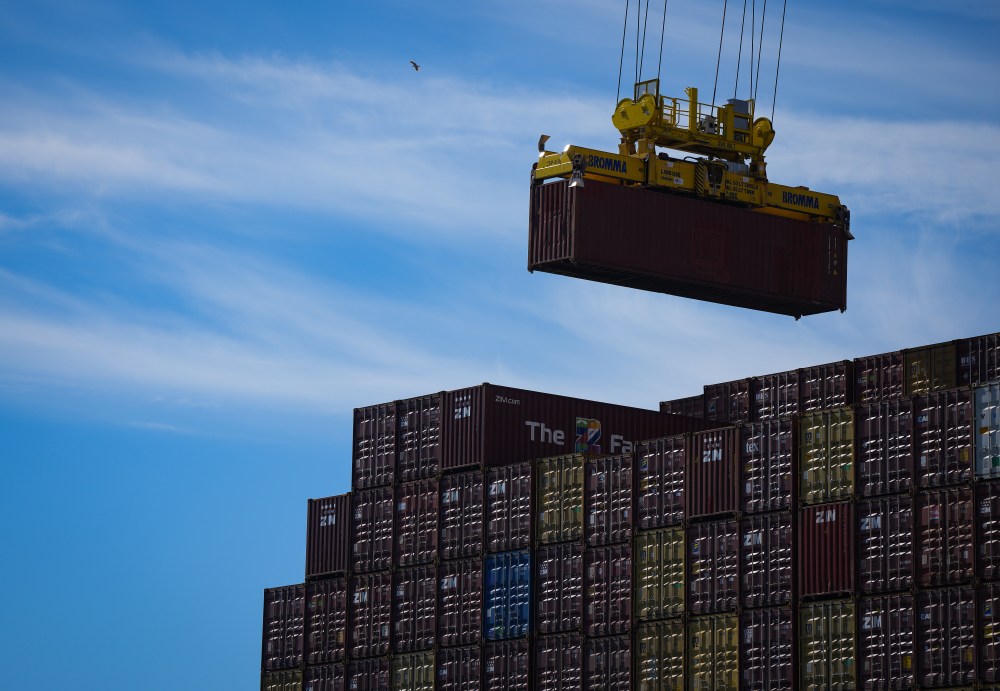
Lisa McEwan, co-owner of Toronto-based customs brokerage Hemisphere Freight, says clients who make sweatshirts, metal coils, agricultural machinery and other items have all pushed back shipments as they look to float thousands more dollars in duties.
“I have six entries right now that I can’t submit until I get paid,” she said. Customs brokers often put forward the money for duties and taxes on behalf of an importer.
She said shippers staring down the tariff barrel might still be able to duck the levies if they booked their shipment before Aug. 22. Those who did not have 10 business days to pay U.S. Customs and Border Protection before late penalties start to accrue, brokers said.
“I’ve been on the phone all morning with clients who are wondering what’s going on,” McEwan said.
“I don’t know how sustainable this is. The cash flows of the company are going to be hurt a lot.”
Some shippers have opted to dispute the new tariffs, arguing their products have been classified incorrectly.
“There was a $25,000 duty charge on (one client’s) shipment when previously they had none, and they didn’t necessarily agree with the way the tariff classification was being applied. So we held the shipment,” said Greg Timm, chief executive of Surrey, B.C.-based PCB Global Trade Management, a customs broker and freight manager.
Support measures pledged by the federal government for affected industries are welcome but amount to a “Band-Aid solution” for most small businesses, added McEwan.
Prime Minister Mark Carney, who has promised to roll out retaliatory tariffs by Sept. 8, accused the U.S. on Saturday of trying to introduce last-minute provisions into a would-be trade agreement that would have restricted Canada’s ability to do deals with other countries.
Trump further escalated his trade war with Canada on Monday, threatening to hike tariffs on all vehicles, auto parts and steel from Canada to 50 per cent on Jan. 1. The new threat of tariffs — separate from those applied Saturday — would build on existing levies on the car and steel sectors.
“I think people are still in a bit of shock and trying to assess what’s going on,” said John Corey, who heads the Freight Management Association of Canada.
“There’s a lot of product going back and forth that’s maybe affected.”
The tariffs that just took effect apply to only about five per cent of Canadian exports, but amount to a prohibitive expense for many manufacturers who cannot pass on the cost to buyers, observers say. The possibility of a spiralling trade war bodes ill for living costs and economic growth, with small- and medium-sized businesses particularly vulnerable.
“With thinner cash reserves, they will have less ability to diversify. Some businesses will undoubtedly close, even with government support,” said Tu Nguyen, an economist with tax consulting firm RSM Canada.
Job losses, weaker foreign investment and inflation could all result from the levies, including those on the auto, steel and lumber sectors, she said.
The prospect of so-called tariff stacking — where one import charge stacks on top of another — also raises concerns.
For example, clothing items that have been tariff-exempt for decades under the Canada-U.S.-Mexico Agreement and its predecessor will now be punished twice — once by the 50 per cent duty and again by the tariff in place for non-CUSMA-compliant goods — brokers said.
“Anyone in textiles will be hit hard, because those have very high duty rates,” said McEwan. “They’re looking at upwards of between 18 and 20 per cent, plus a 50 per cent tariff.”
Some shippers were able to gird themselves against rising tariffs by building up inventory in warehouses south of the border.

“There’s lots of disappointment, but preparedness did exist,” said Alan Dewar, executive vice-president at Winnipeg-based customs brokerage GHY.
“They’re well-positioned now,” he said of one client.
“How they’ll be positioned if it lasts longer than a couple of months remains to be seen.”
This report by The Canadian Press was first published Aug. 24, 2026.
— With a file from Nick Murray in Ottawa
Related Articles
Ottawa to announce details of retaliatory tariffs on U.S. Tuesday
Advertisement Advertise With Us
Advertisement Advertise With Us