

Wall Street holds mostly steady following the latest update on inflation
Advertisement
Read this article for free:
or
Already have an account? Log in here »
To continue reading, please subscribe:
Digital Subscription
One year of digital access for only $1.44 a week*
- Enjoy unlimited reading on winnipegfreepress.com
- Read the E-Edition, our digital replica newspaper
- Access News Break, our award-winning app
- Play interactive puzzles
*Billed as $5.77 plus GST every four weeks. After 52 weeks, price increases to the regular rate of $19.95 plus GST every four weeks. Offer available to new and qualified returning subscribers only. Cancel any time.
To continue reading, please subscribe:
Add Free Press access to your Brandon Sun subscription for only an additional
$1 for the first 4 weeks*
- Enjoy unlimited reading on winnipegfreepress.com
- Read the E-Edition, our digital replica newspaper
- Access News Break, our award-winning app
- Play interactive puzzles
*Your next Brandon Sun subscription payment will increase by $1.00 and you will be charged $17.95 plus GST for four weeks. After four weeks, your payment will increase to $24.95 plus GST every four weeks.
Read unlimited articles for free today:
or
Already have an account? Log in here »
NEW YORK (AP) — The U.S. stock market drifted through a quiet day of trading Wednesday after a report said inflation was a touch worse last month than economists expected. Yields in the bond market, home to some of Wall Street’s biggest recent worries, edged higher following the data.
The S&P 500 edged down by less than 0.1% and remains near its all-time high set earlier this month. The Dow Jones Industrial Average dipped 113 points, or 0.2%, and the Nasdaq composite slipped 0.1%.
Stocks made relatively few big moves ahead of the latest earnings report from the market’s most influential company, Nvidia, which arrived after trading ended for the day. Expectations were high once again for the chip giant, whose tremendous growth in profit because of the artificial-intelligence boom has made it the largest stock by value in the U.S. market.
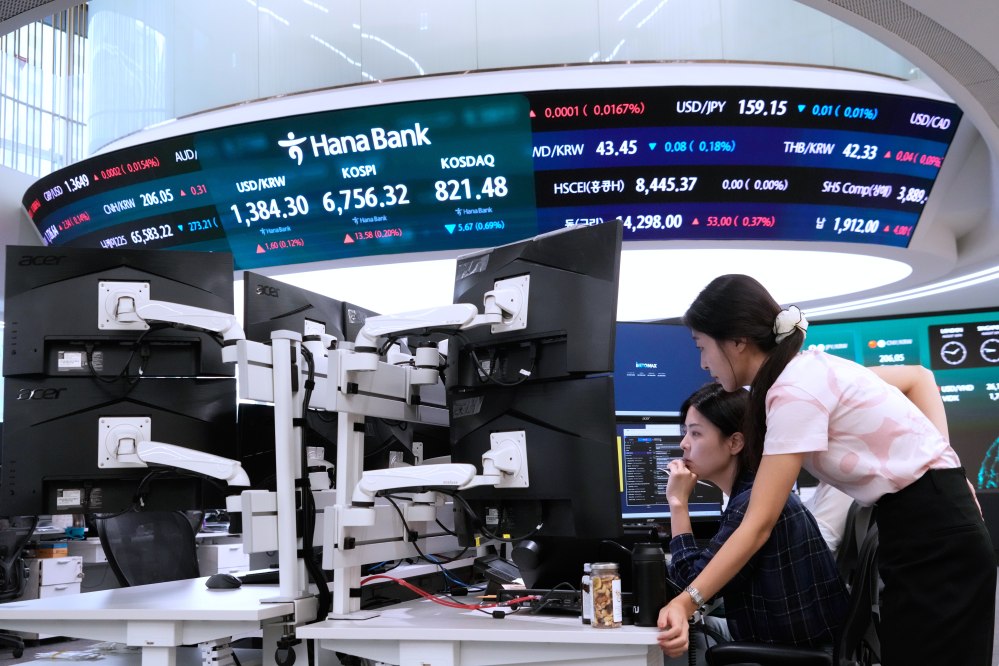
After soaring for years, AI stocks have become shakier on worries that their prices shot too high and that demand for chips may fizzle out if AI does not produce as much profit as hoped.
Strong profit growth across U.S. companies broadly has been the main reason the U.S. stock market has run to records this year.
Abercrombie & Fitch leaped 35.7% after reporting a stronger profit for the latest quarter than analysts expected. The retailer also raised its forecast for earnings over the full year and for how much cash it will send to investors by buying back shares of its own stock.
J.M. Smucker climbed 4.3% after likewise reporting sweeter results than expected for the spring. The seller of Folgers coffee and Smucker’s jams also raised its forecast for profit over the full year.
On the losing end of Wall Street was Intuit, even though the company behind TurboTax, Credit Karma and QuickBooks topped analysts’ profit expectations in the latest quarter. It fell 3.2% after giving a forecast for profit growth of nearly 25% in its upcoming fiscal year, which fell short of analysts’ expectations.
Outside of earnings reports, Meta Platforms added 1.1% after agreeing to pay up to $18 billion and to add child-safety measures to Facebook and Instagram to end a landmark trial over teen social media addiction and settle claims filed by states across the country.
All told, the S&P 500 slipped 1.58 to 7,675.70 points. The Dow Jones Industrial Average dipped 113.52 to 53,463.88, and the Nasdaq composite fell 21.10 to 26,130.20.
In the bond market, which has been home recently to some of Wall Street’s strongest action, Treasury yields ticked higher following updates on inflation and economic growth.
Yields had shot upward through the summer on worries about high inflation and the U.S. government’s growing and gargantuan debt, among other factors. They got so high that the U.S. Treasury Department made a surprise announcement last week to intervene in the bond market, though analysts say its effect could be limited.
The latest update on inflation released Wednesday said that the measure the Federal Reserve has historically preferred to use sat at 3.7% last month. That was the same rate of inflation as in June and slightly worse than the 3.6% that economists expected, according to FactSet. It remains far worse than the 2% goal the Fed has set.
Growth in spending by U.S. consumers, which is the main engine of the economy, slowed at the same time.
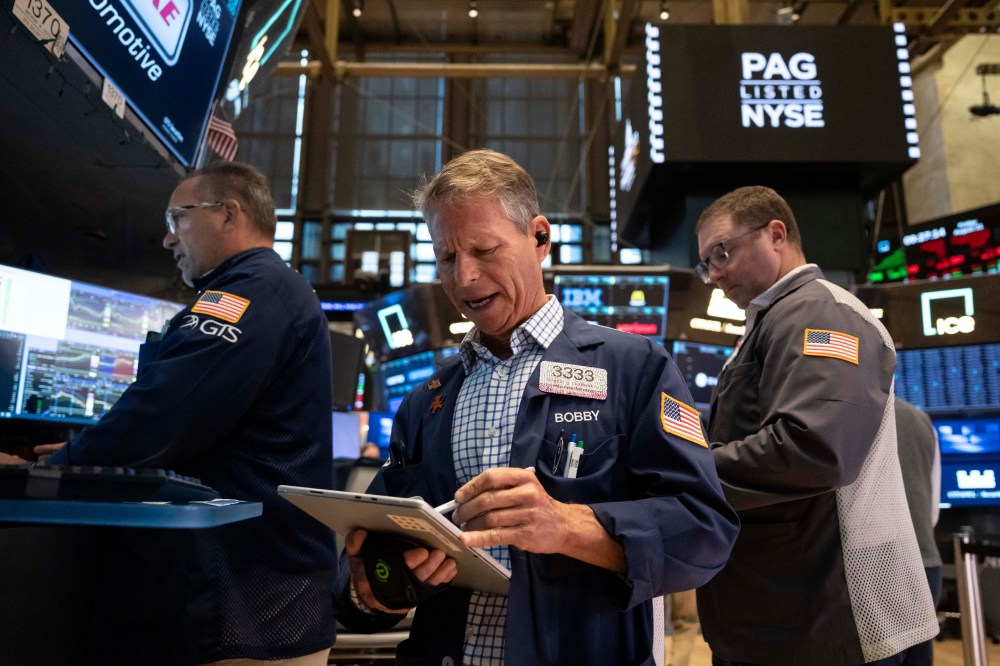
The overall economy grew at a 1.5% annual pace in the spring, according to a revised estimate of its performance, the same amount as the government’s first estimate.
It all helped Treasury yields squiggle up and down before the 10-year Treasury yield edged up to 4.65% from 4.64% late Tuesday.
Traders didn’t change their forecasts much for what the Federal Reserve will do with its main interest rate in the short term, and they are betting on a nearly three-in-four chance the Fed will hike the federal funds rate at least once by the end of the year, according to data from CME Group.

One of the factors that’s worsened inflation this year is higher oil prices, though they’ve come down recently.
The price for a barrel of Brent crude, the international standard, continued to swing Wednesday on uncertainty about when the war with Iran will allow oil tankers to freely exit the Persian Gulf again. It dropped as low as $84.56 before settling at $86.94. That’s down 0.4% from the day before and from $94 at the end of last week.
In stock markets abroad, indexes rose across much of Europe and Asia. South Korea’s Kospi climbed 1%, and Japan’s Nikkei 225 rose 0.6% for two of the bigger moves.
___
AP Business Writers Yuri Kageyama and Michelle Chapman contributed to this report.