

S&P/TSX composite ends lower, U.S. stock markets also down
Advertisement
Read this article for free:
or
Already have an account? Log in here »
To continue reading, please subscribe:

Digital Subscription
One year of digital access for only $205*
- Enjoy unlimited reading on winnipegfreepress.com
- Read the E-Edition, our digital replica newspaper
- Access News Break, our award-winning app
- Play interactive puzzles
*First annual payment billed as $205.00 + GST for one year. This annual subscription will automatically renew at $233.00 + GST every 52 weeks (10% off the regular annual price of $259.35). Offer available to new and qualified returning subscribers only. Cancel any time.
To continue reading, please subscribe:
Add Free Press access to your Brandon Sun subscription for only an additional
$1 for the first 4 weeks*
- Enjoy unlimited reading on winnipegfreepress.com
- Read the E-Edition, our digital replica newspaper
- Access News Break, our award-winning app
- Play interactive puzzles
*Your next Brandon Sun subscription payment will increase by $1.00 and you will be charged $17.95 plus GST for four weeks. After four weeks, your payment will increase to $24.95 plus GST every four weeks.
Read unlimited articles for free today:
or
Already have an account? Log in here »
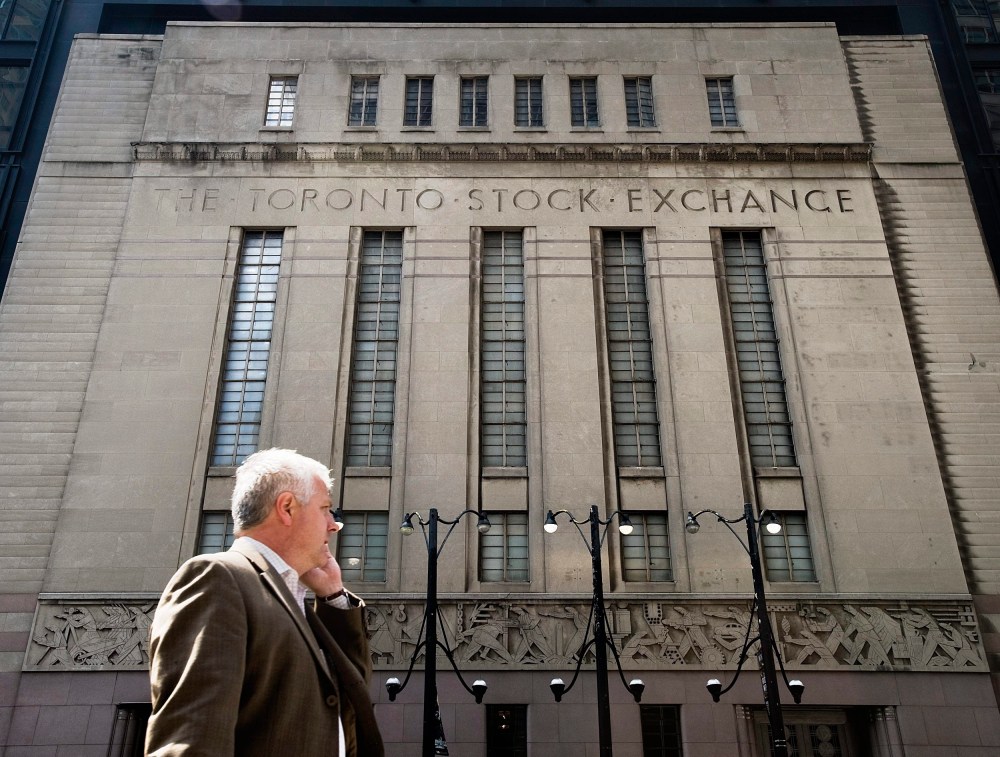
TORONTO – Canada’s main stock index slid almost 300 points on Friday despite the latest GDP report pointing to a strengthening economy as trade tensions prevail.
“I know that GDP was strong, but I think there are fears on both sides of the border about renewed tariffs or trade tensions, if you will, in terms of what could come next and the tit-for-tat that’s going on,” said Carol Schleif, chief market strategist at BMO Wealth Management.
But Schleif suggested taking late-summer Friday’s market moves with a grain of salt.
“It’s going to be hard to read too much long-term out of what the markets are doing in the afternoon on a Friday in the summer,” she said.
“Trading tends to be late; a lot of people are on vacation.”
The S&P/TSX composite index was down 280.33 points at 36,553.92.
In New York, the Dow Jones industrial average was down 9.45 points at 53,559.99. The S&P 500 index was down 19.23 points at 7,711.76, while the Nasdaq composite was down 138.93 points at 26,402.42.
Schleif said markets on both sides of the border are also unpacking U.S. Federal Reserve chair Kevin Warsh’s commentary at the economic symposium in Jackson Hole, Wyo., on Friday.
In his first high-profile speech, Warsh said inflation is still too high in the U.S., signalling that the Fed may have to raise interest rates in the coming months to bring it down. The U.S. bond markets jumped on the potential for a September rate hike.
“For the most part, it gave the market a little more grit in terms of what it had been looking for,” Schleif said.
Overall, she said the Jackson Hole Symposium appeared positive for the U.S. and Canada.
“There’s a really nice picture with Tiff Macklem and Warsh — they’re looking very friendly,” she said. “It’s always good when the people on the front lines making policy are on good terms.”
Meanwhile, Bank of Canada governor Macklem will be up next week with his latest decision on interest rates, shortly after trade talks between Canada and the United States fell apart.
The United States imposed 50 per cent tariffs on roughly five per cent of Canadian exports on Aug. 22, and Canada plans to retaliate with its own counter-tariffs starting Sept. 8.
The Canadian central bank has kept its benchmark rate on hold at 2.25 per cent for nearly a year now, and a broader consensus among economists is signalling another rate hold.
While the economy could slow with a prolonged trade dispute, Schleif said the TSX isn’t going to be affected by tariffs as much, considering its composition.
“The TSX is moving based on miners and financials and things that tend to be in pretty good stead and are benefiting from the fact that you had 3.3 per cent GDP growth,” she said.
Statistics Canada reported real gross domestic product rose 3.3 per cent in the second quarter on an annualized basis — the fastest pace in more than three years as exports and business capital investment ramped up.
Schleif said investors have so far remained resilient despite the geopolitical backdrop, with the TSX’s year-to-date return tallying 15 per cent.
The Canadian dollar traded for 72.00 cents US compared with 72.14 cents US on Thursday.

The October crude oil contract was down 13 cents US at US$83.40 per barrel.
The December gold contract was down US$134.10 at US$4,529.90 an ounce.
This report by The Canadian Press was first published Aug. 28, 2026.
— With files from The Associated Press
Companies in this story: (TSX: GSPTSE, TSX: CADUSD)