

Cuba’s tourism plummets 62% after US pressure and energy embargo
Advertisement
Read this article for free:
or
Already have an account? Log in here »
To continue reading, please subscribe:
Digital Subscription
One year of digital access for only $1.44 a week*
- Enjoy unlimited reading on winnipegfreepress.com
- Read the E-Edition, our digital replica newspaper
- Access News Break, our award-winning app
- Play interactive puzzles
*Billed as $5.77 plus GST every four weeks. After 52 weeks, price increases to the regular rate of $19.95 plus GST every four weeks. Offer available to new and qualified returning subscribers only. Cancel any time.
To continue reading, please subscribe:
Add Free Press access to your Brandon Sun subscription for only an additional
$1 for the first 4 weeks*
- Enjoy unlimited reading on winnipegfreepress.com
- Read the E-Edition, our digital replica newspaper
- Access News Break, our award-winning app
- Play interactive puzzles
*Your next Brandon Sun subscription payment will increase by $1.00 and you will be charged $17.95 plus GST for four weeks. After four weeks, your payment will increase to $24.95 plus GST every four weeks.
Read unlimited articles for free today:
or
Already have an account? Log in here »
HAVANA (AP) — Cuba’s tourism has nosedived since the U.S. has ramped up its pressure on the island this year, threatening international tour operators and imposing an energy embargo.
Tourism on the island declined by 62% from January to July of this year compared to the same period in 2025, according to official figures that highlighted the enormous drop in the island’s strategic sector.
A report published by the National Office of Statistics and Information (ONEI) indicated this Tuesday that 419,000 visitors have arrived in Cuba so far in 2026, compared to 1.1 million during the same period in 2025.
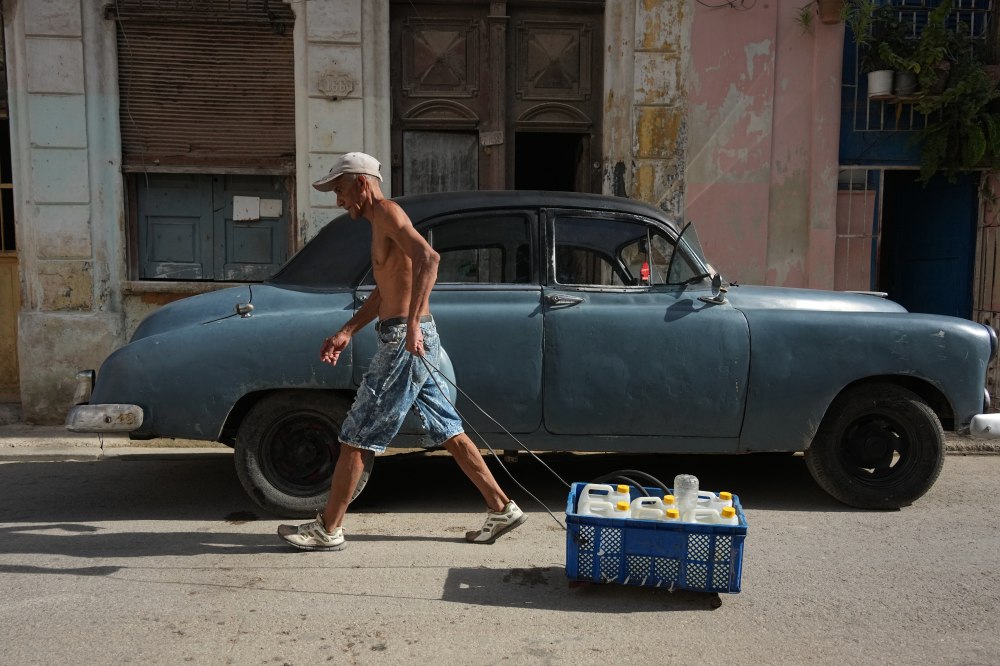
The ONEI report quantifies the notable absence of tourists on the island’s streets, with hotels, hostels, and private accommodations closed, as well as beaches, shops, and attractions with few international visitors.
U.S. President Donald Trump imposed a radical energy embargo on the island in January, pressuring for a change in its political and economic model. This exacerbated a preexisting crisis caused by other U.S. sanctions and a failed internal financial reform that triggered inflation.
Between May and July, the U.S. State Department announced sanctions against the heart of this industry on the island, with measures ranging from freezing accounts to being barred from operating in the U.S. financial system.
Chains such as Meliá and Iberostar — two long-standing partners of the island since the 1990s — and Royalton then suspended all their contracts in the Caribbean nation. Visa and Mastercard payment gateways were also withdrawn. Major airlines such as World2Fly, Air France, Turkish Airlines, and Iberia had already suspended their flights after the government said planes could no longer refuel on the island.
Cuba received approximately 4.3 million tourists in 2019, and over the past 30 years, the travel industry had become an economic engine. Authorities acknowledged that revenues reached $3 billion annually.

___
Follow AP’s Latin America coverage at https://apnews.com/hub/latin-america