

US issues sanctions on Turkish bank that it calls a ‘critical financial lifeline’ for Iran
Advertisement
Read this article for free:
or
Already have an account? Log in here »
To continue reading, please subscribe:
Digital Subscription
One year of digital access for only $1.44 a week*
- Enjoy unlimited reading on winnipegfreepress.com
- Read the E-Edition, our digital replica newspaper
- Access News Break, our award-winning app
- Play interactive puzzles
*Billed as $5.77 plus GST every four weeks. After 52 weeks, price increases to the regular rate of $19.95 plus GST every four weeks. Offer available to new and qualified returning subscribers only. Cancel any time.
To continue reading, please subscribe:
Add Free Press access to your Brandon Sun subscription for only an additional
$1 for the first 4 weeks*
- Enjoy unlimited reading on winnipegfreepress.com
- Read the E-Edition, our digital replica newspaper
- Access News Break, our award-winning app
- Play interactive puzzles
*Your next Brandon Sun subscription payment will increase by $1.00 and you will be charged $17.95 plus GST for four weeks. After four weeks, your payment will increase to $24.95 plus GST every four weeks.
Read unlimited articles for free today:
or
Already have an account? Log in here »
WASHINGTON (AP) — The Trump administration announced Friday that it has imposed sanctions on a Turkish financial institution as part of its latest effort to sever “critical financial lifelines” for the Iranian government.
The actions against Golden Global Yatirim Bankasi Anonim Sirketi come after Treasury Secretary Scott Bessent last week launched “Operation Economic Outcast, ” Washington’s new effort to isolate already heavily sanctioned Iran from its remaining trading partners to try to get it to capitulate to U.S. demands after more than six months of war.
The Treasury Department accused the Turkish bank and its entities of being established to enable Iran’s efforts to transfer oil revenues from China to Turkey, where they could then be converted to cash and gold. It also said the institution “knowingly offered” banking services to Iranian financial entities, including those already sanctioned by the U.S. government in 2022 for funneling Tehran’s oil sales.
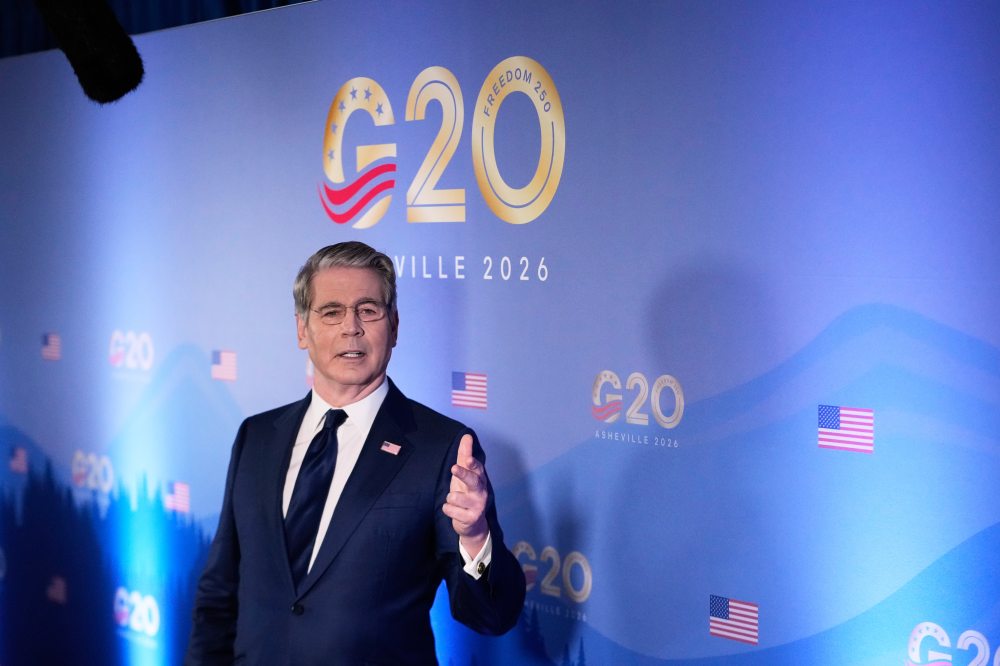
Bessent, who had told The Associated Press earlier this week that another bank would face economic penalties, said financial institutions with ties to Iran will “continue to find out the hard way that we are serious about Operation Economic Outcast.”
“While we hope no more banks will need to be sanctioned, that ultimately depends on how quickly the international community comes to its senses and ceases support of the murderous Iranian regime,” he said in a press release Friday. “We know who you are, we know where you are, and we will continue to take action together with our allies and partners until we have buried the head of the Iranian snake.”
But so far, the goal to force those that still do business with Iran to cut off financial ties or face U.S. retaliation has fallen flat, with promises of an “economic D-Day” for a group of countries that could include China and India quickly turning into warnings and negotiations with Iran’s trading partners.
Bessent had previously told reporters that he wanted countries to have an opportunity to shift away from Iran before it was too late in a bid to avoid upending the global financial system.
The Trump administration’s reluctance to penalize major trading partners that still do business with Iran was on display last week when the U.S. took steps to limit an Egyptian bank’s operations in the United Arab Emirates but stopped short of imposing sanctions.
The U.S. also has resumed military strikes in recent days, prompting Iranian retaliation in the region. It’s unclear what the outcome of the two-pronged strategy will be for President Donald Trump, who has struggled to end an unpopular war with an intransigent Iranian government as energy prices rise and pose problems for Republicans before November’s midterm congressional elections.
Targeted in the latest U.S. sanctions is Golden Global Investment Bank, which was founded in 2019 as Turkey’s first investment bank to offer “banking services and alternative financing methods” to foreign companies, according to its website.
The Istanbul-based bank, which is largely unfamiliar to most Turks, says it aims to increase Turkey’s foreign trade through target markets in neighboring countries.

The Treasury announcement came a day after Turkey’s state-run Halkbank declared it had reached a settlement with the U.S. Justice Department in a nine-year case focused on violating sanctions with Iran.
In that case, senior officials at Halkbank were said to have illegally moved about $20 billion worth of Iranian oil revenues. U.S. prosecutors claimed high-ranking Turkish government officials received millions of dollars in bribes to protect the scheme.
The Halkbank case caused a rift in U.S.-Turkey relations, with Turkish President Recep Tayyip Erdogan personally lobbying the White House to have the case dropped.
___
Wilks reported from Istanbul.