

Iran claims strike on US ship in Strait of Hormuz as fighting escalates
Advertisement
Read this article for free:
or
Already have an account? Log in here »
To continue reading, please subscribe:

Digital Subscription
One year of digital access for only $205*
- Enjoy unlimited reading on winnipegfreepress.com
- Read the E-Edition, our digital replica newspaper
- Access News Break, our award-winning app
- Play interactive puzzles
*First annual payment billed as $205.00 + GST for one year. This annual subscription will automatically renew at $233.00 + GST every 52 weeks (10% off the regular annual price of $259.35). Offer available to new and qualified returning subscribers only. Cancel any time.
To continue reading, please subscribe:
Add Free Press access to your Brandon Sun subscription for only an additional
$1 for the first 4 weeks*
- Enjoy unlimited reading on winnipegfreepress.com
- Read the E-Edition, our digital replica newspaper
- Access News Break, our award-winning app
- Play interactive puzzles
*Your next Brandon Sun subscription payment will increase by $1.00 and you will be charged $17.95 plus GST for four weeks. After four weeks, your payment will increase to $24.95 plus GST every four weeks.
Read unlimited articles for free today:
or
Already have an account? Log in here »
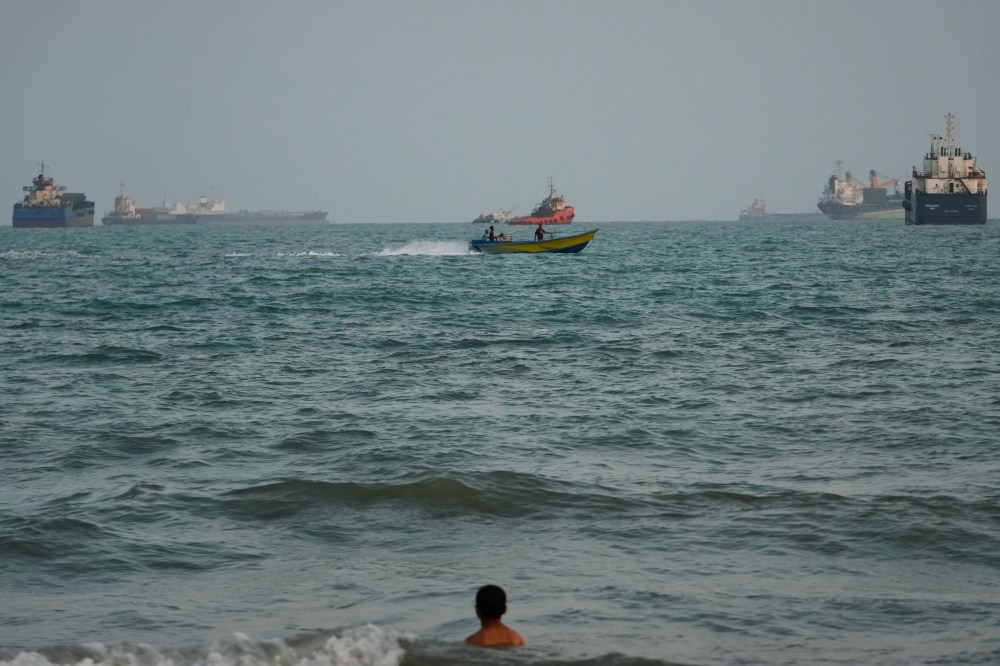
CAIRO (AP) — Iran said Sunday it struck an unmanned U.S. vessel trying to enter the Strait of Hormuz, the latest salvo in a new flare-up of fighting between the two countries.
The U.S. did not immediately confirm the purported attack, which came a day after the U.S. military said forces struck three Iranian oil tankers in response to a missile attack on Navy warships.
The war began with U.S. and Israeli attacks on Iran on Feb. 28. But since a ceasefire agreement was announced in June, on-and-off fighting has persisted with both sides trying to inflict military and economic pain as negotiations have collapsed.
Strikes come about a week after fighting resumed
The U.S. and Iran resumed attacks last week, following a month of relative calm, with the Strait of Hormuz and Iranian communities along it again being targeted. At least five people were killed earlier in the week during a U.S. bombardment of southern Iran.
The Trump administration appears to have adopted a dual-prong approach to the conflict, responding militarily to attacks on the strait while going after foreign financial institutions that handle Iran’s money.
But Tehran’s hard-line new senior leaders have signaled the willingness to dig in after weathering decades of sanctions.
Iran has found ways over the years to circumvent sanctions, and now the U.S. blockade, and get its oil to buyers to help ease growing economic pressures. That relies in part on a shadow fleet transporting its oil.

Meanwhile, Iran’s nuclear program, the issue that contributed to the outbreak of the war, was meant to be addressed in negotiations that fell apart soon after the U.S. and Iran signed a memorandum of understanding in mid-June.
Diplomats say the U.S., Britain, France and Germany seek to refer Iran to the U.N. Security Council for failure to comply with its nuclear nonproliferation obligations.
Instead, Tehran’s new leverage focuses on the Strait of Hormuz that is crucial to global oil and natural gas shipments and was seen as an international waterway before the war began.
___
Magdy reported from Cairo and Frankel reported from Jerusalem.