

Singapore ministers, among world’s highest paid government officials, get first raise in 15 years
Advertisement
Read this article for free:
or
Already have an account? Log in here »
To continue reading, please subscribe:

Digital Subscription
One year of digital access for only $205*
- Enjoy unlimited reading on winnipegfreepress.com
- Read the E-Edition, our digital replica newspaper
- Access News Break, our award-winning app
- Play interactive puzzles
*First annual payment billed as $205.00 + GST for one year. This annual subscription will automatically renew at $233.00 + GST every 52 weeks (10% off the regular annual price of $259.35). Offer available to new and qualified returning subscribers only. Cancel any time.
To continue reading, please subscribe:
Add Free Press access to your Brandon Sun subscription for only an additional
$1 for the first 4 weeks*
- Enjoy unlimited reading on winnipegfreepress.com
- Read the E-Edition, our digital replica newspaper
- Access News Break, our award-winning app
- Play interactive puzzles
*Your next Brandon Sun subscription payment will increase by $1.00 and you will be charged $17.95 plus GST for four weeks. After four weeks, your payment will increase to $24.95 plus GST every four weeks.
Read unlimited articles for free today:
or
Already have an account? Log in here »
KUALA LUMPUR, Malaysa (AP) — Singapore’s ministers, already among the world’s highest paid, are getting a raise for the first time in 15 years, Prime Minister Lawrence Wong said, explaining the government cannot attract top talent into politics if salaries remain unchanged.
Wong told Parliament on Tuesday that under a revised salary framework, the benchmark annual pay for a minister at the lowest grade will rise to 1.8 million Singapore dollars ($1.42 million), from 1.1 million Singapore dollars ($868,330). The prime minister’s benchmark salary will jump to 3.6 million Singapore dollars ($2.8 million) from 2.2 million Singapore dollars ($1.7 million), he said.
The government ministers who will receive raises are elected lawmakers who lead ministries and help make national policies, while allowances for other lawmakers also will increase.
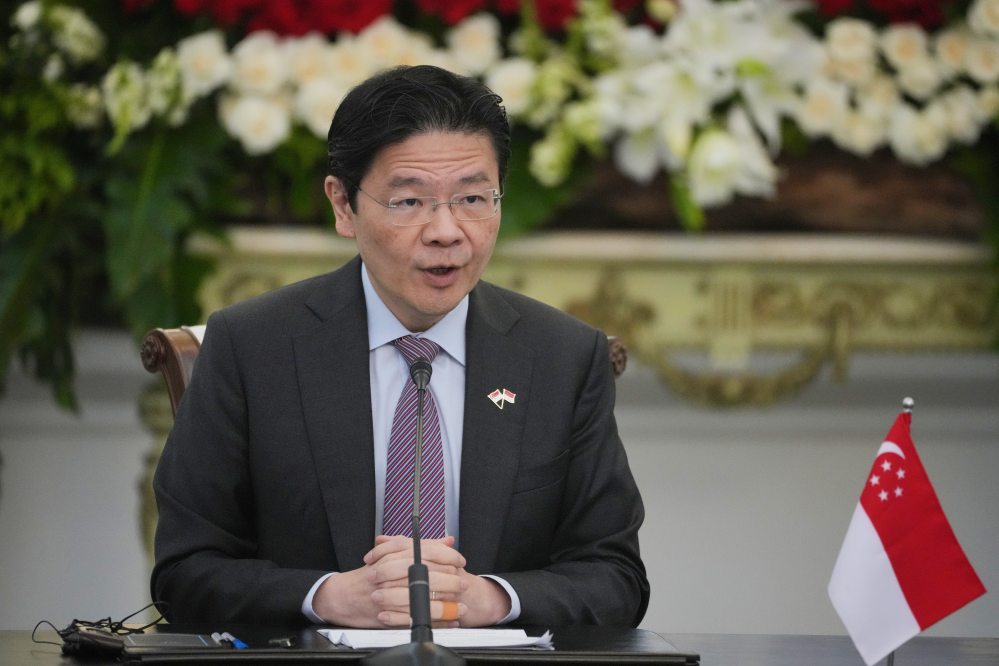
But Wong said ministers and other political officeholders will not immediately move to the new salary benchmark. Instead, they will get a one-time adjustment up to 9% beginning Oct. 15, with the increase depending on performance and responsibilities.
Wong expects most ministers at the lowest grade to earn about 1.35 million Singapore dollars ($1.06 million) by the end of the current term. Salaries thereafter will vary by performance and responsibilities, rather than automatically reaching the benchmark of 1.8 million Singapore dollars, he said.
He didn’t say how much his salary would be, although a 9% adjustment would raise it to 2.4 million Singapore dollars ($1.89 million). Wong said he would donate his entire salary increase to charity for the next five years.
Political pay is a sensitive issue in Singapore as ministers earn far more than most citizens and the prime minister’s salary is among the highest for national leaders worldwide. The government has defended the system as necessary to attract capable people from the private sector and public service and to maintain a clean government.
Singapore chose to deal with political remuneration openly, with no hidden salary components or perks outside the published framework, Wong said.
“Good government did not come naturally to Singapore. It was built deliberately over many years. And there is nothing automatic about sustaining this,” he said.

The government understood why Singaporeans scrutinize ministers’ pay but argued that the issue could not be avoided simply because it was uncomfortable. Ministerial salaries had increasingly fallen behind comparable earnings in the private sector and civil service, making a review necessary, Wong said.
The salary framework uses the median income of Singapore’s top 1,000 citizen earners as a reference point, with a 40% discount applied to reflect the nature of political service.
The new salary scheme would give Wong and future prime ministers “a better chance of persuading capable Singaporeans to step forward, and of building the strongest possible team for Singapore,” he said.
The new framework will be reviewed every five years, the government said.
The current political salary framework was established following a 2011 review and debated in Parliament in 2012. Salaries were cut by about 36% under that review as the public expressed concern over political pay. A subsequent review in 2017 recommended adjustments, but the government decided not to implement them. A review scheduled for 2023 was deferred.