

B.C. forestry sector says industry at ‘breaking point’ in letter to Premier David Eby
Advertisement
Read this article for free:
or
Already have an account? Log in here »
To continue reading, please subscribe:

Digital Subscription
One year of digital access for only $205*
- Enjoy unlimited reading on winnipegfreepress.com
- Read the E-Edition, our digital replica newspaper
- Access News Break, our award-winning app
- Play interactive puzzles
*First annual payment billed as $205.00 + GST for one year. This annual subscription will automatically renew at $233.00 + GST every 52 weeks (10% off the regular annual price of $259.35). Offer available to new and qualified returning subscribers only. Cancel any time.
To continue reading, please subscribe:
Add Free Press access to your Brandon Sun subscription for only an additional
$1 for the first 4 weeks*
- Enjoy unlimited reading on winnipegfreepress.com
- Read the E-Edition, our digital replica newspaper
- Access News Break, our award-winning app
- Play interactive puzzles
*Your next Brandon Sun subscription payment will increase by $1.00 and you will be charged $17.95 plus GST for four weeks. After four weeks, your payment will increase to $24.95 plus GST every four weeks.
Read unlimited articles for free today:
or
Already have an account? Log in here »
VANCOUVER – British Columbia forestry groups have written to Premier David Eby saying the industry is at a “breaking point” and calling for urgent action to address challenges ranging from slow-moving provincial processes to steep U.S. tariffs.
The letter dated Sept. 4 said the entire industry is at risk, from logging and transportation to pulp and paper and value-added manufacturing.
“We are in the middle of a major international trade crisis. Government must respond with the urgency that crisis demands,” said the letter from groups representing contractors, manufacturers, unions and others linked to the sector.
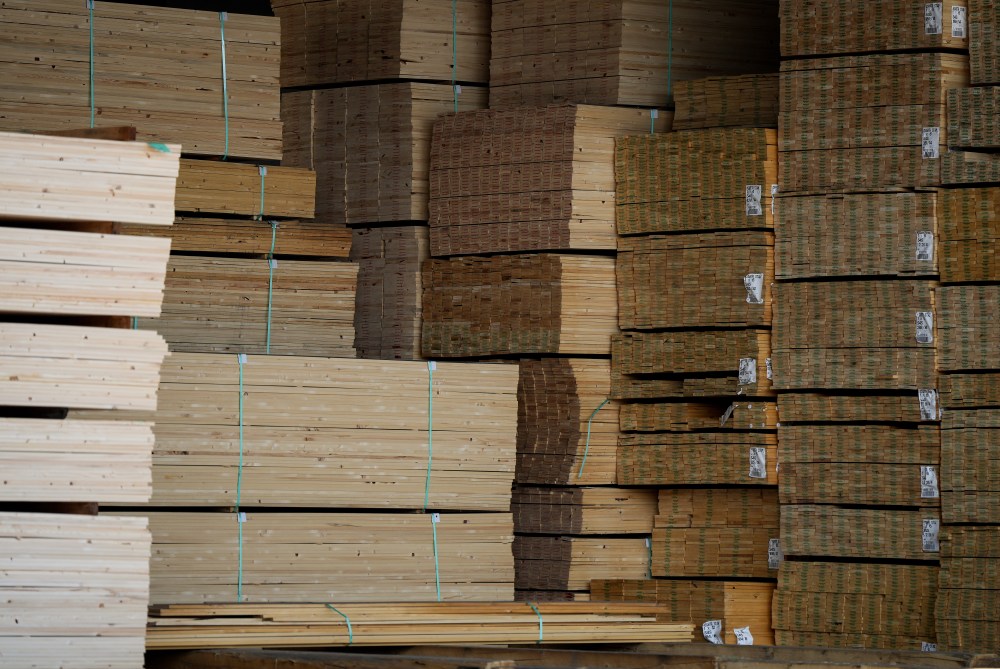
The letter pointed to new U.S. tariffs on a broader range of forest products on top of those already applied to Canadian softwood lumber and acknowledged that international trade pressures are beyond the premier’s control.
But other challenges are “homegrown,” it said. The province “can control many of the costs, regulations, policies, permitting processes and fibre-access decisions that determine whether those companies survive it,” the letter said.
“Every day without stable, predictable access to economically viable wood increases the risk to B.C. businesses, workers, families and forest-dependent communities,” it said.
The letter asked Eby to take swift action to form a “forestry crisis action group” with a mandate to cut costs, remove regulatory barriers and get timber moving.
The group should be led by the premier’s office and bring together senior government decision makers and representatives from across the sector, it said.
The BC Council of Forest Industries, BC First Nations Forestry Council, BC Community Forest Association, BC Pulp & Paper Coalition, Truck Loggers Association, Independent Lumber Manufacturers’ Association and United Steelworkers are among the signatories of the letter released Wednesday.
Forests Minister Ravi Parmar later addressed reporters, saying U.S. tariffs and low pulp prices were part of a “perfect storm” battering the industry.
“Clearly we are in arguably the most challenging period in forestry’s history,” he said.
Parmar said he’d seen the letter and he and the premier were committed to charting a path forward that helps stabilize the sector and ensures its future.
The minister said he and Eby would meet with the signatories of the letter “in the next little while” to listen to their concerns and work on solutions.
“The path forward for forestry must be moving us away from a boom and bust cycle to one that is structurally sound and stable,” he said.
B.C. has seen numerous mill closures in recent years, with Domtar announcing last month it was shuttering a pulp mill in the Howe Sound region. The idling followed news that forestry giant Canfor was closing a mill in Prince George, B.C., in July.
Eddie Petryshen, conservation specialist with the advocacy group Wildsight, based in B.C.’s Kootenay region, said the downturn or “falldown” of the province’s forest industry has been predicted — and ignored — for decades.
“We’ve been talking about getting more jobs per tree for a very long time but we haven’t effectively moved the needle on that,” he said in an interview.
Petryshen said B.C. has an “alarming history” of miscalculating the level of logging its forests can sustain, resulting in overcutting that has caught up with the sector.
The situation has been made worse by the destruction wrought by worsening wildfires and the historic mountain pine beetle epidemic, he added.
Petryshen said the letter from industry groups, which asked B.C. to speed up permitting and increase access to areas for logging, doesn’t buck the trend.
“What’s the actual plan for long-term sector sustainability and not just liquidating the forest and biodiversity values in the short term?” he said.
“We can extract the remaining economical old and primary forests … and not get any more jobs than we have today.”
B.C.’s forest-dependent communities will be “left with the scraps” if the province and the industry don’t change their approach, he said.
The industry letter asked the B.C. government to increase the province’s economically viable harvest to 45 million cubic metres annually, up from a current projection of 29 million cubic metres, a figure linked to the price of lumber.
Parmar said he was committed to finding ways to hit the higher target. But it was “next to impossible to do that” given the punishing U.S. tariffs, he said.
Petryshen, meanwhile, said volume does not necessarily equate to jobs, especially if the sector remained slanted toward “high-volume and low-value” forestry.
Logging in B.C. has often targeted the most ecologically productive sites that support the biggest trees, which are highly sought by the industry, he said.
“I’m not sure how you can get to this theoretical 45 million cubic metres and not impact existing protections or things like what the industry might consider constraints — old-growth management areas, wildlife habitat areas.”
B.C. needs a biodiversity crisis action group, he added.
“I’ve watched as seven southern caribou herds have been locally extirpated in the last two decades and I see their habitat moving down the highway on the back of logging trucks,” said Petryshen, who lives in Kimberley, B.C.

Parmar highlighted the province’s plan to shift to a “working forest” model, saying Wednesday that it would address concerns the industry has been raising.
The new approach would eliminate what the minister described as a “cutblock by cutblock” approach to permitting, a shift he said would cut costs, speed up harvesting timelines and provide certainty for the industry.
The province has outlined the model, saying it includes three zones: the working forest where the priority is commercial logging, a multiple-use zone with stewardship efforts alongside “carefully managed” forestry activities, and a conservation zone aimed at preserving habitat, biodiversity and ecosystem health.
An update last month said the province would work with First Nations to identify “early candidate areas” set to be announced this fall for testing the approach.
This report by The Canadian Press was first published Sept. 9, 2026.