

Canadian pump prices creep higher as Mideast fighting escalates
Advertisement
Read this article for free:
or
Already have an account? Log in here »
To continue reading, please subscribe:

Digital Subscription
One year of digital access for only $205*
- Enjoy unlimited reading on winnipegfreepress.com
- Read the E-Edition, our digital replica newspaper
- Access News Break, our award-winning app
- Play interactive puzzles
*First annual payment billed as $205.00 + GST for one year. This annual subscription will automatically renew at $233.00 + GST every 52 weeks (10% off the regular annual price of $259.35). Offer available to new and qualified returning subscribers only. Cancel any time.
To continue reading, please subscribe:
Add Free Press access to your Brandon Sun subscription for only an additional
$1 for the first 4 weeks*
- Enjoy unlimited reading on winnipegfreepress.com
- Read the E-Edition, our digital replica newspaper
- Access News Break, our award-winning app
- Play interactive puzzles
*Your next Brandon Sun subscription payment will increase by $1.00 and you will be charged $17.95 plus GST for four weeks. After four weeks, your payment will increase to $24.95 plus GST every four weeks.
Read unlimited articles for free today:
or
Already have an account? Log in here »
CALGARY – Fuel prices tend to ease off around this time of year, but one industry expert says drivers should expect no such relief this time.
“Traditionally, gas prices decline after Labour Day as gasoline demand slowly tapers off and we also in a week make the transition back to cheaper winter gasoline,” said Patrick De Haan, head of petroleum analysis at price-tracking website Gasbuddy.com.
“But we may not see much of that tailwind this year.”
Crude prices spiked when the U.S. and Israel launched their war against Iran in late February. Tanker shipments all but ceased through the Strait of Hormuz, a strategically vital link between the Persian Gulf and the open ocean. By early summer, prices retreated to close to prewar levels amid hopes for peace, but the situation has since deteriorated.
Brent crude, the international standard, was hovering in the triple digits in Wednesday trading after attacks on oil facilities and ships in the Middle East threatened to further debilitate an already weakened supply chain. The last time prices were that high was in July.
“Brent breaking above US$100 is a major psychological milestone for markets, but the bigger concern is what this means for inflation,” Lukman Otunuga, market research head at global broker FXTM, said Wednesday.
Ukrainian attacks on Russian refineries have further squeezed the market, De Haan added.
“At least for now, Canadian motorists across most provinces are going to have to dig deeper.”
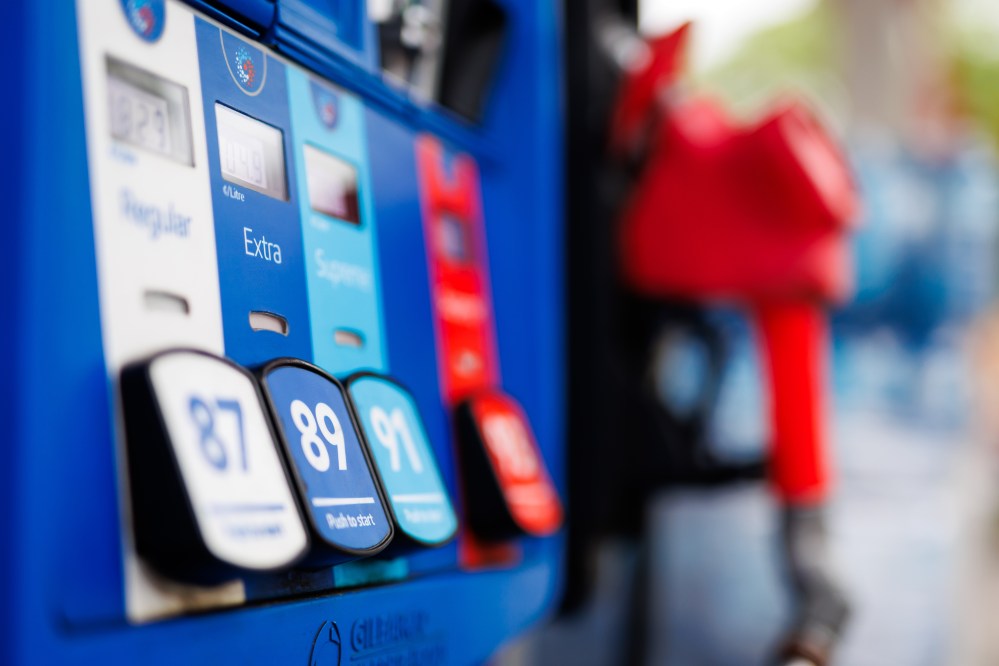
Gasbuddy, which crowdsources pump price data from across the U.S. and Canada, pegs the national average for a litre of regular unleaded gasoline in Canada at just above $1.80, an almost four-cent jump from a day earlier.
“It likely could hit $1.82 to $1.85 here in the next week or two,” De Haan said.
Diesel prices, already touching record highs, could also climb an additional five to 10 cents a litre, he added.

And that will filter through to consumers in a “furious fashion” in the weeks ahead, as trucks and railroads pass costs on, De Haan said. It’s also the “worst possible time” for farmers, who are getting into their fields to harvest their crops and need diesel to run their machinery.
When it comes to diesel costs, there’s not much that can be done, he added.
“Farmers can’t really let their crops go to waste. Trucks have to still haul goods to the market that are needed.”
This report by The Canadian Press was first published Sept. 9, 2026.
— with files from The Associated Press