

Japanese utility execs resign over falsified quake safety data for 2 nuclear reactors
Advertisement
Read this article for free:
or
Already have an account? Log in here »
To continue reading, please subscribe:

Digital Subscription
One year of digital access for only $205*
- Enjoy unlimited reading on winnipegfreepress.com
- Read the E-Edition, our digital replica newspaper
- Access News Break, our award-winning app
- Play interactive puzzles
*First annual payment billed as $205.00 + GST for one year. This annual subscription will automatically renew at $233.00 + GST every 52 weeks (10% off the regular annual price of $259.35). Offer available to new and qualified returning subscribers only. Cancel any time.
To continue reading, please subscribe:
Add Free Press access to your Brandon Sun subscription for only an additional
$1 for the first 4 weeks*
- Enjoy unlimited reading on winnipegfreepress.com
- Read the E-Edition, our digital replica newspaper
- Access News Break, our award-winning app
- Play interactive puzzles
*Your next Brandon Sun subscription payment will increase by $1.00 and you will be charged $17.95 plus GST for four weeks. After four weeks, your payment will increase to $24.95 plus GST every four weeks.
Read unlimited articles for free today:
or
Already have an account? Log in here »
TOKYO (AP) — The president of Chubu Electric Power Co., Japan’s third-largest utility, said Monday that he and the chairperson are resigning to take responsibility over the company’s yearslong manipulation of earthquake safety data for two nuclear reactors and that the operator will withdraw applications to restart them.
Japan has been gradually restarting some of the 54 nuclear reactors it shuttered in 2011, after the Fukushima disaster, when a 9.0 earthquake off Japan’s northeastern coast and a subsequent tsunami caused meltdowns at three reactors operated by Tokyo Electric Power Company Holdings, or TEPCO.
Chubu Electric’s announcement comes at a time when Prime Minister Sanae Takaichi’s government has accelerated nuclear reactor restarts amid rising energy costs and as it comes under pressure to reduce carbon emissions.
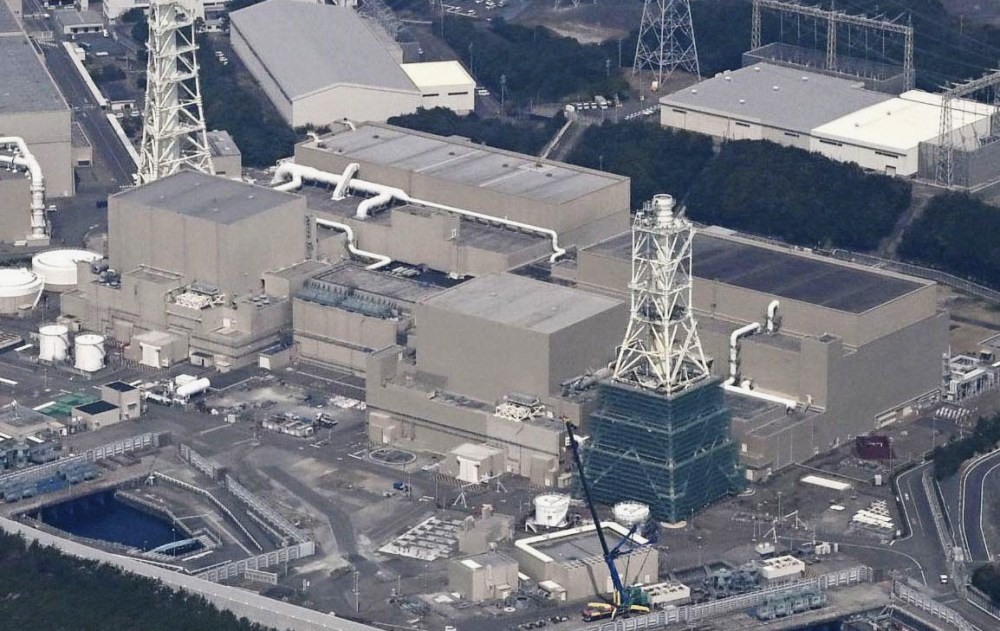
Chubu Electric President Kingo Hayashi said that an outside investigative panel found that the utility had for years provided manipulated seismic data for its Hamaoka No. 3 and No. 4 reactors to ensure the figures met requirements.
With the credibility of the safety data in serious question, the utility has decided to drop the pending restart application for the two reactors, Hayashi said.
“We had serious problems with our corporate culture and governance,” Hayashi said. “Regaining public trust is our top priority.”
Hayashi and chairperson Satoru Katsuno were not directly linked to the data manipulation. But the top management set early resumption as a key business target and harshly reprimanded a team working on a resumption permit because of the prolonged screening, which might have pressured them into wrongdoing, the report said.
Hayashi and Katsuno will officially step down on Sept. 30, while Minoru Yasui, currently a director, will be promoted to president on Oct. 1.
Chubu Electric applied for safety screening to resume operations at the No. 3 and 4 reactors at the Hamaoka plant in 2014 and 2015, but the Nuclear Regulation Authority suspended their screening in December after months of internal investigation based on a tip from a whistleblower.

Two other reactors at the plant are being decommissioned, and a fifth is idle.
The plant, about 200 kilometers (125 miles) west of Tokyo, is located on a coastal area known for potential risks from so-called Nankai Trough megaquakes.
Hayashi said nuclear power generation remains an important energy supply and that the utility will reapply for restarts of the No. 3 and No. 4 reactors after implementing preventive measures, restructuring and making a fresh start.
Public opinion on nuclear energy in Japan remains divided due to lingering safety concerns after the 2011 Fukushima Daiichi meltdowns, though acceptance has gradually grown as many households face rising fuel costs from the repercussions of the Middle East conflict.
Of Japan’s 54 commercial reactors, 11 are currently in operation, 20 are offline and more than 20 others are being decommissioned, according to the Nuclear Regulation Authority.