

From investment buzz to building: Canada’s major projects face hurdles, experts say
Advertisement
Read this article for free:
or
Already have an account? Log in here »
To continue reading, please subscribe:

Digital Subscription
One year of digital access for only $205*
- Enjoy unlimited reading on winnipegfreepress.com
- Read the E-Edition, our digital replica newspaper
- Access News Break, our award-winning app
- Play interactive puzzles
*First annual payment billed as $205.00 + GST for one year. This annual subscription will automatically renew at $233.00 + GST every 52 weeks (10% off the regular annual price of $259.35). Offer available to new and qualified returning subscribers only. Cancel any time.
To continue reading, please subscribe:
Add Free Press access to your Brandon Sun subscription for only an additional
$1 for the first 4 weeks*
- Enjoy unlimited reading on winnipegfreepress.com
- Read the E-Edition, our digital replica newspaper
- Access News Break, our award-winning app
- Play interactive puzzles
*Your next Brandon Sun subscription payment will increase by $1.00 and you will be charged $17.95 plus GST for four weeks. After four weeks, your payment will increase to $24.95 plus GST every four weeks.
Read unlimited articles for free today:
or
Already have an account? Log in here »
OTTAWA – Canada’s inaugural investment summit created a buzz that the country is open for business, but experts say the real test will be whether that momentum can translate into major projects that overcome labour shortages, community concerns, environmental hurdles and lengthy approvals.
The two-day summit in Toronto hosted by Prime Minister Mark Carney and two of Canada’s largest pension investors aims to create a sustained pipeline of private investment for major Canadian projects.
It included a flurry of multi-billion dollar funding announcements that Ottawa says are part of its broader goal of attracting $1 trillion in total investment to Canada over five years.
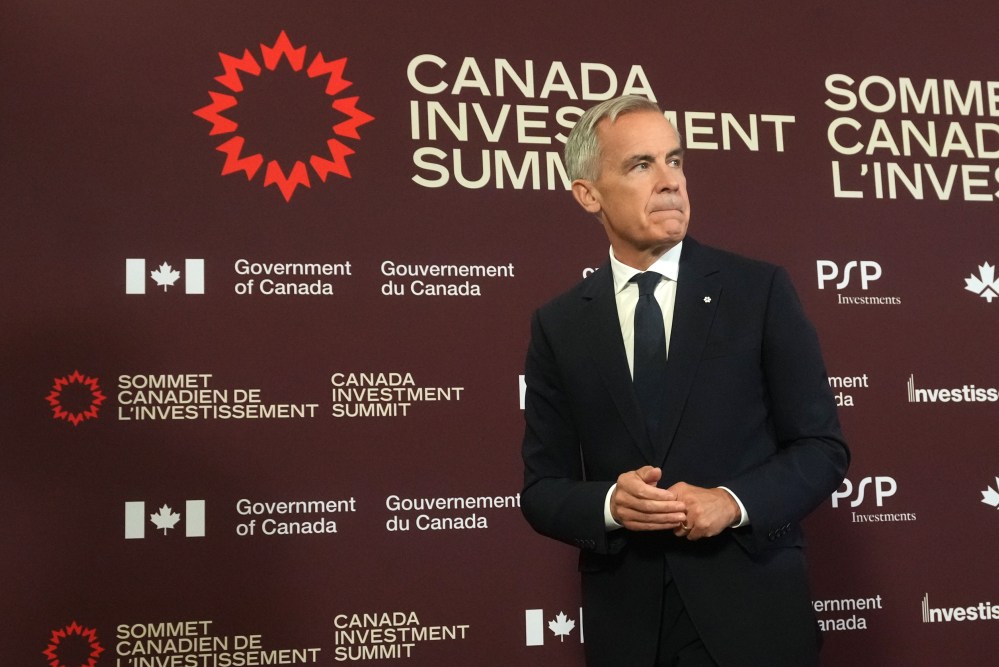
At the summit, Carney said the world’s largest investors, who manage more than $120 trillion in assets, would come to “peer into our shop window” as global interest in Canada grows.
But observers say the longer-term success depends on whether the country can turn interest into actual projects that are financed, approved and built.
“We do have to prove that it works,” said Rachel Samson, vice-president of research at the Institute for Research on Public Policy.
“It’s not enough to have a flashy brochure, you really have to show that the investments can be done in the way that they’re being pitched.”
The summit included a 66-page prospectus with more than 160 projects in energy, minerals and mining, marine and port infrastructure, power and utilities, digital technology, advanced manufacturing and transportation.
Samson said Ottawa has introduced measures to help enable the development of these large-scale projects.
One is the so-called productivity mega deduction tax policy, she said. The new tax incentive, which has an estimated cost of $36 billion over five years, lets businesses deduct the cost of most new equipment and other investments from their taxable income right away, instead of spreading it over several years.
Another is the streamlined regulatory approach of “one project, one review, one year,” which makes Canada attractive to investors, Samson said.
“It shows that projects won’t be bogged down the way that perhaps they once were,” Samson said.
The invitation-only summit held at the Four Seasons in Yorkville, one of Toronto’s most upscale neighbourhoods, was attended by some of the world’s biggest investors, money managers and executives from nearly 30 countries.
Executives with BlackRock, Blackstone, Macquarie Group and major state-owned investment funds mingled with Canadian premiers, pension executives and corporate leaders during the summit.
David Jones, a fellow-in-residence at the C.D. Howe Institute and director at Cambridge Economic Policy Associates, said the strong list of attendees “signals a willingness and an appetite from investors to invest in Canada if the right projects are there.”
“Investors are putting a first foot forward and saying, ‘Right, guys, there’s a lot of funding on the table here — if you can deliver the right type of projects,'” he said.
“Pension funds and investors aren’t charities, so whilst this is a statement of intent and willingness, it will rely on the kind of high-quality projects coming through.”
Patrick Leblond, University of Ottawa associate professor of public and international affairs, said the investor momentum sparked by the summit will help reduce the perceived risk of investing in large-scale projects in Canada.
Even if some of the investments would have happened anyway, he said the buzz attracts additional capital and signals to the world that Canada is a compelling investment destination.
However, Leblond said projects can stall for years without local community and Indigenous support, an adequate workforce and a streamlined regulatory process, causing investors to lose interest.
“The No. 1 thing is getting the communities around these projects on board,” he said. “You need buy-in.”
Many of the proposed projects are in conventional energy, minerals and metals, sectors that often face greater opposition because of environmental concerns.
“A lot of these projects in mining and energy involve Indigenous communities and if we don’t bring them on board, they could eventually block these things and then that’s when investors will move on,” Leblond said.
The labour force is the second biggest potential roadblock to the success of large-scale projects, he said.
“It’s all great to build pipelines, to build mines, to build a high speed rail network,” Leblond said. “But who will be the engineers, the metallurgists, the construction workers. Where are they going to come from?”
The projects included in the prospectus range from shovel-ready developments to proposals still at the concept stage.

They include the Port of Churchill Plus expansion in Manitoba, the Wind West offshore project in Nova Scotia, and the West Coast Oil Pipeline from Alberta to British Columbia.
Philip Cross, a senior fellow at the Macdonald-Laurier Institute and former chief economic analyst at Statistics Canada, said it’s positive to see the federal government recognizing the chronic weakness of business investment in Canada.
But he expressed skepticism that Ottawa will “sit back and pick which projects will be fast-tracked and which won’t.”
“If we look at how governments have selected projects over the last decade, that’s one of the problems with this country,” Cross said. “I’m very skeptical of the ability of governments to select or to direct investment to the areas where our economy needs it.”
This report by The Canadian Press was first published Sept. 16, 2026.