

Some N.L. politicians say they can’t support Quebec energy proposal worth billions
Advertisement
Read this article for free:
or
Already have an account? Log in here »
To continue reading, please subscribe:

Digital Subscription
One year of digital access for only $205*
- Enjoy unlimited reading on winnipegfreepress.com
- Read the E-Edition, our digital replica newspaper
- Access News Break, our award-winning app
- Play interactive puzzles
*First annual payment billed as $205.00 + GST for one year. This annual subscription will automatically renew at $233.00 + GST every 52 weeks (10% off the regular annual price of $259.35). Offer available to new and qualified returning subscribers only. Cancel any time.
To continue reading, please subscribe:
Add Free Press access to your Brandon Sun subscription for only an additional
$1 for the first 4 weeks*
- Enjoy unlimited reading on winnipegfreepress.com
- Read the E-Edition, our digital replica newspaper
- Access News Break, our award-winning app
- Play interactive puzzles
*Your next Brandon Sun subscription payment will increase by $1.00 and you will be charged $17.95 plus GST for four weeks. After four weeks, your payment will increase to $24.95 plus GST every four weeks.
Read unlimited articles for free today:
or
Already have an account? Log in here »
ST. JOHN’S – Several politicians in Newfoundland and Labrador say they won’t vote in favour of a new 50-year draft agreement to share energy from Labrador with Hydro-Québec.
Government representatives have spent the past four days arguing in the legislature about the multibillion-dollar energy proposal, ahead of a formal vote Thursday night.
Keith Russell, a representative in Labrador, shocked the province on Monday morning when he announced he was walking away from the governing Progressive Conservatives to sit as an Independent, leaving the party with half of the 40 seats in the legislature.
In a blistering speech on Thursday afternoon, he said the Tories were not serving his central Labrador district, Lake Melville, which could see a massive influx of workers if the developments outlined in the agreement go ahead.
“After everything I’ve heard, and everything I’ve read, and everything I’ve asked during the debate, I cannot support this agreement,” Russell boomed. “I can’t go back and look the people of Lake Melville in the eye … I can’t say, ‘The government told me it’ll all work out, so that’s good enough.'”
Russell said the four-day sitting this week was a “sales pitch,” rather than a debate.
Bettina Ford, the Opposition Liberal member for Gander, also stood in the legislature to say she could not support the draft deal. Her speech reflected the history of hydroelectric failures still haunting Newfoundland and Labrador as it looks to tap the massive hydroelectric potential of the Churchill River and free itself from crushing debt.
“Will future generations look back and say that we secured the best possible return for Newfoundlanders and Labradorians?” she said.
If all of the governing Progressive Conservatives support the deal without any support from opposition parties or independents, the endorsement could pass by a single vote.
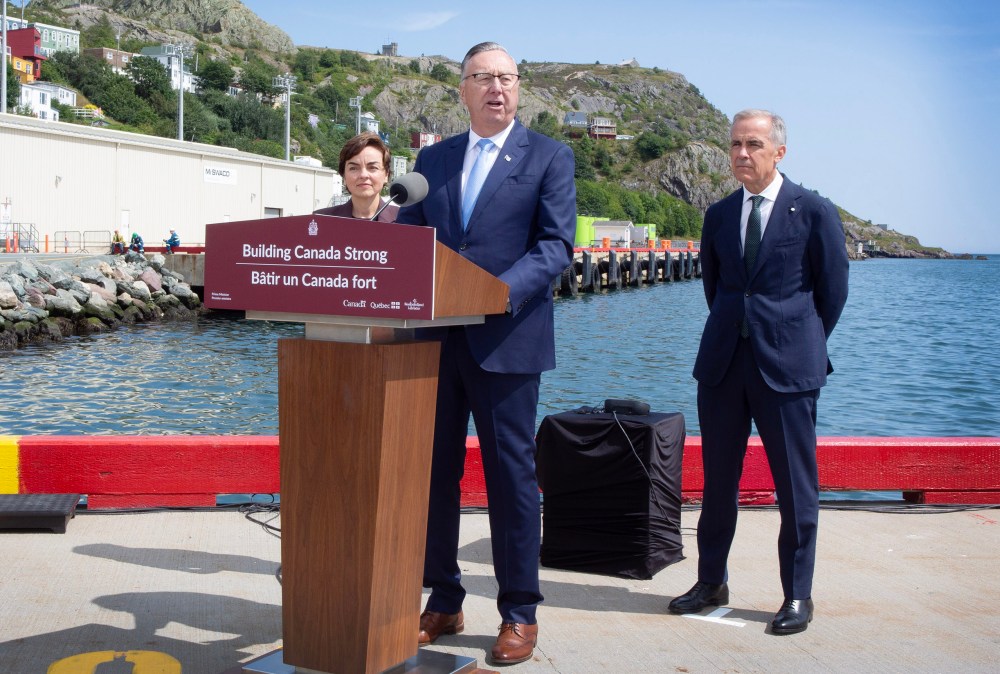
Newfoundland and Labrador Premier Tony Wakeham unveiled the framework agreement last month alongside Quebec Premier Christine Fréchette and Prime Minister Mark Carney. The deal outlines plans for more than $50 billion worth of hydro and wind energy developments along the Churchill River, which cuts through south-central Labrador.
Carney touted it as “the largest clean energy investment in North American history” and his government has promised $10 billion in financing to help it along.
The deal could also end decades of hard feelings toward Quebec in Canada’s easternmost province, if it goes ahead.
Provincial utilities in Quebec and Newfoundland and Labrador co-own and operate the 5,428-megawatt Churchill Falls hydroelectric plant according to a contract first signed in 1969, which gives Hydro-Québec the lion’s share of the energy from the facility for just a fraction of a cent per kilowatt hour.
Many in Newfoundland and Labrador have long felt cheated as Hydro-Québec made tidy profits selling the majority of the power for much higher market rates.
The new agreement would end the 1969 arrangement 15 years early and set higher, escalating rates for Churchill Falls energy.
However, the Liberals have repeatedly questioned the rate scheme, saying it should be based on market prices, rather than the consumer price index.
Liberal Leader John Hogan has said the pricing strategy could once again keep Churchill Fates rates far below market value and leave the province regretting the agreement 50 years in the future, just as it regrets the 1969 contract now.

He told reporters early Thursday afternoon that he knew of six Liberals planning to vote against the proposal.
The Liberals first hammered out a draft deal with Hydro-Québec in 2024, before the Progressive Conservatives were elected. Wakeham sent negotiators back to Hydro-Québec to ask for different terms.
If Thursday’s vote approves the framework deal, final agreements could be struck by the end of year. The proposal expires March 31, 2027 if no final deals are signed.
The Progressive Conservatives hold half of the 40 seats in the legislature, while the Liberals hold 15 and the NDP have two. There are also three Independent members, one of whom is the Speaker, who only votes in the event of a tie.
This report by The Canadian Press was first published Sept. 16, 2026.