

PQ attacked over federal transfers in economy debate
Advertisement
Read this article for free:
or
Already have an account? Log in here »
To continue reading, please subscribe:

Digital Subscription
One year of digital access for only $205*
- Enjoy unlimited reading on winnipegfreepress.com
- Read the E-Edition, our digital replica newspaper
- Access News Break, our award-winning app
- Play interactive puzzles
*First annual payment billed as $205.00 + GST for one year. This annual subscription will automatically renew at $233.00 + GST every 52 weeks (10% off the regular annual price of $259.35). Offer available to new and qualified returning subscribers only. Cancel any time.
To continue reading, please subscribe:
Add Free Press access to your Brandon Sun subscription for only an additional
$1 for the first 4 weeks*
- Enjoy unlimited reading on winnipegfreepress.com
- Read the E-Edition, our digital replica newspaper
- Access News Break, our award-winning app
- Play interactive puzzles
*Your next Brandon Sun subscription payment will increase by $1.00 and you will be charged $17.95 plus GST for four weeks. After four weeks, your payment will increase to $24.95 plus GST every four weeks.
Read unlimited articles for free today:
or
Already have an account? Log in here »
MONTREAL – The Parti Québécois was attacked for relying on federal transfers in its fiscal plan during an economy debate Thursday evening.
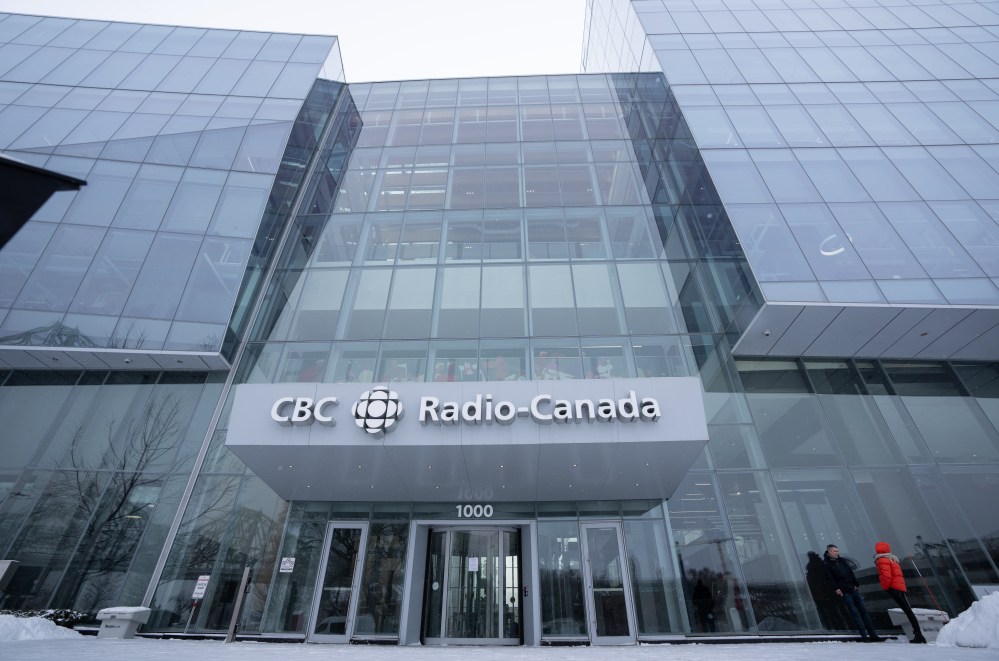
Candidates from Quebec’s five main parties sparred over their visions for the province’s economy on Radio-Canada’s airwaves. The party leaders, who faced off in two debates earlier this week, did not participate.
PQ candidate Alain Therrien had to defend his party’s plan to rely on increasing federal transfers to fund electoral promises. His opponents questioned how the party would fund its economy if the PQ’s promised sovereignty referendum was successful.
“For a sovereigntist party, he makes up $4.4 billion that suddenly appears, as if by magic, from Ottawa,” said Conservative candidate Adrien Pouliot.
Therrien pushed back, saying his party relied on numbers provided by the auditor general, who wrote in her pre-electoral report that she expects federal transfers to increase over the next three years.
Other parties, including the Coalition Avenir Québec, included similar numbers in their fiscal plans.
But Coalition Avenir Québec candidate Eric Girard cited a study out of the University of Calgary showing Alberta’s economy would take a major hit if it were to separate.
“Where is your sovereignty when it comes to the financial framework?” he quipped.
Host Gérald Fillion had to cut the candidates’ mics as they got heated over the issue.
Over an hour, Fillion grilled the candidates on their plans to tackle American tariffs, the cost of living, energy and public finances.
On the topic of tariffs, he asked candidates if they supported increasing taxes on energy for Americans, to which Québec solidaire candidate Gabriel Laurence-Brook readily agreed. Coalition Avenir Québec Leader Christine Fréchette has also said she wouldn’t rule it out.
The other parties showed more caution, with Liberal candidate Michel Leblanc saying Quebec needs to stay cool-headed and evaluate its options, like alliances with Europe.
Government spending was the major theme of the debate.
Quebec’s Balanced Budget Act requires the deficit to be eliminated by 2029-30, and auditor general Christine Roy has warned that serious belt-tightening would be needed to meet that goal. She projected at least $2 billion in cuts starting next year and up to $5 billion the following year.
“Raise your hand if you support austerity measures,” Fillion asked his guests.
None of the candidates raised their hands, with Therrien and Pouliot insisting their parties are proposing “rigorous” management of public finances.
Laurence-Brook said his party is the only one not proposing to slash public services.
The Conservatives are promising “historic tax cuts” and major reductions in government spending. The Liberals and the PQ also said they would slow government spending and both promised to cut into public service positions.
“I can’t believe I’m hearing the other parties promise us yet another round of austerity measures,” said Laurence-Brook. “That’s not the right thing to do, we need to maintain revenue streams.”
His party is proposing a tax on the ultra-rich, saying it would generate $5 billion in government revenue. He added that Quebecers need robust services in times of economic uncertainty.
Girard was on the defensive as he was accused of mishandling public finances while economy minister. He pushed back, saying his government had to spend to weather the COVID-19 pandemic. He stressed that Quebec lowered its debt under the Coalition Avenir Québec.
His government was mired in scandals in recent years, from major investments into failing companies like electric battery plant Northvolt to cost overruns on the auto board’s digital platform, SAAQClic.
The candidates also got animated debating whether Quebec should consider fracking for shale gas to boost its revenues and gain independence from the American market.
The Conservative party wants to rely on fossil fuels to fund Quebec’s economy, and Fréchette has hinted she could be open to the idea. However, Girard refused to answer whether he was in favour of fracking during the debate.
Québec solidaire, the Liberals and the PQ have firmly opposed fracking for shale gas.

“The best way to divide Quebecers is by telling them we’re going to frack in their backyards and propose a referendum,” said Leblanc.
Leblanc said a Liberal government would instead leverage Quebec’s mines and critical minerals.
The five party leaders will face off in a final televised debate with Radio-Canada anchor Patrice Roy on Sept. 23.
Quebecers head to the polls on Oct. 5.
This report by The Canadian Press was first published Sept. 17, 2026.