

Federal Reserve official says fighting inflation likely to be ‘painful’
Advertisement
Read this article for free:
or
Already have an account? Log in here »
To continue reading, please subscribe:

Digital Subscription
One year of digital access for only $205*
- Enjoy unlimited reading on winnipegfreepress.com
- Read the E-Edition, our digital replica newspaper
- Access News Break, our award-winning app
- Play interactive puzzles
*First annual payment billed as $205.00 + GST for one year. This annual subscription will automatically renew at $233.00 + GST every 52 weeks (10% off the regular annual price of $259.35). Offer available to new and qualified returning subscribers only. Cancel any time.
To continue reading, please subscribe:
Add Free Press access to your Brandon Sun subscription for only an additional
$1 for the first 4 weeks*
- Enjoy unlimited reading on winnipegfreepress.com
- Read the E-Edition, our digital replica newspaper
- Access News Break, our award-winning app
- Play interactive puzzles
*Your next Brandon Sun subscription payment will increase by $1.00 and you will be charged $17.95 plus GST for four weeks. After four weeks, your payment will increase to $24.95 plus GST every four weeks.
Read unlimited articles for free today:
or
Already have an account? Log in here »
WASHINGTON (AP) — A top Federal Reserve official said Monday that the central bank may have to cause economic pain in the form of higher unemployment to combat stubbornly high inflation.
Austan Goolsbee, president of the Federal Reserve Bank of Chicago, said in a speech in London that the Fed is facing a series of persistent supply shocks that have driven up inflation, including higher oil prices from the Iran war and tariffs. Typically, Goolsbee noted, the central bank would essentially wait for such shocks to fade and inflation to fall on its own rather than raise borrowing costs.
But faced with an ongoing series of persistent supply shocks, the Fed now has little choice but to hike rates, Goolsbee said. The increases are needed to lower consumer and business demand to a level consistent with reduced supply, he added, which should bring inflation back to the Fed’s 2% target.
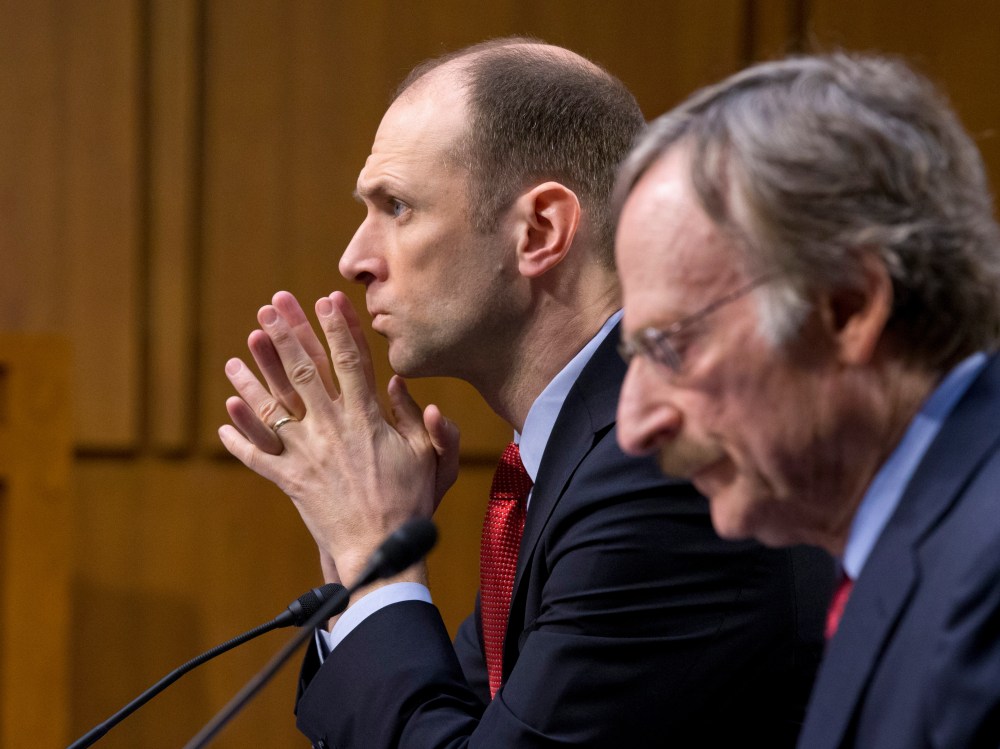
“The only way to bring inflation down is to raise rates and narrow the gap between supply and demand,” he said in a written copy of his remarks. “Forcing inflation back to target in the short run means pushing employment below target. … In the short run, supply shocks force a difficult trade-off” between the Fed’s goals of low inflation and maximum employment.
“It’s going to be painful,” Goolsbee said in later remarks to reporters. “It would necessarily be painful.”
Goolsbee’s comments contradict Fed Chairman Kevin Warsh’s remarks last Wednesday at a news conference that took place after the Fed lifted its key interest rate for the first time in three years to about 3.9%.
“I don’t believe that we need to do harm to the labor markets to achieve our objective,” Warsh said last week.

The Fed generally fights inflation by raising interest rates to cool borrowing and spending. Historically, such rate hikes have often slowed growth and have even led to recessions.
Yet in 2022-2023, the Fed sharply raised interest rates and inflation did decline, without a significant rise in unemployment or economic slowdown.