

US futures climb as oil prices drop and investors await expected Trump-Xi meeting
Advertisement
Read this article for free:
or
Already have an account? Log in here »
To continue reading, please subscribe:

Digital Subscription
One year of digital access for only $205*
- Enjoy unlimited reading on winnipegfreepress.com
- Read the E-Edition, our digital replica newspaper
- Access News Break, our award-winning app
- Play interactive puzzles
*First annual payment billed as $205.00 + GST for one year. This annual subscription will automatically renew at $233.00 + GST every 52 weeks (10% off the regular annual price of $259.35). Offer available to new and qualified returning subscribers only. Cancel any time.
To continue reading, please subscribe:
Add Free Press access to your Brandon Sun subscription for only an additional
$1 for the first 4 weeks*
- Enjoy unlimited reading on winnipegfreepress.com
- Read the E-Edition, our digital replica newspaper
- Access News Break, our award-winning app
- Play interactive puzzles
*Your next Brandon Sun subscription payment will increase by $1.00 and you will be charged $17.95 plus GST for four weeks. After four weeks, your payment will increase to $24.95 plus GST every four weeks.
Read unlimited articles for free today:
or
Already have an account? Log in here »
U.S. futures are climbing as oil prices decline and investors await an expected meeting between U.S. President Donald Trump and Chinese leader Xi Jinping this week in Washington, which could cover trade, artificial intelligence and geopolitics.
Futures for the S&P 500 gained 0.7% on Monday, while those for the Dow Jones Industrial Average rose 0.8%. Nasdaq futures climbed 1.1%.
Oil prices fell more than 3% Monday as vessel traffic and energy flows through the Strait of Hormuz picked up, although the Strait has remained largely closed and uncertainty persisted over U.S.-Iran tensions. Saudi Arabia on Saturday confirmed that Yemen’s Houthi rebels tried to attack its capital with a ballistic missile, the first targeting of Riyadh since the escalation in fighting with the Tehran-backed rebels that has opened a new front in the Iran war.
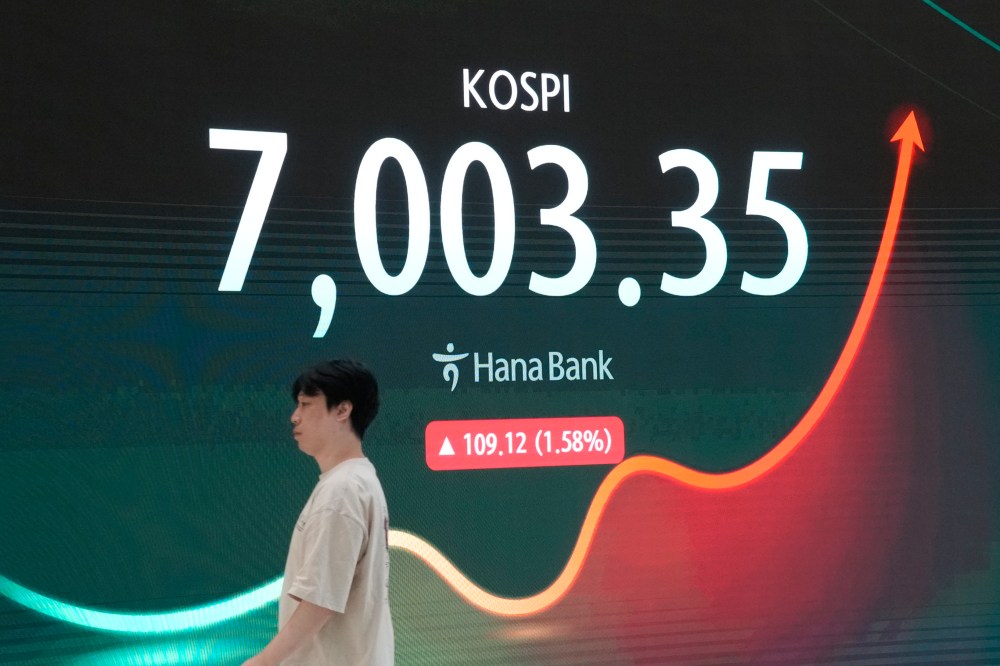
Brent crude, the international standard, fell 3.2% to $100.50 per barrel. It was at roughly $72 a barrel in late February, before the start of the war in Iran. Oil prices shot past $100 a barrel earlier in the month. It was the first time prices had reached triple digits since July.
Benchmark U.S. crude lost 3.2% to $92.98 per barrel.
Oil supply concerns remain elevated, ING commodities strategists Ewa Manthey and Warren Patterson wrote in a commentary on Monday. However, they said profit-taking by investors after the recent jump in oil prices, together with hopes for constructive discussions at this week’s U.N. General Assembly and at the Trump-Xi meeting, helped improve market sentiment.
Treasury Secretary Scott Bessent told reporters following talks Sunday with Chinese Vice Premier He Lifeng in New York that the U.S. had “a very successful engagement” with the Chinese side.
Bessent said talks with China touched on trade and AI. China and the United States have been discussing reciprocal tariff reductions on $30 billion worth of goods from each side.
In Beijing, China’s Foreign Ministry on Monday confirmed that Xi will pay a state visit to the U.S. between Sept. 23 and 25. Experts and policymakers believe trade, tariffs, AI safety, among other items, are likely to be on the agenda. The war in Iran and developments in the Middle East and ties between China and Iran could also be discussed.

Investors are also watching the bond market as the yield on the U.S. 10-year Treasury hit 5% and the Federal Reserve last week decided to raise rates for the first time in three years. The yield on the U.S. 10-year Treasury was at around 4.96% on Monday. The Bank of Japan last week also raised rates to a 31-year high.
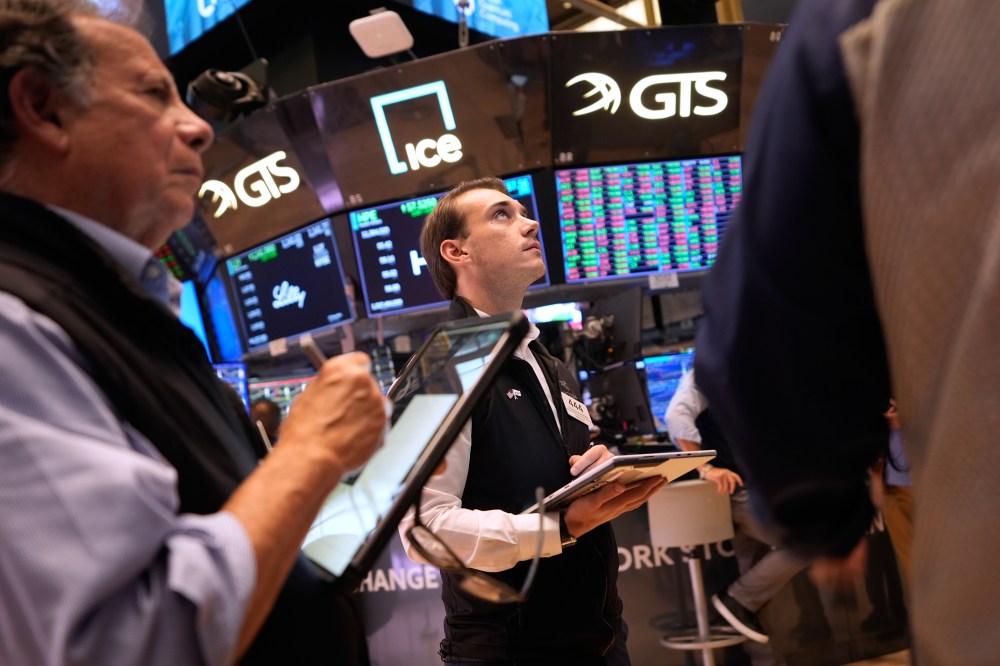
Government bond yields have been elevated since the war also because of growing inflationary pressure from the war-driven energy shock as well as concerns about rising U.S. national debt.
In Europe, Britain’s FTSE 100 added 1% to 10,761.35. France’s CAC 40 rose 1% to 8,142.14. Germany’s DAX was up 1.1% to 25,591.79.
Markets in Japan were closed Monday and will remain closed through Wednesday for holidays.
The U.S. dollar rose to 157.27 Japanese yen from 156.81 yen. The euro was trading at $1.1481, down from $1.1483.