

Ottawa opens up 15% Trans Mountain equity stake to Indigenous groups on pipeline path
Advertisement
Read this article for free:
or
Already have an account? Log in here »
To continue reading, please subscribe:

Digital Subscription
One year of digital access for only $205*
- Enjoy unlimited reading on winnipegfreepress.com
- Read the E-Edition, our digital replica newspaper
- Access News Break, our award-winning app
- Play interactive puzzles
*First annual payment billed as $205.00 + GST for one year. This annual subscription will automatically renew at $233.00 + GST every 52 weeks (10% off the regular annual price of $259.35). Offer available to new and qualified returning subscribers only. Cancel any time.
To continue reading, please subscribe:
Add Free Press access to your Brandon Sun subscription for only an additional
$1 for the first 4 weeks*
- Enjoy unlimited reading on winnipegfreepress.com
- Read the E-Edition, our digital replica newspaper
- Access News Break, our award-winning app
- Play interactive puzzles
*Your next Brandon Sun subscription payment will increase by $1.00 and you will be charged $17.95 plus GST for four weeks. After four weeks, your payment will increase to $24.95 plus GST every four weeks.
Read unlimited articles for free today:
or
Already have an account? Log in here »
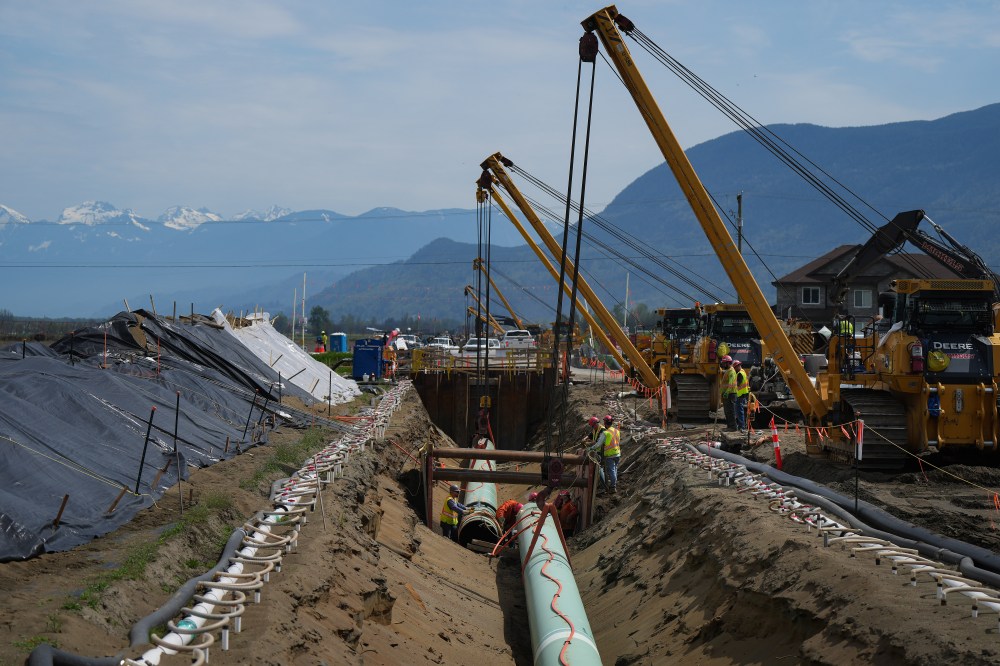
OTTAWA – The Canadian government has offered Indigenous groups a collective 15 per cent ownership stake in the Trans Mountain pipeline, advancing a long-promised plan to give First Nations equity in the federally owned infrastructure connecting Alberta crude to a Vancouver-area export terminal.
In a letter to a First Nation along the pipeline’s path seen by The Canadian Press on Tuesday, a Department of Finance official said the equity investment would be equally distributed among participating groups “through a low-cost government-provided loan.”
The Trans Mountain equity offer follows consultations and discussions with 129 First Nations, said John Fragos, spokesperson for Finance Minister François-Philippe Champagne.
Ottawa is now gauging interest among the Indigenous nations before determining the finer details, including the size of individual stakes and the terms for buying in, he said.
“The government’s position on economic reconciliation is long-standing and clear: Indigenous communities must be able to participate in and directly benefit from the projects shaping Canada,” Fragos said in a statement.
He added that each Indigenous nation that invests in Trans Mountain is set to receive $2.5 million, intended to compensate for revenue they might have earned had Indigenous ownership been put in place years earlier.
“We’re making up for lost time,” he said in a followup call.
Meanwhile, the letter said Ottawa will provide eligible groups with up to $100,000 for participation costs, while separately covering independent advisers to assist with due diligence.
Details of the offer will be shared during a series of in-person meetings in Vancouver, Victoria, Kamloops and Edmonton planned for late October, the letter added.
Ottawa bought the existing Trans Mountain pipeline, its expansion project and related assets for $4.5 billion in 2018 after Kinder Morgan investors raised concerns that regulatory uncertainty made the investment too risky.
It later committed to exploring Indigenous economic participation in the expansion with the 129 Indigenous communities potentially affected by the project.

The expansion began operations in 2024 and increased the Trans Mountain system’s capacity to about 890,000 barrels per day from roughly 300,000 barrels per day.
Finance documents released that year said Ottawa planned to provide Indigenous groups with access to capital to acquire a stake in Trans Mountain.
The documents said the Indigenous stake could be held collectively through a special-purpose vehicle, giving participating groups governance rights and a share of cash generated by the pipeline.
Until now, however, the government had not publicly specified the size of the ownership stake it was prepared to make available.
This report by The Canadian Press was first published Sept. 22, 2026.