

Labour law changes would bring ‘sunlight’ to collective bargaining: jobs minister
Advertisement
Read this article for free:
or
Already have an account? Log in here »
To continue reading, please subscribe:

Digital Subscription
One year of digital access for only $205*
- Enjoy unlimited reading on winnipegfreepress.com
- Read the E-Edition, our digital replica newspaper
- Access News Break, our award-winning app
- Play interactive puzzles
*First annual payment billed as $205.00 + GST for one year. This annual subscription will automatically renew at $233.00 + GST every 52 weeks (10% off the regular annual price of $259.35). Offer available to new and qualified returning subscribers only. Cancel any time.
To continue reading, please subscribe:
Add Free Press access to your Brandon Sun subscription for only an additional
$1 for the first 4 weeks*
- Enjoy unlimited reading on winnipegfreepress.com
- Read the E-Edition, our digital replica newspaper
- Access News Break, our award-winning app
- Play interactive puzzles
*Your next Brandon Sun subscription payment will increase by $1.00 and you will be charged $17.95 plus GST for four weeks. After four weeks, your payment will increase to $24.95 plus GST every four weeks.
Read unlimited articles for free today:
or
Already have an account? Log in here »
OTTAWA – Jobs Minister Patty Hajdu says the Liberals’ proposed changes to the Canada Labour Code would bring some much-needed “sunlight” to collective bargaining in federally regulated sectors.
Hajdu said in an interview that one of the most consequential parts of the sweeping economic legislation tabled Monday looks to give the public a better sense of what’s happening when negotiations turn sour.
The Liberals are proposing to install a special mediator who would document both sides’ arguments and publish a report to identify where the sticking points are in a labour dispute before talks break down. It’s a tool the government sees being used in cases where unions and employers have a history of acrimony.
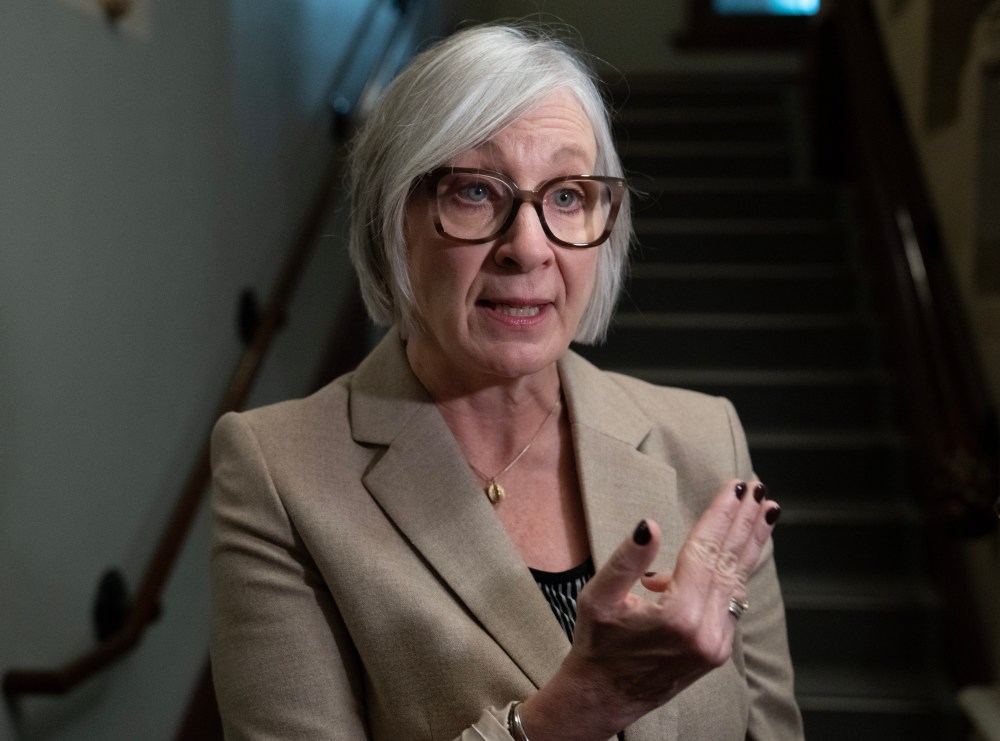
“To me, that’s one of the biggest, most powerful tools we’re introducing, is sunlight, a glimpse into that table of a high-conflict, highly stuck relationship,” Hajdu said.
The minister said there are times in negotiations when employers or unions refuse to bargain in good faith and instead wait for the government to intervene.
She said making that report public would help place the responsibility for reaching a deal back on the parties and reduce the need for the government to get involved.
“It’ll be clear to Canadians that the bargaining has broken down, and why. There’ll be more transparency on that,” Hajdu said.
“Hopefully this sharpens both employers’ minds and unions’ minds to the task at hand, which is to really, really get that deal.”
If passed, C-39 would require the jobs minister to consider the special mediator’s report before triggering Section 107 of the labour code, which allows the minister to intervene in a work stoppage and possibly order it to end. The minister must also conclude that the labour disruption is adversely affecting the “national interest” before taking that extraordinary step.
Labour leaders have come out strongly this week against those changes in the bill, arguing they would interfere with the right to strike.
Adam King, assistant professor in the labour studies program at the University of Manitoba, agrees with union leaders that the proposed changes to Section 107 would weaken workers’ collective bargaining rights.
He also said he sees little benefit in the special mediator’s assessment of negotiations.

The federal government used an approach similar to the special mediator’s report during the recent Canada Post bargaining saga. After the government triggered Section 107 to end postal workers’ holiday season strike in 2024, Ottawa commissioned longtime mediator William Kaplan to publish a report on where the parties stood and the barriers to getting a deal.
But King said that report only served to reinforce management’s narrative at the bargaining table and laid the groundwork for further cuts at Canada Post.
Because employers can request the installation of a special mediator under the proposed legislation, King argued the role will mark the first steps toward resolving a dispute with binding arbitration.
“I see it really as part of the process of making it easier for the minister to impose arbitration in situations where workers and employers are either at an impasse or in a particularly contentious round of negotiations,” he said.
This report by The Canadian Press was first published Sept. 22, 2026.