

US will make up to $7 billion in loans to help Trump ally Milei tap Argentina’s oil and minerals
Advertisement
Read this article for free:
or
Already have an account? Log in here »
To continue reading, please subscribe:

Digital Subscription
One year of digital access for only $205*
- Enjoy unlimited reading on winnipegfreepress.com
- Read the E-Edition, our digital replica newspaper
- Access News Break, our award-winning app
- Play interactive puzzles
*First annual payment billed as $205.00 + GST for one year. This annual subscription will automatically renew at $233.00 + GST every 52 weeks (10% off the regular annual price of $259.35). Offer available to new and qualified returning subscribers only. Cancel any time.
To continue reading, please subscribe:
Add Free Press access to your Brandon Sun subscription for only an additional
$1 for the first 4 weeks*
- Enjoy unlimited reading on winnipegfreepress.com
- Read the E-Edition, our digital replica newspaper
- Access News Break, our award-winning app
- Play interactive puzzles
*Your next Brandon Sun subscription payment will increase by $1.00 and you will be charged $17.95 plus GST for four weeks. After four weeks, your payment will increase to $24.95 plus GST every four weeks.
Read unlimited articles for free today:
or
Already have an account? Log in here »
BUENOS AIRES, Argentina (AP) — The Trump administration said Wednesday it would set aside $7 billion for loans to support energy, mining and infrastructure projects in Argentina, its latest move to secure energy and critical minerals closer to home and back the South American country’s libertarian president.
The U.S. Export-Import Bank, a federal agency, would make up to $7 billion available through 2027 for projects in Argentina, the State Department said, helping companies in the country obtain loans to buy American equipment and hire U.S. firms to expand the country’s railways, pipelines, ports and power networks.
The deal advances U.S. President Donald Trump’s effort to reduce reliance on China’s mineral processing industry, as well as bolstering his ally President Javier Milei, who is betting on oil, gas and mineral exports to transform Argentina’s economy and ease the chronic dollar shortages that have fueled repeated economic crises.
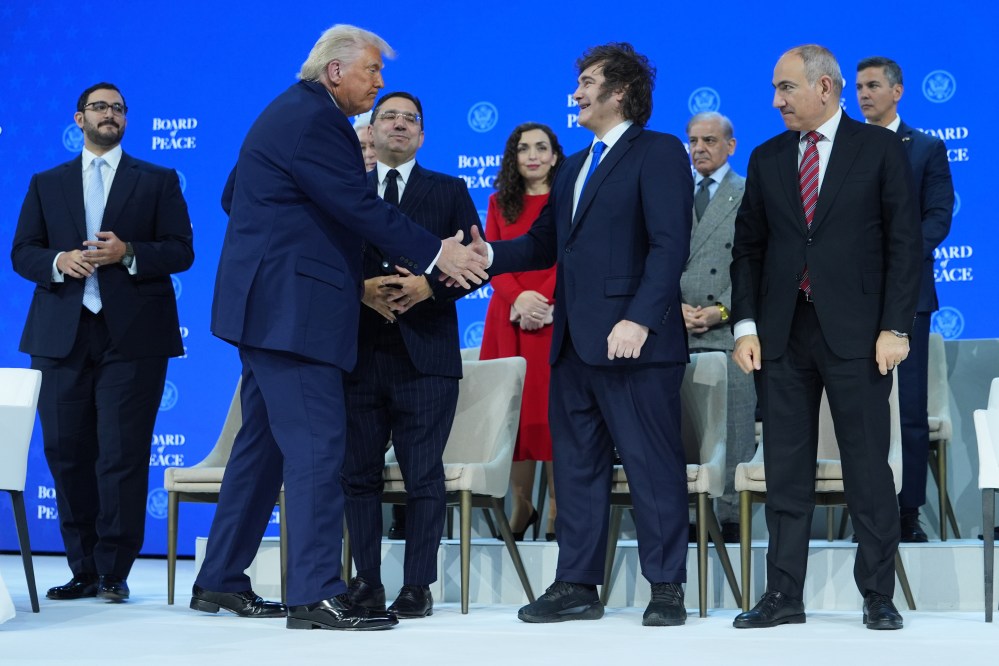
“Working together, the United States and Argentina seek to continue to build on our robust relationship through increased U.S. investment, close security cooperation and aligned values,” the State Department said in a statement.
The relationship has already paid dividends for Milei’s Argentina: Last year, Washington backed a $20 billion International Monetary Fund bailout for Argentina and extended a separate $20 billion currency-swap line to stabilize the Argentine peso. The countries also signed a free trade pact earlier this year.
On the sidelines of the U.N. General Assembly in New York, U.S. Deputy Secretary of State Christopher Landau and Argentine Foreign Minister Pablo Quirno said on Wednesday that the agreement aims to connect Argentina’s lithium- and copper-rich northwest and sprawling Vaca Muerta shale fields to the country’s ports, making it easier to ship minerals, oil and gas to the U.S. and other markets.
Inadequate transport and energy infrastructure has long hampered development of Argentina’s remote deposits. The country’s history of protectionist trade policies, currency controls and sovereign debt defaults has also discouraged foreign investment.

Milei, a fierce believer in free markets, has moved to open Argentina’s economy, scrapping import restrictions and offering tax breaks to attract investors. That has led to a surge in cheap imports, squeezing labor-intensive industries like manufacturing and retail already struggling under Milei’s spending cuts and tight monetary policy. Booming oil production and mining exports have become an economic lifeline.
The country has vast deposits of lithium and copper, minerals that are necessary for the global shift toward green energy.