

Workforce challenges persist for Ontario’s manufacturing sector: industry group
Advertisement
Read this article for free:
or
Already have an account? Log in here »
To continue reading, please subscribe:

Digital Subscription
One year of digital access for only $205*
- Enjoy unlimited reading on winnipegfreepress.com
- Read the E-Edition, our digital replica newspaper
- Access News Break, our award-winning app
- Play interactive puzzles
*First annual payment billed as $205.00 + GST for one year. This annual subscription will automatically renew at $233.00 + GST every 52 weeks (10% off the regular annual price of $259.35). Offer available to new and qualified returning subscribers only. Cancel any time.
To continue reading, please subscribe:
Add Free Press access to your Brandon Sun subscription for only an additional
$1 for the first 4 weeks*
- Enjoy unlimited reading on winnipegfreepress.com
- Read the E-Edition, our digital replica newspaper
- Access News Break, our award-winning app
- Play interactive puzzles
*Your next Brandon Sun subscription payment will increase by $1.00 and you will be charged $17.95 plus GST for four weeks. After four weeks, your payment will increase to $24.95 plus GST every four weeks.
Read unlimited articles for free today:
or
Already have an account? Log in here »
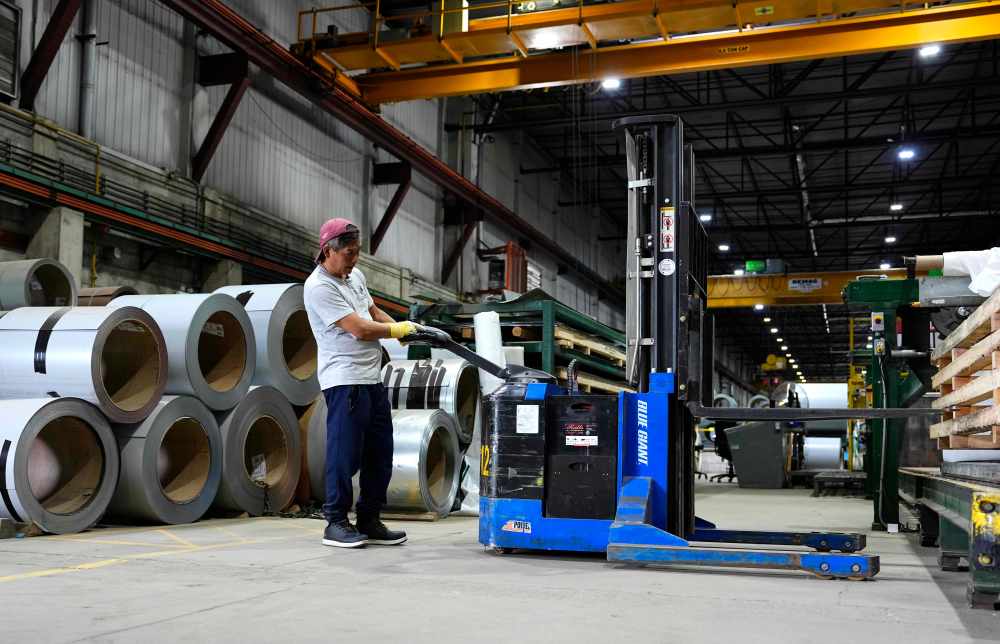
A new report from the industry association representing Canadian manufacturers says workforce challenges persist in the country’s largest province, even as job vacancies are on the decline.
The findings published by Canadian Manufacturers and Exporters say Ontario manufacturers are facing shortages in key skilled trades as apprenticeship pathways aren’t keeping pace with modern manufacturing.
The report, which reflects roundtable discussions the association held with manufacturers and educators across the province, pointed to a “weak alignment” between education and industry needs. It said that small and medium-sized manufacturers have limited capacity to absorb these challenges.
“Manufacturers are still struggling to find people that they need with the kind of skills they need,” said the group’s president and CEO Dennis Darby.
“This really means that we’ve got to do better to match the demand with how we train and educate and prioritize skilled trades.”
Darby said that gap is broad-based across the skilled trades.
“It’s everything from welders to mechatronics to electrical technicians. It’s right across the board,” he said in an interview.
“One of the things we’re trying to help evolve is trying to get better linkages between educational institutions and manufacturers and … doing more to really make that connection earlier.”
The report said stakeholders widely expressed that while labour market conditions may be changing, manufacturers still face structural workforce challenges. That’s despite a sharp decline in the province’s manufacturing job vacancy rate, which fell from 4.7 per cent in 2022 to 1.7 per cent at the end of last year — the lowest rate in more than a decade.
Darby attributed that downward trend to the trade war between Canada and the United States, as temporary layoffs of manufacturing workers have narrowed the job gap for now. He said roughly 50,000 jobs — mostly related to steel, aluminum, automotive and fabrication — have been hit by tariffs.
“But long term, we’re convinced and our members and companies are convinced, we have to fill that pipeline,” he said, noting around 20,000 workers in Ontario’s manufacturing sector are retiring per year.

It comes as the sector is facing additional pressure from Canada’s downward immigration trend.
“Canada has relied historically on skilled immigrants coming to Canada and with those reductions, temporarily that’s caused a real perturbation,” said Darby.
“We’ve heard that from the colleges as well, suddenly there’s not as many people and the pathways to citizenship are not as clear.”
The association said there needs to be more responsive immigration pathways that reflect employer needs, along with targeted government programs to help smaller manufacturers with succession planning.
This report by The Canadian Press was first published Sept. 23, 2026.