Lonely orphan wells landscape Province’s small oil, gas sector lists 31 ownerless sites — far cry from thousands in Alberta, Saskatchewan
Read this article for free:
or
Already have an account? Log in here »
To continue reading, please subscribe:

Digital Subscription
One year of digital access for only $205*
- Enjoy unlimited reading on winnipegfreepress.com
- Read the E-Edition, our digital replica newspaper
- Access News Break, our award-winning app
- Play interactive puzzles
*First annual payment billed as $205.00 + GST for one year. This annual subscription will automatically renew at $233.00 + GST every 52 weeks (10% off the regular annual price of $259.35). Offer available to new and qualified returning subscribers only. Cancel any time.
To continue reading, please subscribe:
Add Free Press access to your Brandon Sun subscription for only an additional
$1 for the first 4 weeks*
- Enjoy unlimited reading on winnipegfreepress.com
- Read the E-Edition, our digital replica newspaper
- Access News Break, our award-winning app
- Play interactive puzzles
*Your next Brandon Sun subscription payment will increase by $1.00 and you will be charged $17.95 plus GST for four weeks. After four weeks, your payment will increase to $24.95 plus GST every four weeks.
Read unlimited articles for free today:
or
Already have an account? Log in here »
As other western provinces struggle to address the environmental and economic fallout from an accumulation of thousands of orphan oil and gas wells, only a tiny portion of Manitoba’s petroleum infrastructure is sitting idle and unclaimed.
But it’s unclear if the province’s small roster of orphan wells is the byproduct of effective regulation — or an historic lack of departmental oversight.
Manitoba’s oil and gas industry is relatively small and generally opaque. None of the experts contacted for this story had direct knowledge of the province’s orphan well landscape.
TIM SMITH / Brandon Sun files
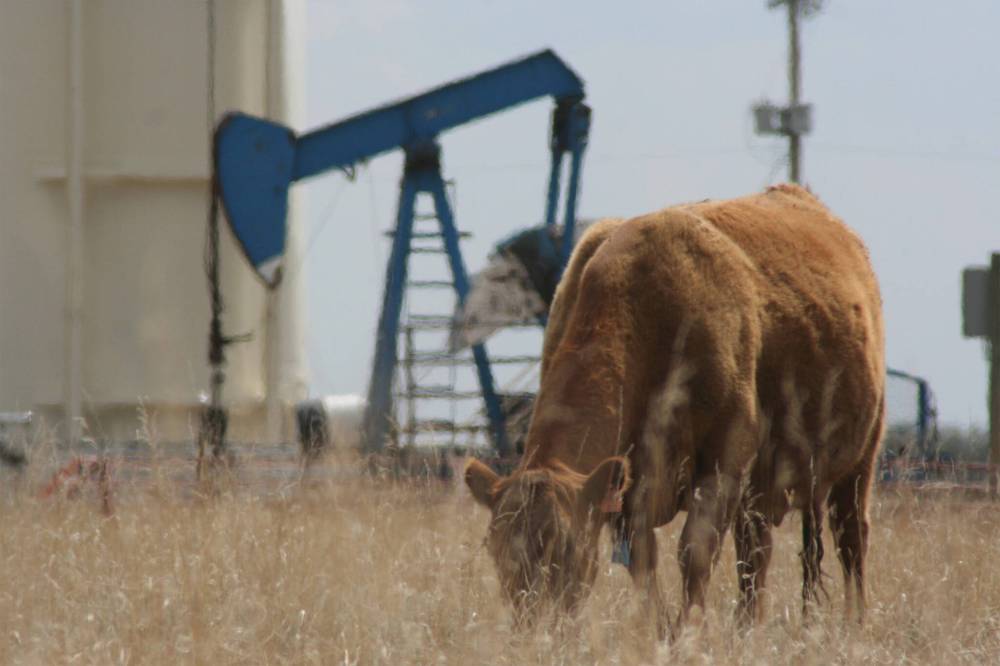
Pumpjacks at work in a farm field near Waskada. Manitoba has roughly 4,000 wells currently producing oil and has quadrupled (to four) its number of inspectors in recent years.
“My lab has probably measured the most non-producing wells in the country. I don’t think anybody I know is working on it (in Manitoba) who are in the academic realm,” says Mary Kang, an associate professor in civil engineering at McGill University in Montreal.
The province’s petroleum branch has only been compiling and sharing orphan well data for the past five years.
Its 2025 inventory lists 31 well sites without a legally or financially responsible owner, which makes up less than one per cent of the 4,000 wells currently producing oil in Manitoba.
The reasons for this are many: Manitoba’s oil and gas industry is smaller than other western provinces, allowing for regular inspections of batteries and most producing wells, according to an emailed statement from a provincial spokesperson.
But the intricacies of regulation also differ across the provinces. At the same time, the government body tasked with keeping tabs on the issue has been chronically understaffed.
Whether Manitoba offers a lesson for other provinces or if it should be eyeing the rapidly escalating orphan well inventories of its neighbours with caution remains to be seen.
Environmental impacts
Orphan wells are oil or gas drilling sites that have been left to languish without being properly cleaned up, often because the company that owns them has gone bankrupt.
Wells are often thousands of metres deep and these sites can leak methane, a potent and volatile greenhouse gas, and contaminate soil, air and groundwater.
A 2025 study co-authored by Kang suggests Canada’s non-producing oil and gas wells emit a combined 230 kilotonnes of methane per year — a figure seven times higher than Environment and Climate Change Canada’s estimates. Wells that have been properly sealed with cement and decommissioned are referred to as plugged or “abandoned.” Most orphaned wells are not yet plugged.
“In general, plugged wells emit less (methane) and are less of an environmental concern,” Kang says, adding unplugged wells are a bigger concern.
“But even among unplugged wells, some emit nothing and some emit a lot.”
‘Leaps and bounds’
Orphan wells are an issue that can expand quickly.
“The concern is that the inventory can grow in leaps and bounds from year to year; we just saw that happen here in Alberta,” says Amanda Bryant, manager of the oil and gas program at the Pembina Institute, an Alberta-based environmental think tank.
Alberta’s orphan well inventory ballooned to more than 7,300 sites this year after thousands of wells owned by an insolvent Calgary-based oil company were transferred to the province’s Orphan Well Association.
The association — a non-profit funded by industry — is responsible for decommissioning and cleaning up orphaned oil and gas sites. Alberta had fewer than 300 orphan wells when the organization was founded in 2002.
That exponential growth is due to poor provincial regulation, Bryant says.
“The main problem is that there’s nothing stopping companies from deferring the costs of closure and cleanup,” she says.
“The other half is the so-called liability dumping behaviour that a lot of companies engage in.”
The practice of liability dumping cited by Bryant has made insolvency a growing concern as larger companies sell off risky assets to smaller companies, which critics say happens with too little financial vetting from the regulator.
As in Manitoba, oil and gas companies in Alberta are legally required to clean up well sites that are no longer in use.
Yet, because the Alberta Energy Regulator provides no concrete timelines for closing unused wells, operators often leave the sites for years or decades to avoid paying clean-up costs.
If a company files for bankruptcy prior to remediation, that cost is passed on to the Orphan Well Association.
Taxpayers can be left footing some of the bill for closure costs — which carry an estimated $1.66-billion price tag — due the association’s lack of adequate funding, while also covering delinquent oil and gas companies’ unpaid oil and gas land rent and taxes owed to municipalities.
To address the issue, the Pembina Institute has recommended increasing the orphan well levy, enacting an escalating inactive well fee and introducing strict timelines for cleanup.
‘I don’t think anybody I know is working on it (in Manitoba) who are in the academic realm’
The situation is similar in Saskatchewan, which has nearly 4,500 orphan wells, and British Columbia, which has 998.
Unique regulatory environment
Manitoba’s oil and gas industry is an outlier in several ways.
For one, it has a comparatively small oil patch, which is concentrated in the southwest corner of the province and dominated by Tundra Oil & Gas — a locally owned subsidiary of Winnipeg-headquartered James Richardson & Sons Limited.
It also differs in provincial regulation.
Operators have to submit an application to suspend drilling at a well site to the petroleum branch. Suspensions are valid for a maximum of three years, after which the company needs to apply for an extension.
“What it means is that Manitoba has a much lower proportion of its wells that are in a suspended state,” Bryant says.
“If (wells) sit there in a state of inactivity for a long time … there’s a risk that they’ll end up orphans, and so that’s a positive policy move that the province has taken.”
Unlike other provinces, where insolvency is a driving force, most of Manitoba’s orphan wells are the result of petroleum branch seizures following non-compliance of shutdown orders or failure to meet regulatory requirements, a provincial spokesperson said.
If a seized well is capable of producing oil, the province can sell the facility or transfer the licence to a new owner, according to the province.
Nearly all of the companies with orphan wells are still actively drilling elsewhere in the oil patch.
Four inspectors now employed
Manitoba has been addressing orphan wells for many years, according to the province, but only released its first consolidated inventory in 2021, with an update posted publicly last year.
Of the 23 wells listed on the original inventory, all but six remained orphaned in 2025, according to a Free Press/Narwhal analysis of the publicly available records.
The others were removed from the list after their status was updated to abandoned in 2022.
The 2025 batch of 25 seized wells is largely due to improved staffing capacity, allowing the department to clear a backlog of investigations, the spokesperson said.
Manitoba currently has four provincial petroleum inspectors, up from the single inspector employed in early 2024, when a major Imperial Oil pipeline shutdown prompted the government to address gaps in its monitoring program.

Mya Wheeler, a Winnipeg-based social scientist and researcher whose PhD thesis focused on the local oil and gas industry, found staffing was a perennial problem that undermined departmental efforts to adhere to legislated regulations.
“As the ramping up of oil wells occurred, there was the same and then less staff, and there was a 600 per cent increase in drilling during the fracking boom,” she says.
“There’s not a lot of ability to make compliance happen because of low staffing.”
Eva Wasney covers environmental issues in Manitoba for The Narwhal in partnership with the Free Press
eva.wasney@winnipegfreepress.com

Eva Wasney covers environmental issues in Manitoba for The Narwhal in partnership with the Winnipeg Free Press. Read more about Eva.
Every piece of reporting Eva produces is reviewed by an editing team before it is posted online or published in print — part of the Free Press‘s tradition, since 1872, of producing reliable independent journalism. Read more about Free Press’s history and mandate, and learn how our newsroom operates.
Our newsroom depends on a growing audience of readers to power our journalism. If you are not a paid reader, please consider becoming a subscriber.
Our newsroom depends on its audience of readers to power our journalism. Thank you for your support.