

Happy email debt forgiveness day

Advertisement
Read this article for free:
or
Already have an account? Log in here »
To continue reading, please subscribe:

Digital Subscription
One year of digital access for only $205*
- Enjoy unlimited reading on winnipegfreepress.com
- Read the E-Edition, our digital replica newspaper
- Access News Break, our award-winning app
- Play interactive puzzles
*First annual payment billed as $205.00 + GST for one year. This annual subscription will automatically renew at $233.00 + GST every 52 weeks (10% off the regular annual price of $259.35). Offer available to new and qualified returning subscribers only. Cancel any time.
To continue reading, please subscribe:
Add Free Press access to your Brandon Sun subscription for only an additional
$1 for the first 4 weeks*
- Enjoy unlimited reading on winnipegfreepress.com
- Read the E-Edition, our digital replica newspaper
- Access News Break, our award-winning app
- Play interactive puzzles
*Your next Brandon Sun subscription payment will increase by $1.00 and you will be charged $17.95 plus GST for four weeks. After four weeks, your payment will increase to $24.95 plus GST every four weeks.
Read unlimited articles for free today:
or
Already have an account? Log in here »
There are few things more capable of producing an immediate feeling of guilt than opening your inbox and seeing an email you have not answered.
You know the one. It has been sitting there for three days or three months or perhaps long enough that responding now feels less like answering an email and more like reopening a historical case. You read it, think, “I really need to deal with that,” and then close it again.
The next week you see it, feel slightly worse and tell yourself you will answer it when you have more time. A month later, you are considering whether it would be less embarrassing to change your name and move to another province.
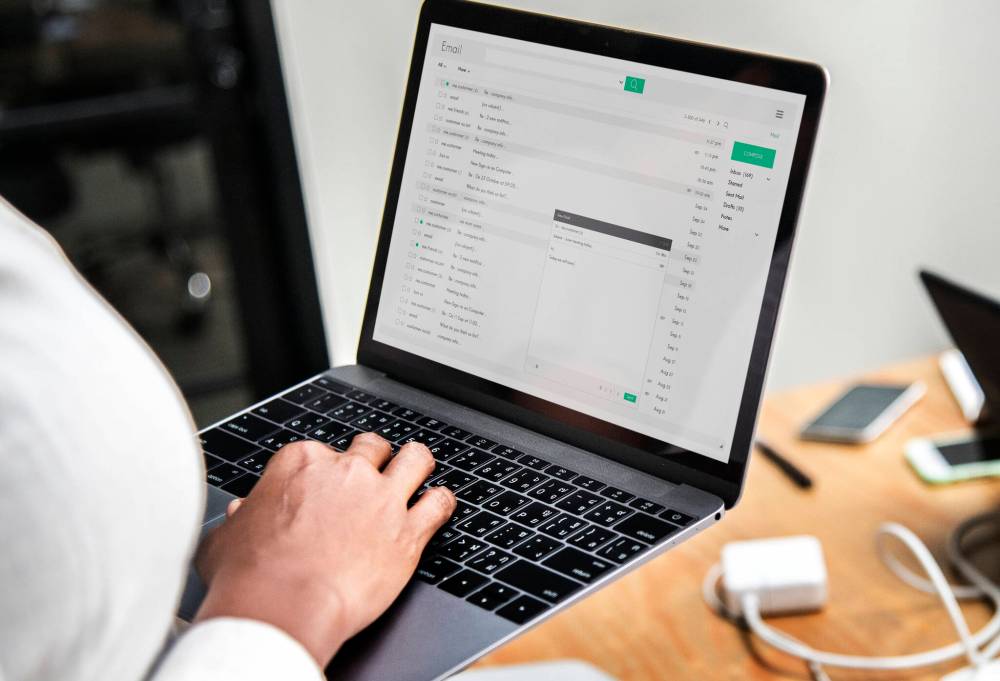
Fortunately, there is a solution: Sept. 30 is Email Debt Forgiveness Day, and I think it may be one of the most compassionate holidays we have invented.
The premise is wonderfully simple. If there is an email you have wanted to answer but have been too anxious, overwhelmed or embarrassed to send, Sept. 30 gives you permission to send the response without apologizing or explaining why it took so long.
It does not matter how much time has passed. You simply answer the email. No elaborate explanation. No paragraph beginning with “I am so sorry for the delay.” No attempt to reconstruct the events of the last six months that somehow prevented you from typing three sentences.
The idea came from Alex Goldman and P.J. Vogt, the hosts of the now-defunct podcast Reply All, which was devoted to the strange, funny and occasionally maddening ways the internet has become part of our lives. Goldman apparently understood the particular anxiety of an unanswered email very well, and the two created Email Debt Forgiveness Day in 2015. What began as a somewhat ridiculous podcast-created holiday became a genuine annual tradition for people who had accumulated a little too much email debt.
And, honestly, I love the idea.
There is something deeply comforting about the notion that somewhere along the way, two people looked at the collective anxiety caused by unanswered emails and decided what we really needed was a holiday granting us permission to just write back. I am a longtime fan of Reply All, so perhaps I am predisposed to think this is brilliant, but I also suspect Goldman and Vogt understood something many of us experience every day: an unanswered email can take up far more space in your brain than it takes up on your screen.
You may have 17 unread messages, but somehow it is always the one you have been avoiding that comes to mind while you are brushing your teeth, making dinner or trying to fall asleep.
The interesting thing is the email itself is often not even the problem. It is what we think the email represents. Perhaps someone is waiting for an answer we do not have. Maybe we need to say no to a request. Maybe we promised to send something and forgot. Maybe the answer requires some research or a difficult conversation. Sometimes, we simply do not know how to respond, so instead of sending a short message saying, “I need a little more time to look into this,” we send absolutely nothing.
And then the silence becomes its own problem.
The longer we leave an email unanswered, the more difficult it can feel to respond. We start believing the recipient must be annoyed. We imagine they have been sitting at their desk staring at their inbox, wondering why we have personally chosen to ignore them. In reality, there is a good chance they have moved on to their own collection of unanswered emails and have completely forgotten about ours.
This is one of the strange things about modern work. We have more ways to communicate than ever, yet we have also created an environment in which we feel that every message deserves an immediate and perfectly crafted response. Email has become both incredibly convenient and a source of enormous pressure.
There is nothing wrong with wanting to be responsive. In fact, being reliable and communicating well are important workplace skills. But responsiveness does not mean every email needs an immediate answer, nor does it mean that every delay requires a confession. Sometimes, the best response is simply the response you finally send.
Email Debt Forgiveness Day also raises an interesting workplace question about the expectations we create around email. If employees feel they have to answer everything immediately, they may spend their entire day reacting instead of actually doing their jobs. An inbox can become a very efficient way of avoiding the important work on your desk because every new message gives you something else to do.
This is where a little discipline can help. Rather than allowing email to dictate the entire day, some people find it helpful to set specific times for checking and responding to messages. Others use folders, flags or categories to distinguish between things that require immediate attention and things that can wait.
The perfect system is the one that works for you, but the important part is recognizing your inbox is a tool — it is not your boss.
It is also worth remembering email is not always the right communication method. If you have been exchanging increasingly complicated paragraphs with someone about a problem that could be solved with a five-minute conversation, perhaps it is time to pick up the phone. If a message involves emotion, conflict or something particularly sensitive, a conversation may be much more effective than trying to interpret someone’s tone from an email.
And perhaps most importantly, we need to give each other a little grace. People get busy. People go on vacation. People miss emails. People have difficult weeks. Sometimes, people see a message and genuinely intend to respond, only to have something else happen and completely forget. It happens to all of us.
On Sept. 30, I am suggesting we embrace Email Debt Forgiveness Day.
Go through your inbox and find the emails you have been avoiding. Pick one. Maybe pick five if you are feeling ambitious. Answer them. Do not spend 20 minutes writing an apology for taking too long to respond. You do not need to explain that you were overwhelmed, distracted, busy, travelling, dealing with other priorities or simply staring at the email every morning while hoping it would answer itself.
Just answer it.
There is something surprisingly freeing about realizing that you are allowed to start again. The recipient may not even remember how long it has been. They may be delighted simply to hear from you. And if they do wonder why it took so long, you can point them toward Email Debt Forgiveness Day and let them know that Sept. 30 has arrived to rescue both of you from the awkwardness.
Of course, there are some emails that should not wait.
If someone is waiting for information they need to do their job, a deadline is approaching or the matter is urgent, we should not need a special day to remind us to communicate. But for the emails that have somehow become emotionally enormous simply because we have left them sitting there, forgiveness seems like a pretty good idea.

Perhaps we should take the concept beyond Sept. 30, too. Imagine a workplace where people could say, “I missed this. I am sorry. Here is the answer,” without feeling they needed to write a novel explaining themselves. Imagine being able to send a late response without worrying that the delay has become so embarrassing that responding is now worse than continuing to ignore it.
Our inboxes are not going to become empty, but perhaps we can make our inboxes a little less stressful by letting go of the idea that every delayed response requires a dramatic apology.
So, on Sept. 30, open the email you have been avoiding. Take a breath. Type the response. Hit send. And then forgive yourself.
After all, it is Email Debt Forgiveness Day. I think we have all earned a little mercy from our inboxes.
Tory McNally, CPHR, BSc., vice-president, professional services at TIPI Legacy HR+ (formerly Legacy Bowes), is a human resource consultant, relationship builder and problem solver. She can be reached at tmcnally@tipipartners.com
Tory McNally, CPHR, BSc., vice-president, professional services at TIPI Legacy HR+ (formerly Legacy Bowes), is a human resource consultant, strategic thinker and problem solver. Read more about Tory.
Our newsroom depends on a growing audience of readers to power our journalism. If you are not a paid reader, please consider becoming a subscriber.
Our newsroom depends on its audience of readers to power our journalism. Thank you for your support.
Tory McNally, CPHR, BSc., vice-president, professional services at TIPI Legacy HR+ (formerly Legacy Bowes), is a human resource consultant, strategic thinker and problem solver. Read more about Tory.
Our newsroom depends on a growing audience of readers to power our journalism. If you are not a paid reader, please consider becoming a subscriber.
Our newsroom depends on its audience of readers to power our journalism. Thank you for your support.
Advertisement Advertise With Us
Advertisement Advertise With Us