

Carney gives Alberta pipeline special interest designation, to be called Pacific Link
Advertisement
Read this article for free:
or
Already have an account? Log in here »
To continue reading, please subscribe:

Digital Subscription
One year of digital access for only $205*
- Enjoy unlimited reading on winnipegfreepress.com
- Read the E-Edition, our digital replica newspaper
- Access News Break, our award-winning app
- Play interactive puzzles
*First annual payment billed as $205.00 + GST for one year. This annual subscription will automatically renew at $233.00 + GST every 52 weeks (10% off the regular annual price of $259.35). Offer available to new and qualified returning subscribers only. Cancel any time.
To continue reading, please subscribe:
Add Free Press access to your Brandon Sun subscription for only an additional
$1 for the first 4 weeks*
- Enjoy unlimited reading on winnipegfreepress.com
- Read the E-Edition, our digital replica newspaper
- Access News Break, our award-winning app
- Play interactive puzzles
*Your next Brandon Sun subscription payment will increase by $1.00 and you will be charged $17.95 plus GST for four weeks. After four weeks, your payment will increase to $24.95 plus GST every four weeks.
Read unlimited articles for free today:
or
Already have an account? Log in here »
FORT MCMURRAY – A pipeline to haul Alberta oil to tankers on the B.C. coast took a big step forward Thursday.
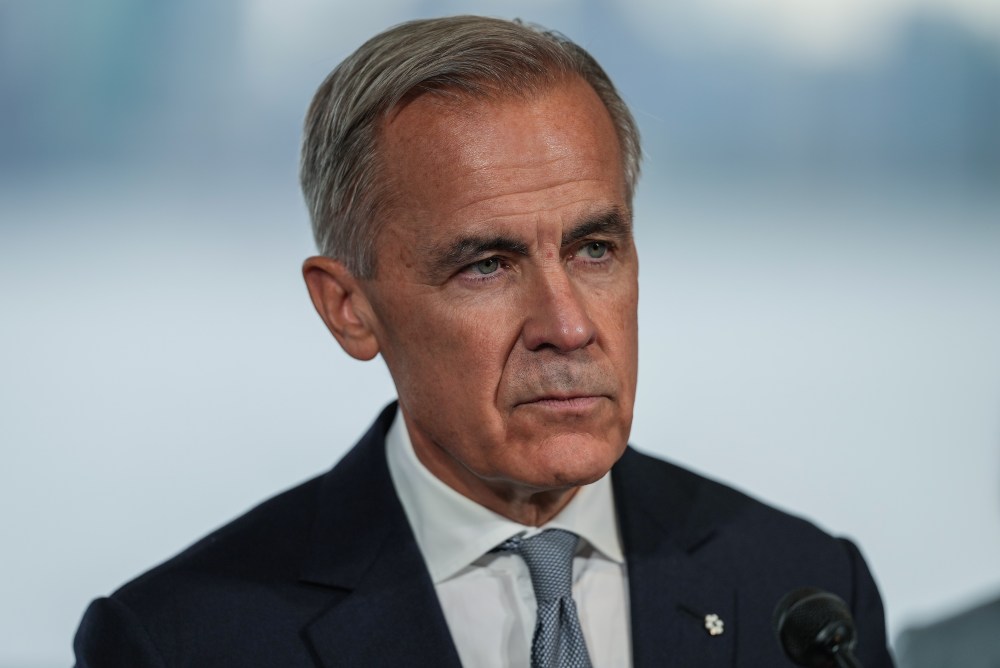
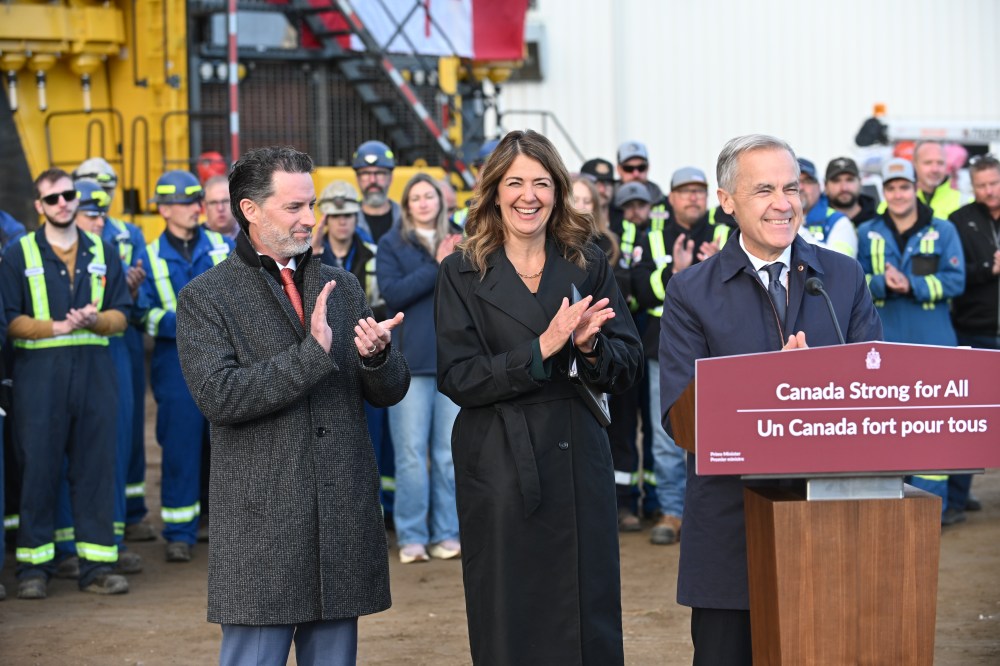
Prime Minster Mark Carney, with Alberta Premier Danielle Smith at his side, announced the line – to be known as Pacific Link — is the first project to receive national interest designation under the Building Canada Act.
The designation doesn’t mean the line is a done deal, but it streamlines and simplifies rules, timelines and oversight to help make it a reality.
The goal is to get consultations, environmental safeguards, financing and Indigenous partnerships completed by Sept. 1, 2027, to clear the way for construction to begin and ensure startup by 2032-33.
“This is an important day for Alberta and for Canada,” Carney announced in the oilsands hub of Fort McMurray.
“Canada is working.”
The project, estimated at between $35 billion and $44 billion, is to be split among Trans Mountain Corp., which is a federal Crown corporation, and the provincially owned Alberta Petroleum Marketing Commission.
Indigenous communities will be offered a minimum of 10 per cent ownership interest, financed through federal and province loan programs.
Calgary-based Pembina Pipeline Corporation is offering expertise to project development as a private sector investor, earning 10 per cent of profits through construction with the opportunity to take another 10 per cent once oil starts flowing.
The roughly 1,250-kilometre pipeline would carry upwards of one million barrels of crude oil per day from Bruderheim, Alta., to a port near Delta, B.C.
By opening up its oil markets to South Korea, China and Japan, the line is being laid out as a solution to Canada’s trade reliance on the United States, strained by a volatile trade war.
“A pipeline to the West Coast is part of our mission to transform our economy to double our non-U.S. exports over the next decade,” Carney said. The goal is “to unlock the full potential of Canada as a global energy superpower.”
“Today, 90 per cent of Alberta’s oil goes to the U.S.,” he said.
“Pacific Link will materially reduce that dependence by allowing us to export an additional one million barrels a day to growing markets in Asia.”
The line has also been cited by both Ottawa and Alberta as a symbol of the power of pan-Canadian co-operation, as the province heads towards its Oct. 19 referendum on separation.
The symbolism was written on the lectern from which Carney and Smith spoke: Canada Strong for All.
Smith said the pipeline means the days of federal-provincial head-butting over Alberta developing its resources are over.
“Today, we’re turning the page,” Smith said.
The Building Canada Act, passed more than a year ago, gives Ottawa the power to issue special conditions for projects covering a dozen federal laws in order to help them proceed.
Last November, the federal and Alberta governments signed an energy pact committing Ottawa to declare a pipeline to the West Coast in the national interest.
The pipeline is to advance along with a carbon storage project called Pathways, owned by various companies, which would prevent emissions from increased oil production from entering the atmosphere.
Industry has welcomed Ottawa’s moves to simplify the regulatory process, roll back environmental policies and beef up tax incentives for new investments.
Greenpeace Canada said Thursday that Carney is moving quickly to bulldoze the country’s environmental laws and Indigenous rights, while prospective crude oil customers in Europe and Asia are transitioning to renewable energy sources.
“In the wake of the wars in Ukraine and Iran, oil and gas are recognized as a source of overwhelming economic, environmental and geopolitical risk,” the environmental advocacy organization said in a statement, while criticizing the cost to taxpayers.
The pipeline announcement is also about politics.
Albertans are to vote in less than three weeks on whether the province should stay in Canada or hold a second, binding referendum on beginning the process to separate.
Smith has held up the new pipeline as a tangible example of how Canada can work and why Albertans need to vote with her to stay.
Detractors within Alberta’s independence movement had labelled the pipeline as an expensive pipe dream and wrote it off as Ottawa’s way of appeasing a province considering secession.
Recent public surveys indicate a strong majority to keep Alberta in Canada.
Smith has championed staying in Canada, but critics say it’s not about that. They say her referendum is a duplicitous double game, designed to stay onside with mainstream Albertans while placating rebellious separatists in her governing United Conservative Party.

Smith said Thursday that Alberta and Ottawa will always have their issues.
But “the approach that I’ve seen the government of Canada take is one where they genuinely want to identify problems, and genuinely solve them.”
She said she’s voting for Alberta to stay in Canada. “And I’ve been doing as many speeches and public appearances and coffee parties as I can to convince more and more Albertans to do the same.”
This report by The Canadian Press was first published Oct. 1, 2026.
— With files from Lauren Krugel and Dayne Patterson in Calgary, and Nick Murray in Ottawa