

Díaz-Canel questions US measures over new restrictions on Cuban private firms
Advertisement
Read this article for free:
or
Already have an account? Log in here »
To continue reading, please subscribe:

Digital Subscription
One year of digital access for only $205*
- Enjoy unlimited reading on winnipegfreepress.com
- Read the E-Edition, our digital replica newspaper
- Access News Break, our award-winning app
- Play interactive puzzles
*First annual payment billed as $205.00 + GST for one year. This annual subscription will automatically renew at $233.00 + GST every 52 weeks (10% off the regular annual price of $259.35). Offer available to new and qualified returning subscribers only. Cancel any time.
To continue reading, please subscribe:
Add Free Press access to your Brandon Sun subscription for only an additional
$1 for the first 4 weeks*
- Enjoy unlimited reading on winnipegfreepress.com
- Read the E-Edition, our digital replica newspaper
- Access News Break, our award-winning app
- Play interactive puzzles
*Your next Brandon Sun subscription payment will increase by $1.00 and you will be charged $17.95 plus GST for four weeks. After four weeks, your payment will increase to $24.95 plus GST every four weeks.
Read unlimited articles for free today:
or
Already have an account? Log in here »
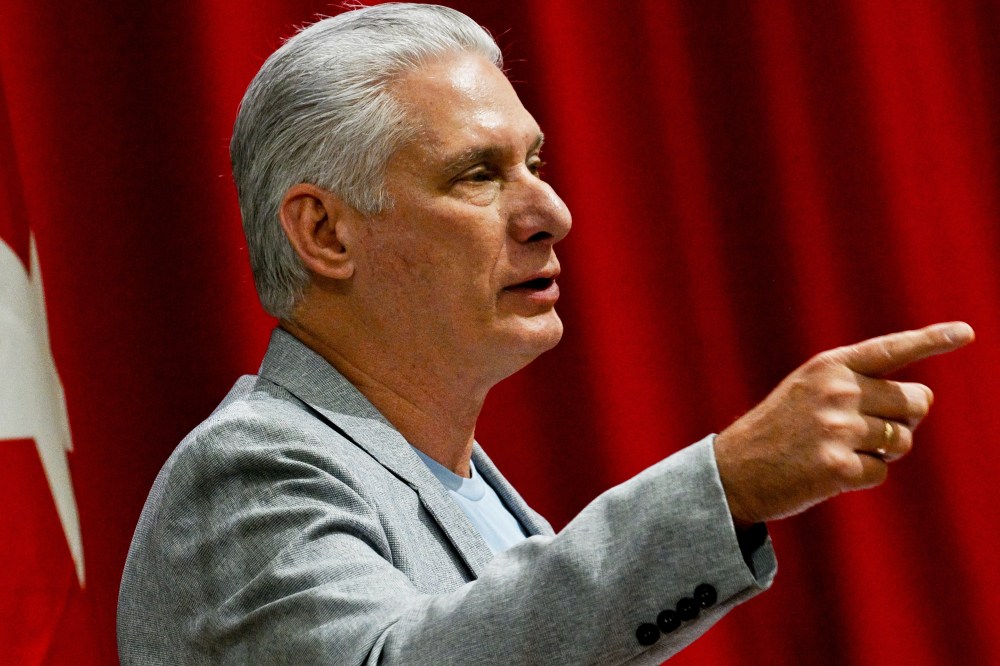
HAVANA (AP) — Cuban President Miguel Díaz-Canel on Friday accused the United States of hypocrisy for promoting private enterprise on the island while imposing new restrictions against privately-owned Cuban businesses.
Díaz-Canel hosted a podcast with Prime Minister Manuel Marrero to discuss the implementation of an economic reform package approved by parliament in June that gives private enterprise unprecedented latitude.
The reforms include allowing private businesses to employ more than 100 workers, participate in financial and currency markets, import and export goods without state intermediaries, hire workers directly and gain access to more idle land.
Although Díaz-Canel and Marrero reiterated that the Cuban government does not intend to embrace capitalism, the package moves Cuba toward the kind of economic opening the United States has demanded for decades — even as Washington maintains sanctions that Havana describes as an energy blockade.
“We are not going to stop,” Díaz-Canel said, rejecting assertions by U.S. President Donald Trump and U.S. Secretary of State Marco Rubio that Cuba is a “failed state.”
At the same time, he rejected the latest U.S. sanctions, which this week revoked the permission previously granted by former U.S. President Joe Biden for small Cuban private entrepreneurs to open accounts in U.S. banks.

No figures are available on how many Cuban entrepreneurs hold such accounts, but independent analysts on the island described the move as a setback for the development of private enterprise.
“Now they are attacking that sector as well, making it increasingly clear that there is no interest or willingness to benefit our people — that it is all a lie, all a fallacy,” Díaz-Canel added.
U.S. sanctions have deepened the economic crisis gripping the island for five years. Cubans have endured blackouts lasting more than 30 hours, transportation disruptions, flight cancellations and a sharp decline in production.
___
Follow AP’s coverage of Latin America and the Caribbean at https://apnews.com/hub/latin-america