

TSX rises nearly 350 points amid investor focus on economic resilience
Advertisement
Read this article for free:
or
Already have an account? Log in here »
To continue reading, please subscribe:

Digital Subscription
One year of digital access for only $205*
- Enjoy unlimited reading on winnipegfreepress.com
- Read the E-Edition, our digital replica newspaper
- Access News Break, our award-winning app
- Play interactive puzzles
*First annual payment billed as $205.00 + GST for one year. This annual subscription will automatically renew at $233.00 + GST every 52 weeks (10% off the regular annual price of $259.35). Offer available to new and qualified returning subscribers only. Cancel any time.
To continue reading, please subscribe:
Add Free Press access to your Brandon Sun subscription for only an additional
$1 for the first 4 weeks*
- Enjoy unlimited reading on winnipegfreepress.com
- Read the E-Edition, our digital replica newspaper
- Access News Break, our award-winning app
- Play interactive puzzles
*Your next Brandon Sun subscription payment will increase by $1.00 and you will be charged $17.95 plus GST for four weeks. After four weeks, your payment will increase to $24.95 plus GST every four weeks.
Read unlimited articles for free today:
or
Already have an account? Log in here »
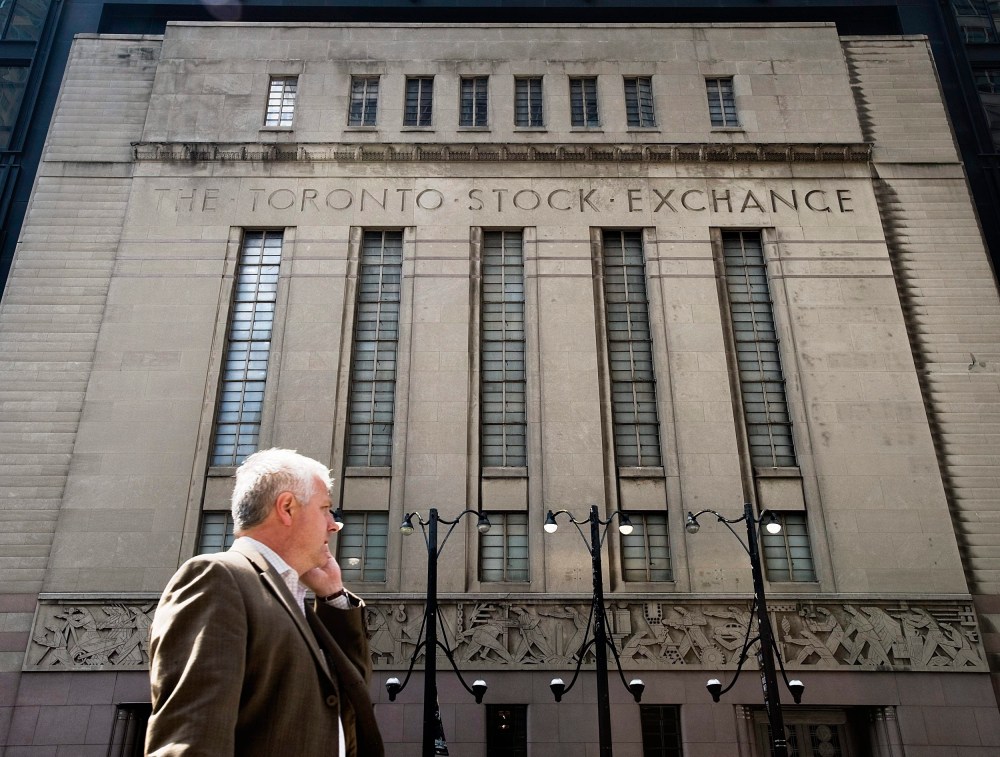
TORONTO – Canada’s main stock index rose on Friday, breaking a string of negative moves this week, as investors evaluated the resilience of the domestic economy amid higher bond yields and heightened trade tensions.
The S&P/TSX composite index was up 347.89 points at 35,502.65.
“If you look at what happened over the past week, for Canadian investors, the week was really about the tension between a still-resilient economy and a tougher interest rate backdrop,” said Anish Chopra, managing director with Portfolio Management Corp.
Despite Friday’s rebound, he said the bigger story this week has been that higher global yields have weighed on Canadian equities.
Canadian bond yields have been affected by an increase in U.S. Treasuries, which have risen for a range of reasons, from worries about inflation to Washington’s massive debt load.
“With longer-term rates moving up, that certainly has an impact on equity markets as well as specifically on the TSX. Canadian equities were pressured for much of the week, especially when you look at financials and rate-sensitive sectors,” Chopra said.
“But today certainly looks better.”
On Tuesday, Statistics Canada said real gross domestic product was essentially unchanged in July as strength in construction and utilities that month was offset by declines elsewhere in the economy.
Chopra said the Canadian economy has been “doing quite well” despite the ongoing trade tensions and is “holding up better than many feared in some areas.”
On Thursday, U.S. Trade Representative Jamieson Greer said outstanding issues with Canada are “quite difficult to resolve” as the G20 trade ministers’ meeting came to a close in Milwaukee, WI. The U.S. also escalated the trade war again earlier this week by imposing import bans on several Canadian goods, including most alcohol, dairy byproducts and motorcycles.
“The Canadian economy has been resilient, but when you look at markets, they’re still wrestling with what a higher interest rate environment means for economic growth, credit and valuations,” Chopra said.
Prime Minister Mark Carney announced Thursday that the Pacific Link pipeline project is the first to be designated a project in the national interest under the Building Canada Act.
“Canada really can’t control the world oil price, but it can improve where Canadian oil can be sold,” Chopra said.
“So opening up other markets is very important in the longer term for Canada and Canadian producers.”
The November crude oil contract was down US$1.76 at US$91.11 per barrel.
Next week, Statistics Canada will release its September jobs report on Friday. Chopra said the data will be very important for the interest rate outlook in Canada.
Overall, he said next week will be a question of how durable Friday’s market rally will prove to be.
“Is next week going to be a continuation of Friday? Or is it going to be a continuation of earlier in the week where it was tough for Canadian and global stock market performance?” Chopra said.
In New York, the Dow Jones industrial average was up 250.40 points at 51,176.96. The S&P 500 index was up 56.27 points at 7,722.72, while the Nasdaq composite was up 319.27 points at 27,190.86.

The Canadian dollar traded for 70.20 cents US compared with 70.21 cents US on Thursday.
The December gold contract was down US$40 at US$4,162.30 an ounce.
This report by The Canadian Press was first published Oct. 2, 2026.
— With files from The Associated Press.
Companies in this story: (TSX: GSPTSE, TSX: CADUSD)