

Got a raise? Don’t let lifestyle creep eat away at the extra cash
Advertisement
Read this article for free:
or
Already have an account? Log in here »
To continue reading, please subscribe:

Digital Subscription
One year of digital access for only $205*
- Enjoy unlimited reading on winnipegfreepress.com
- Read the E-Edition, our digital replica newspaper
- Access News Break, our award-winning app
- Play interactive puzzles
*First annual payment billed as $205.00 + GST for one year. This annual subscription will automatically renew at $233.00 + GST every 52 weeks (10% off the regular annual price of $259.35). Offer available to new and qualified returning subscribers only. Cancel any time.
To continue reading, please subscribe:
Add Free Press access to your Brandon Sun subscription for only an additional
$1 for the first 4 weeks*
- Enjoy unlimited reading on winnipegfreepress.com
- Read the E-Edition, our digital replica newspaper
- Access News Break, our award-winning app
- Play interactive puzzles
*Your next Brandon Sun subscription payment will increase by $1.00 and you will be charged $17.95 plus GST for four weeks. After four weeks, your payment will increase to $24.95 plus GST every four weeks.
Read unlimited articles for free today:
or
Already have an account? Log in here »
“Creep” is the important word — it is a slow and steady process, easily unnoticed, advancing in the background.
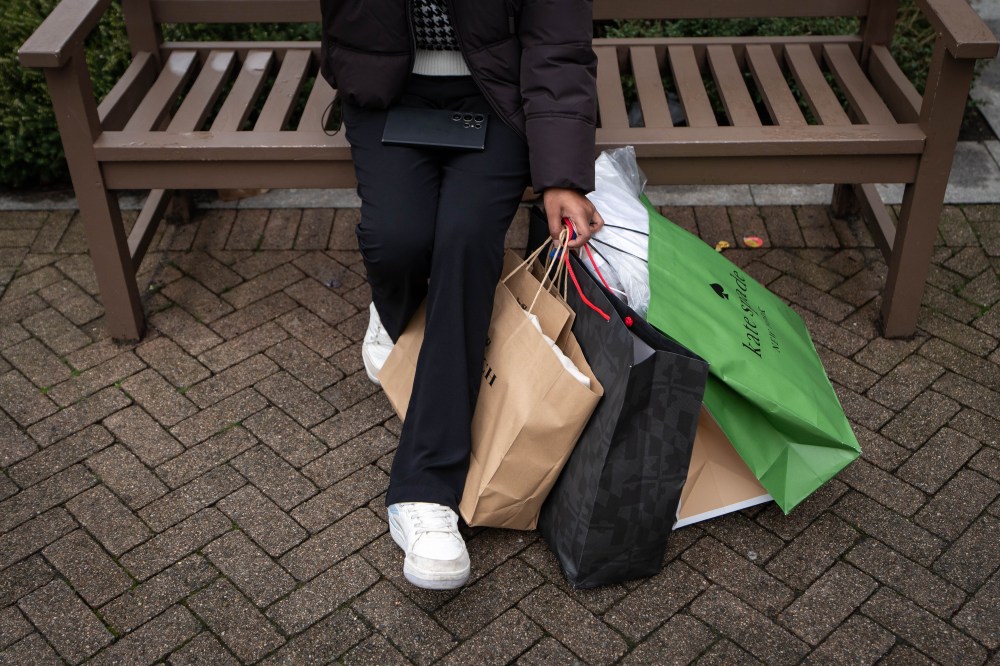
Lifestyle creep means gradually spending more in daily life, usually as a result of a recent raise, but it also entails new spending habits that feel small but become permanent. These expenses add up.
“Your expenses are always going to rise to meet the level of income that you have,” said Brandon Wiebe, a fee-only financial planner with Money Helps in Saskatoon.
“As soon as you’re making more money, the expenses will find their way, one way or another, to make sure all that money has a new job.”
Even without an increase in income, your spending can creep up if you’re not careful — buying a subscription to watch a new show, or having a stressful day and deciding to order delivery for dinner, Wiebe pointed out.
In that sense, lifestyle creep can be lumped together with impulse purchases and poor financial habits in general.
“Are you spending because you’re bored or because you had a tough week?” said Stacy Yanchuk-Oleksy, CEO of Money Mentors, a non-profit credit counselling organization in Alberta.
Sometimes an upgrade in one area can have a cascading effect, she noted.
“It’s kind of like when folks do renos — they replace their stove and then they realize it doesn’t match with anything else. Then they renovate the kitchen, replacing everything,” Yanchuk-Oleksy said.
The “hedonic treadmill” theory explains the psychology behind lifestyle creep. You might treat yourself one time to a little luxury item, but if you treat yourself a few times, it might feel like the new normal.
This makes it a hard habit to quit, because you feel deprived if you give it up. Worse, you might need new luxury habits to feel the same excitement again, because the previous treat now feels ordinary.
This is why Wiebe favours prevention: Don’t rack up those new expenses in the first place.
“It’s much easier to keep yourself from spending more, because you don’t know what you’re missing, so to speak,” Wiebe said. “It is a very conscious effort you have to make to deprive yourself of something that you’ve grown accustomed to and enjoyed, and at that point, probably also think you deserve.”
The most common areas for lifestyle creep, Wiebe said, are convenience purchases (paying extra for something easy, rather than shopping around for a better price), small pleasures (daily spending that adds up over time), and keeping up with lifestyles you see from friends and family.
If your spending has gotten away from you, Yanchuk-Oleksy recommended writing all your expenses down. She called it a “terribly boring piece of advice” but said it’s very effective at holding you accountable. Her next recommendation is getting help, noting that her credit counselling organization offers free sessions and full budgets for clients.
“I see it as deeper than a budgeting exercise; I think it’s just getting into a better relationship with your money,” Yanchuk-Oleksy said. “There’s nothing wrong with having a bit of lifestyle creep. Plan for that, and the rest — pop it into savings. You can always use it later. Savings is an expense, right? It’s meant to be spent, just not today.”
Savings are more than just emergency funds or contributions to longer-term goals, such as a downpayment. Use savings for large purchases too, Yanchuk-Oleksy said. Instead of relying on credit, save for it.
“It helps people be more intentional with their money,” she said.
Wiebe recommended scheduling time to review your spending and budget on a regular basis — it could be monthly, or every couple months. Find problem areas and replace those costs with cheaper alternatives.
For instance, when buying a car, Wiebe and his wife drafted a must-have list of features. It looked as if they were headed for a luxury vehicle purchase, but neither of them cared much for how the car looked on the outside.
Wiebe and his wife decided to buy a vehicle from an auction, which had been damaged by hail. Inside the car, they had every feature they wanted.
“We ended up paying a little less than half price” Wiebe said. “And now we’re driving something economical, and it has all the things we like. But someone else is looking at that car and they’re saying, ‘I would never drive a car with hail dings on it.’”

Wiebe also recommended automating your savings through your bank, so a portion of income is set aside without having to think about it. Automation will make your life easier, and also set healthy boundaries for spending.
“You can relax a lot more with the money you have remaining,” Wiebe said. “If your money is running a little lower, you’ll have those natural instincts kick in and say, ‘I don’t have money to spend on X, Y, or Z.’”
Those boundaries help prevent an unpleasant course-correction, where you might have to cut a lot of habits you’ve enjoyed.
“One of the biggest things you can do on a long-term basis is to avoid the creep,” he said, “instead of trying to pedal backwards and eliminate it.”
This report by The Canadian Press was first published Oct. 5, 2026.