

N.B. public advocate pitches non-profit co-ordination unit to fix social services
Advertisement
Read this article for free:
or
Already have an account? Log in here »
To continue reading, please subscribe:

Digital Subscription
One year of digital access for only $205*
- Enjoy unlimited reading on winnipegfreepress.com
- Read the E-Edition, our digital replica newspaper
- Access News Break, our award-winning app
- Play interactive puzzles
*First annual payment billed as $205.00 + GST for one year. This annual subscription will automatically renew at $233.00 + GST every 52 weeks (10% off the regular annual price of $259.35). Offer available to new and qualified returning subscribers only. Cancel any time.
To continue reading, please subscribe:
Add Free Press access to your Brandon Sun subscription for only an additional
$1 for the first 4 weeks*
- Enjoy unlimited reading on winnipegfreepress.com
- Read the E-Edition, our digital replica newspaper
- Access News Break, our award-winning app
- Play interactive puzzles
*Your next Brandon Sun subscription payment will increase by $1.00 and you will be charged $17.95 plus GST for four weeks. After four weeks, your payment will increase to $24.95 plus GST every four weeks.
Read unlimited articles for free today:
or
Already have an account? Log in here »
FREDERICTON – New Brunswick’s public advocate is proposing the provincial government create a new body he says would allow for more cost-effective delivery of social services.
Provincial advocate Kelly Lamrock, in a report published Tuesday, proposed the creation of a Non-Profit Opportunities Unit that would measure success by tracking human results, such as vulnerable people receiving housing.
Lamrock writes the unit would co-ordinate the province’s social services strategy while leaving service delivery to the government’s partners in non-government organizations.
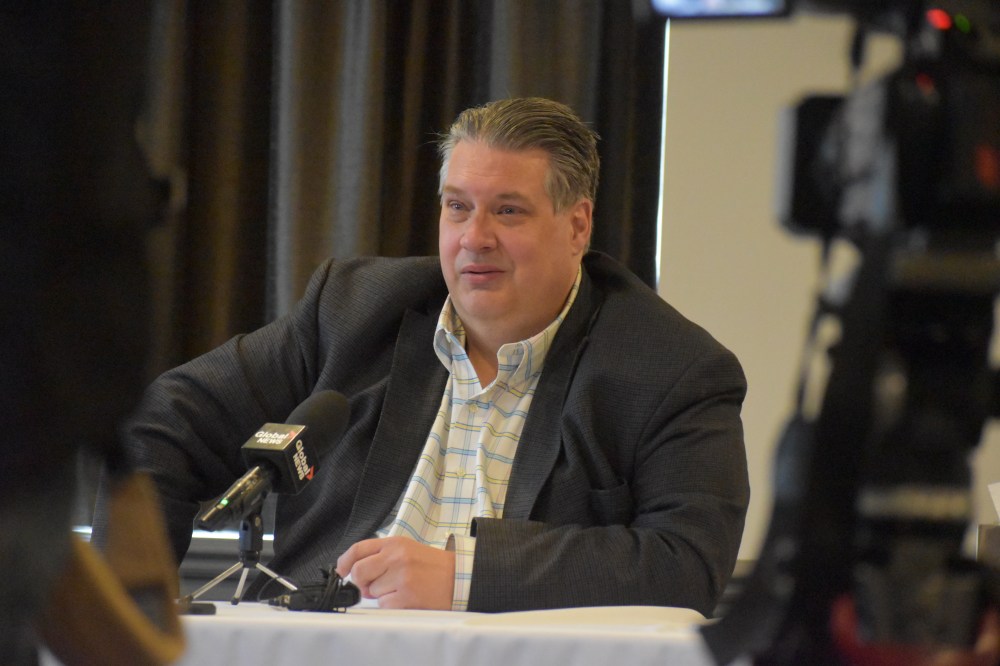
He says the unit aims to make the social welfare system more nimble and responsive by empowering local problem solvers, rather than relying solely on rigid government bureaucracy.
“It’s a way for communities to spot problems and propose solutions — and get government to fund the solution closer to the community,” Lamrock said by phone Tuesday.
He compared social services to a boat, saying the government “should steer, but not row — the rowing should happen closer to the community and closer to the individual.”
He wrote the current system heavily depends on social services workers following manuals and checklists rather than tracking whether a person’s life actually improves.
In two separate reports released earlier this year, Lamrock blamed the deaths of a 16-year-old boy and an elderly woman on systemic failures by the province’s Department of Social Development.
In his 50-page report released Tuesday, Lamrock criticizes the department for being too rules-bound in its approach to social services.
The proposed non-profit unit, he wrote, would track human quality-of-life outcomes as a new way of measuring the value of taxpayer-funded programs.
To accomplish that, he proposed “social entrepreneurship contracts” that could provide savings for government by focusing on preventative measures and tracking their progress.
Lamrock suggests in his report that spending more on social services can lead to savings later by preventing crises.
For example, he says investing more in programs for at-risk teenagers, such as those who are recovering from addictions, can decrease costs down the road by reducing the number of youth who enter the justice system.
He points out massive amounts of taxpayer dollars are spent on emergency rooms, police and the courts — which can be costly routes for dealing with social welfare problems such as addictions or mental health crises.
Lamrock said his proposed unit could also work to connect the bureaucratic dots for the community organizations by streamlining grant applications.
“The resources are all with the folks who move slowest,” Lamrock said.
“And maybe there’s a way to get the resources in the hands of the most nimble problem solvers.”
Lamrock said he believed the Liberal government could establish the unit, along with some of his other recommendations, in the near future.
As well, he pointed out that if the province is going to run deficits, as it’s projected to do for the next couple of years, it needs to use that extra spending efficiently before a period of deep cuts to social services.
“We actually have to … make sure we get results now that have fewer crisis expenditures later and that transforms the system into something effective,” he said.

“If we don’t do that … we’re just going to downsize a very dysfunctional status quo.”
Cindy Miles, the social development minister, didn’t immediately commit to implementing the recommendations in the report, but said they deserved “careful review.”
“We will take the time necessary to thoroughly assess the recommendations before determining next steps,” Miles said in a statement.
The Liberal minister said her department agreed with having “strong partnerships with the non-profit sector, a focus on better outcomes, and efforts to strengthen prevention and early intervention.”
This report by The Canadian Press was first published Oct. 6, 2026.