

5 traders jailed for rigging key interest rates have their convictions quashed
Advertisement
Read this article for free:
or
Already have an account? Log in here »
To continue reading, please subscribe:

Digital Subscription
One year of digital access for only $205*
- Enjoy unlimited reading on winnipegfreepress.com
- Read the E-Edition, our digital replica newspaper
- Access News Break, our award-winning app
- Play interactive puzzles
*First annual payment billed as $205.00 + GST for one year. This annual subscription will automatically renew at $233.00 + GST every 52 weeks (10% off the regular annual price of $259.35). Offer available to new and qualified returning subscribers only. Cancel any time.
To continue reading, please subscribe:
Add Free Press access to your Brandon Sun subscription for only an additional
$1 for the first 4 weeks*
- Enjoy unlimited reading on winnipegfreepress.com
- Read the E-Edition, our digital replica newspaper
- Access News Break, our award-winning app
- Play interactive puzzles
*Your next Brandon Sun subscription payment will increase by $1.00 and you will be charged $17.95 plus GST for four weeks. After four weeks, your payment will increase to $24.95 plus GST every four weeks.
Read unlimited articles for free today:
or
Already have an account? Log in here »
LONDON (AP) — A British court on Wednesday quashed the convictions of five traders accused of manipulating benchmark interest rates in one of the biggest banking scandals to come out of the 2008 global financial crisis.
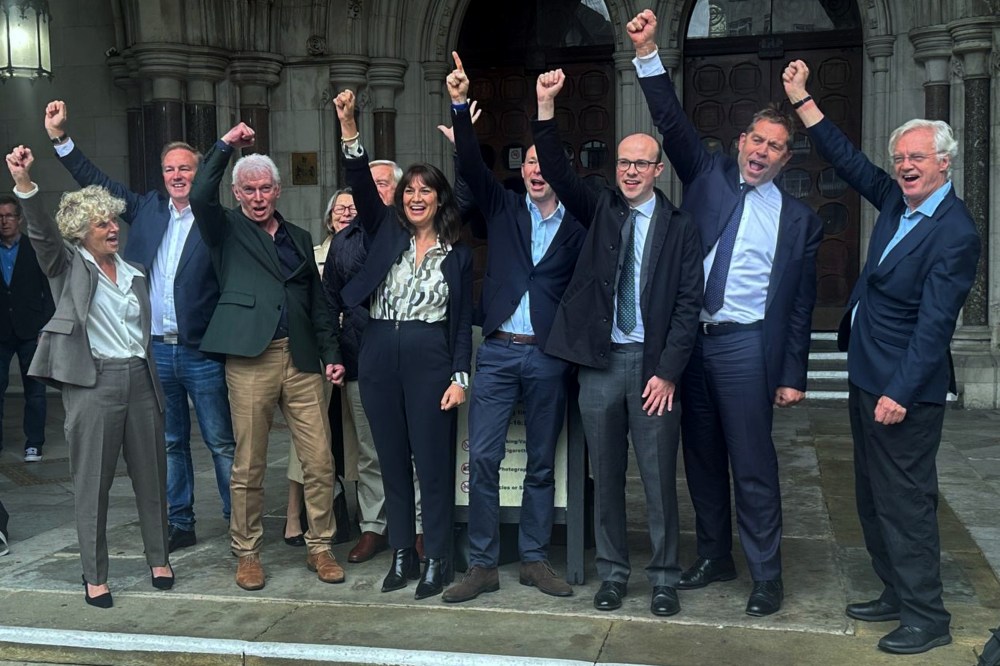
The Court of Appeal threw out the fraud convictions of former Barclays employees Jonathan Mathew, Jay Merchant, Alex Pabon, Philippe Moryoussef and Colin Bermingham.
The five were sentenced between 2016 and 2019 for offenses connected to influencing the London Inter-Bank Offered Rate, or Libor, and its euro currency equivalent Euribor. The rates were used to set the interest rates on trillions of dollars of financial products around the world.
In July 2025, the U.K. Supreme Court quashed the convictions of two other traders: Tom Hayes, a former Citigroup and UBS trader, and Carlo Palombo, who worked for Barclays. It ruled that the convictions were unfair because the judges in their separate cases gave inaccurate instructions to jurors.
Lawyers for the five others argued that juries in their cases received almost identical instructions and therefore “their trials were unfair and their convictions are unsafe.”
The U.K.’s Serious Fraud Office said it would not seek retrials for Hayes and Palombo and did not oppose the five other defendants’ appeals.
Libor and Euribor were critical benchmarks that were once used to set the interest rates on everything from business loans to home mortgages and credit card debt. They were based on figures submitted daily by major international banks, reporting the rate at which they could borrow money from other banks.
During the financial crisis, regulators became aware that some banks were making artificially low Libor submissions to make their institutions seem more creditworthy, or submitting fake numbers to achieve a rate that better suited them.

The Serious Fraud Office began investigating alleged efforts to manipulate Libor in 2012. That ultimately led to the conviction of nine bankers and the acquittal of 11 others.
The rates were phased out in recent years, in part because they were seen as worsening the financial crisis.