

Nova Scotia says new road rules will better protect pedestrians, cyclists and others
Advertisement
Read this article for free:
or
Already have an account? Log in here »
To continue reading, please subscribe:

Digital Subscription
One year of digital access for only $205*
- Enjoy unlimited reading on winnipegfreepress.com
- Read the E-Edition, our digital replica newspaper
- Access News Break, our award-winning app
- Play interactive puzzles
*First annual payment billed as $205.00 + GST for one year. This annual subscription will automatically renew at $233.00 + GST every 52 weeks (10% off the regular annual price of $259.35). Offer available to new and qualified returning subscribers only. Cancel any time.
To continue reading, please subscribe:
Add Free Press access to your Brandon Sun subscription for only an additional
$1 for the first 4 weeks*
- Enjoy unlimited reading on winnipegfreepress.com
- Read the E-Edition, our digital replica newspaper
- Access News Break, our award-winning app
- Play interactive puzzles
*Your next Brandon Sun subscription payment will increase by $1.00 and you will be charged $17.95 plus GST for four weeks. After four weeks, your payment will increase to $24.95 plus GST every four weeks.
Read unlimited articles for free today:
or
Already have an account? Log in here »
HALIFAX – Nova Scotia is replacing its century-old traffic legislation with new rules it says will better protect vulnerable road users.
The new Traffic Safety Act will soon come into force, replacing the old Motor Vehicle Act, which was written in the 1920s and has been modified and amended countless times over the decades.
The new act introduces the concept of vulnerable road users, which include pedestrians, cyclists, drivers of farm vehicles and motorcyclists. The definition, now enshrined in legislation, also includes peace officers, emergency workers and tow-truck drivers working along highways.
“I’m really happy about the addition of the vulnerable road users to this act,” Public Works Minister Fred Tilley told reporters Wednesday. “That will make a huge difference for Nova Scotians and the safety of our highways and roadways.”
Drivers who injure or kill a vulnerable road user could receive double the regular fine for certain infractions, such as careless driving or speeding.
Courts can also consider harm to vulnerable users as an aggravating factor when considering the length of licence suspensions.
The Traffic Safety Act was passed in 2025, but the first batch of regulations needed to describe its specific rules were unveiled on Wednesday. The act and the regulations both go into force on Oct. 19 and the province is rolling out a marketing campaign later this year.
Use of devices such as tablets and global positioning systems will be covered under distracted driving rules that already apply to cellphones.
“Some of the loopholes around driving while distracted have been removed,” said Tilley. “So I think that will make those laws stick better, which will give law enforcement more incentive to actually lay those charges.”
The act clarifies that drivers are now required to clean snow and ice off their vehicles before driving, and it adds a law stating it is an offence for a motorist to open a door into the path of cyclists or other vehicles.
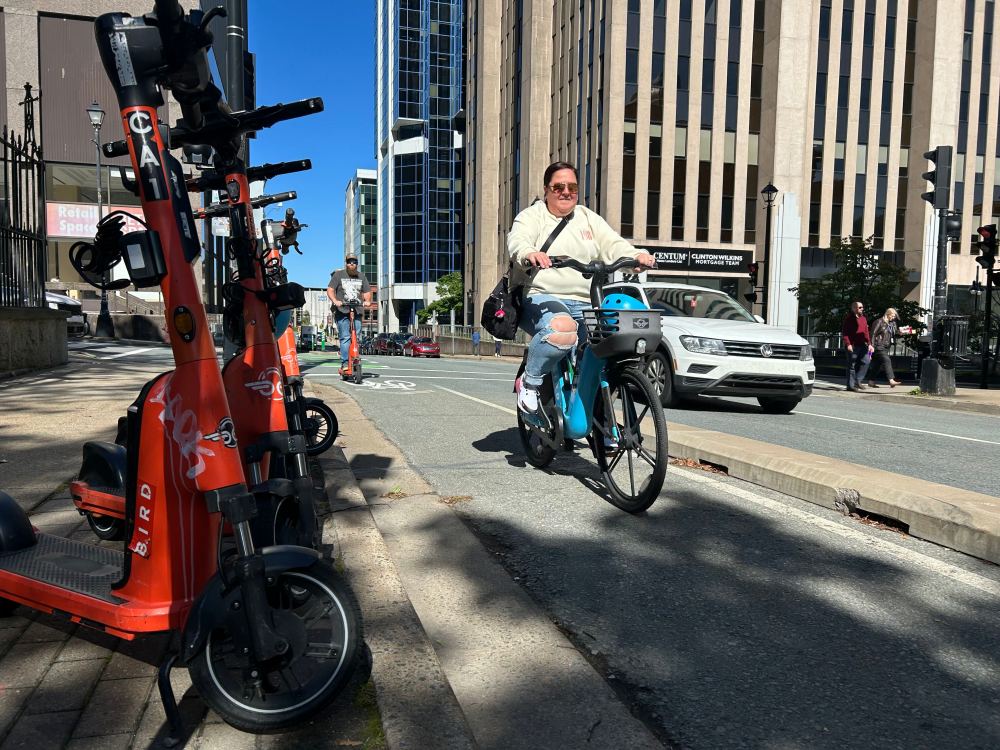
E-bike riders must be 14 or older under the new rules, coming into line with Nova Scotia’s existing age restrictions for e-scooters. The new regulations also give officials the power to impound e-bikes and e-scooters that can travel more than the 32-kilometre-per-hour speed limit for those devices.

Last year in Canada, 57 children riding e-scooters or e-bikes suffered severe injuries that led to prolonged hospital stays, intensive care admissions or death, according to the Canadian Paediatric Surveillance Program.
Other organizations have said the number of injuries attributed to the devices have been on the rise in recent years.
Meanwhile, Nova Scotia is adopting national standards for driver fitness and vision, clarifying the ages that child seats must be used and giving municipalities the ability to lower speed limits on municipal roads to less than 50 kilometres per hour.
The changes do not allow for automated traffic cameras to catch speeders. Tilley said the government has more study and consultation to do on the issue.
This report by The Canadian Press was first published Oct. 7, 2026.