

Hamilton to pilot bylaw to protect downtown renters from extreme indoor heat
Advertisement
Read this article for free:
or
Already have an account? Log in here »
To continue reading, please subscribe:

Digital Subscription
One year of digital access for only $205*
- Enjoy unlimited reading on winnipegfreepress.com
- Read the E-Edition, our digital replica newspaper
- Access News Break, our award-winning app
- Play interactive puzzles
*First annual payment billed as $205.00 + GST for one year. This annual subscription will automatically renew at $233.00 + GST every 52 weeks (10% off the regular annual price of $259.35). Offer available to new and qualified returning subscribers only. Cancel any time.
To continue reading, please subscribe:
Add Free Press access to your Brandon Sun subscription for only an additional
$1 for the first 4 weeks*
- Enjoy unlimited reading on winnipegfreepress.com
- Read the E-Edition, our digital replica newspaper
- Access News Break, our award-winning app
- Play interactive puzzles
*Your next Brandon Sun subscription payment will increase by $1.00 and you will be charged $17.95 plus GST for four weeks. After four weeks, your payment will increase to $24.95 plus GST every four weeks.
Read unlimited articles for free today:
or
Already have an account? Log in here »
Landlords in downtown Hamilton will soon face new requirements to protect renters from stifling indoor summer temperatures after local councillors backed a first-of-its-kind pilot in Ontario.
The pilot will require landlords in the city’s downtown Ward 2, where most residents are renters, to keep at least one room in each unit below 26 C, a threshold recognized by Health Canada.
The results will likely be watched closely by other cities, including Toronto, that are studying how to protect renters from rising temperatures driven by climate change.
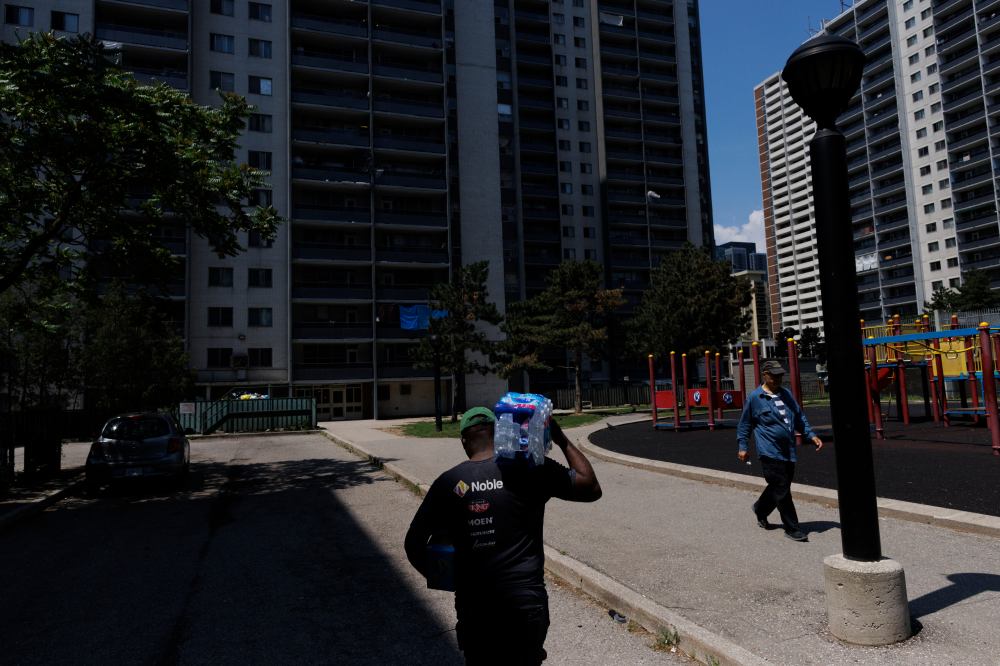
The pilot is expected to inform staff recommendations, due in early 2029, on how to expand the bylaw Hamilton-wide.
“We recognize the significance of addressing the impacts of extreme heat on Hamilton residents and want to take a thoughtful approach to implementing this groundbreaking bylaw,” Mike Zegarac, the interim city manager, said in a statement.
The pilot is the first time a city in Ontario has voted to make landlords responsible for keeping rental units cool in the summer. The city’s health committee first directed staff to come up with a maximum temperature bylaw in 2023.
Ontario’s tenant laws require landlords to heat an apartment, but not to keep it cool in summer, a distinction some advocates say is increasingly untenable as climate change increases the frequency and intensity of dangerous heat waves across the province. Hamilton is expected to see roughly an extra 25 days above 30 C by mid-century, according to models based on current climate policies.
Toronto has also directed its city staff to come up with a similar bylaw by next summer.
The Hamilton pilot will start next year and run through September 2028. Exemptions are available to landlords who show there are structural, electrical or physical barriers to compliance, or if the only way to comply would require constructions or demolition. Tenants can also choose to opt out.

One of the recognized risks is the pilot’s possible impact on above-guideline rent increases sought by landlords to cover associated air conditioning costs, a staff report says. The report also notes there’s an overall lack of consistent funding programs available to property owners to complete retrofits.
Recent changes to provincial law give tenants the right to install air conditioners and allow landlords to pass off extra utility costs in seasonal rent increases, but do not provide for access to cooling as a minimum standard.
Tenant and environmental groups argued the pilot did not go far enough. At a minimum, it should be expanded to the other downtown wards and applied citywide by summer 2028, said a written submission co-signed by ACORN Hamilton, Environment Hamilton and the Canadian Environmental Law Association.
A landlord group, meanwhile, said a decision should be deferred and the bylaw studied further. The Hamilton and District Apartment Association said in its submission there was “no need to rush this decision.”
This report by The Canadian Press was first published Oct. 8, 2026.