

Protein crests current appetite wave

Advertisement
Read this article for free:
or
Already have an account? Log in here »
To continue reading, please subscribe:

Digital Subscription
One year of digital access for only $205*
- Enjoy unlimited reading on winnipegfreepress.com
- Read the E-Edition, our digital replica newspaper
- Access News Break, our award-winning app
- Play interactive puzzles
*First annual payment billed as $205.00 + GST for one year. This annual subscription will automatically renew at $233.00 + GST every 52 weeks (10% off the regular annual price of $259.35). Offer available to new and qualified returning subscribers only. Cancel any time.
To continue reading, please subscribe:
Add Free Press access to your Brandon Sun subscription for only an additional
$1 for the first 4 weeks*
- Enjoy unlimited reading on winnipegfreepress.com
- Read the E-Edition, our digital replica newspaper
- Access News Break, our award-winning app
- Play interactive puzzles
*Your next Brandon Sun subscription payment will increase by $1.00 and you will be charged $17.95 plus GST for four weeks. After four weeks, your payment will increase to $24.95 plus GST every four weeks.
Read unlimited articles for free today:
or
Already have an account? Log in here »
Holiday feasts often reflect the latest fads and trends influencing how we eat.
This Thanksgiving’s table is likely to feature more Canadian content than it might otherwise as a point of national pride.
In the recent past, the carb-free craze has made cauliflower a substitute for the mashed potatoes on some family spreads. Some have gone meatless, while others have added more. Still others offer gluten-free, dairy-free or fat-free alternatives.
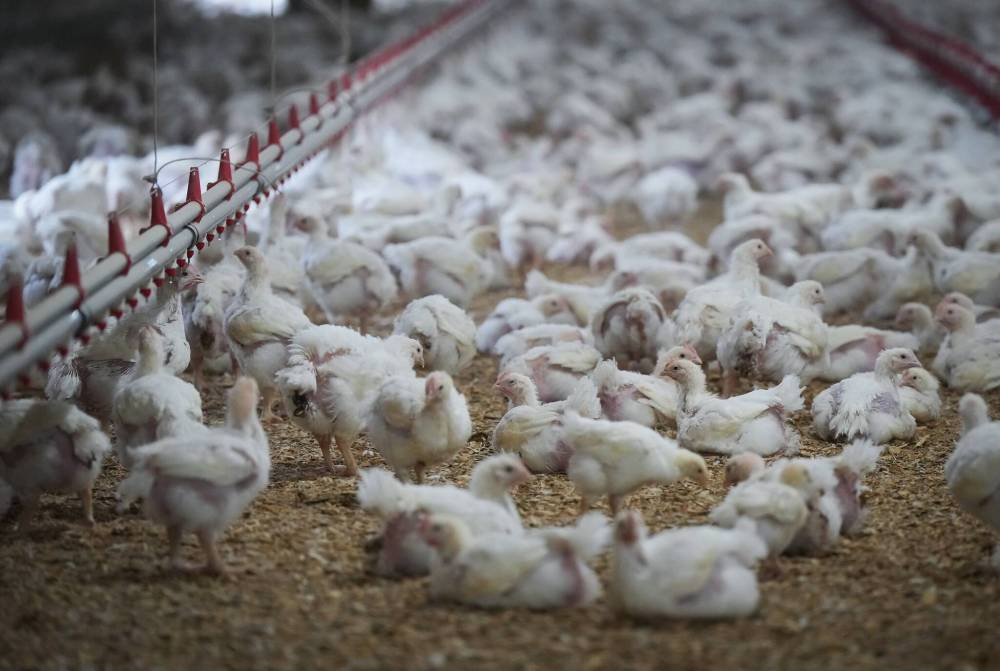
DARRYL DYCK /THE CANADIAN PRESS FILES
Chickens at a poultry farm in Abbotsford, B.C. Canadian per capita consumption of chicken has increased to one kilogram per person.
Nowadays, it seems consumers can’t get enough protein. Desmond Sobool, deputy chief economist Farm Credit Canada, told a recent economic update for the agri-food sector there are two converging influences in play.
“There’s growing focus on what is called ‘protein-maxing diets,’ and as well, the increased adoption of GLP-1 medications,” he said. “So together, these trends are helping support demand for protein products, even as prices remain elevated.”
Sobool said Canadian per capita consumption has increased across several protein sources, with chicken scoring the largest gain in the meat department at one kilogram per person.
“Normally, you’d expect higher prices to weigh on demand, and we’re not seeing that,” he said. “Consumers continue to prioritize protein purchases.”
For example, even though beef prices are up 17 per cent, per capita beef consumption has increased by 0.8 kg per person. There is, however, evidence some of the growth in chicken consumption is due to consumers looking for lower-priced options. The poultry industry is responding with increased production.
“Historically, ground beef was typically cheaper than chicken breast,” Sobool said. “Currently, ground beef is roughly 60 cents per pound more expensive than chicken breast.”
Like dairy, chicken in Canada is produced under supply management, which means producers’ production is regulated by quotas based on domestic market needs. Broiler barns operate on an eight-week cycle between the time chicks are placed on feed and when they go to market.
Beef production in Canada is not controlled but rather guided by domestic and export market signals, production costs and climate. It typically ebbs and flows on a six-year cycle.
However, the size of Canada’s beef herd is currently at a 35-year-low — a function of years of drought and high production costs. Good prices are inspiring herd expansion, but it takes years before decisions made today come to market. And that expansion may be slower because there is a large demographic of ranchers nearing retirement who might avoid creating more work for themselves.
Interest in dairy products such as cottage cheese and yogurt has also spiked. Cottage cheese consumption has experienced a 75 per cent increase over 2023 levels and yogurt consumption is up nine per cent year over year.
That’s affecting how producers get paid, which affects what they feed their cows.
“Milk boards are placing greater emphasis on protein components and less on butterfat when determining producer compensation,” Sobool said. “This creates stronger incentive for producers to maximize protein production, helping align the entire dairy supply chain with these evolving consumer demands.
“With growth continuing now for three years in a row, I would say this protein … fad is more of a trend and is here to stay.”
Time will tell.
In the early 2000s, dairy protein, such as whey, was a low-value byproduct used as a filler in processed foods until it was discovered by the fitness gurus. During that same era, component pricing steered dairy producers towards low-fat milk production.

A decade ago, dairy component pricing underwent a major shift to encourage higher butterfat to address surging demand for cream and other high-fat dairy products. Now it’s back to protein.
There are always wild cards in play like the U.S. deciding to launch a trade war against Canada. Would we lose our nationalistic appetites if all of that went away?
The difference between a cycle, trend and fad is nebulous, even more so in these uncertain times. Like the changing tides, feeding frenzies roll in like waves, washing over everything until it feels like we’re drowning in a sea of change. Then they recede.
What remains in their wake defines that difference. My hunch is it won’t be cottage cheese or cauliflower casserole.
Laura Rance-Unger is editor emeritus for Glacier FarmMedia. She can be reached at lrance@farmmedia.com
Laura Rance is editorial director at Farm Business Communications.
Our newsroom depends on a growing audience of readers to power our journalism. If you are not a paid reader, please consider becoming a subscriber.
Our newsroom depends on its audience of readers to power our journalism. Thank you for your support.
Laura Rance is editorial director at Farm Business Communications.
Our newsroom depends on a growing audience of readers to power our journalism. If you are not a paid reader, please consider becoming a subscriber.
Our newsroom depends on its audience of readers to power our journalism. Thank you for your support.
Advertisement Advertise With Us
Advertisement Advertise With Us