

Energy agency lowers world oil demand forecast for the year
Advertisement
Read this article for free:
or
Already have an account? Log in here »
To continue reading, please subscribe:

Digital Subscription
One year of digital access for only $205*
- Enjoy unlimited reading on winnipegfreepress.com
- Read the E-Edition, our digital replica newspaper
- Access News Break, our award-winning app
- Play interactive puzzles
*First annual payment billed as $205.00 + GST for one year. This annual subscription will automatically renew at $233.00 + GST every 52 weeks (10% off the regular annual price of $259.35). Offer available to new and qualified returning subscribers only. Cancel any time.
To continue reading, please subscribe:
Add Free Press access to your Brandon Sun subscription for only an additional
$1 for the first 4 weeks*
- Enjoy unlimited reading on winnipegfreepress.com
- Read the E-Edition, our digital replica newspaper
- Access News Break, our award-winning app
- Play interactive puzzles
*Your next Brandon Sun subscription payment will increase by $1.00 and you will be charged $17.95 plus GST for four weeks. After four weeks, your payment will increase to $24.95 plus GST every four weeks.
Read unlimited articles for free today:
or
Already have an account? Log in here »
The International Energy Agency is lowering its world oil demand forecast for the year, noting that the war in Iran is leading to escalating fuel prices, limited oil supplies and a deteriorating economic outlook.
The agency’s report on Wednesday said that global oil demand is predicted to drop 2.5 million barrels a day year-over-year in the fourth quarter and fall 2.6 million barrels a day on average this year. Diesel is expected to account for 25% of the drop.
The IEA foresees a partial recovery of 2 million barrels a day next year, but that still puts global oil use 0.6% below 2025 levels.
Global production climbed 2.5 million barrels a day month-over-month to 102.3 million barrels a day in September, driven by Gulf producers. OPEC+ gains of 2.1 million barrels a day were led by Saudi Arabia, while the United Arab Emirates drove non-OPEC+ increases.
Oil supply is expected to drop by 5.8 million barrels a day to 100.7 million barrels a day this year before climbing by 7.7 million barrels a day next year. The agency said that renewed Gulf attacks “leave the recovery fragile.”
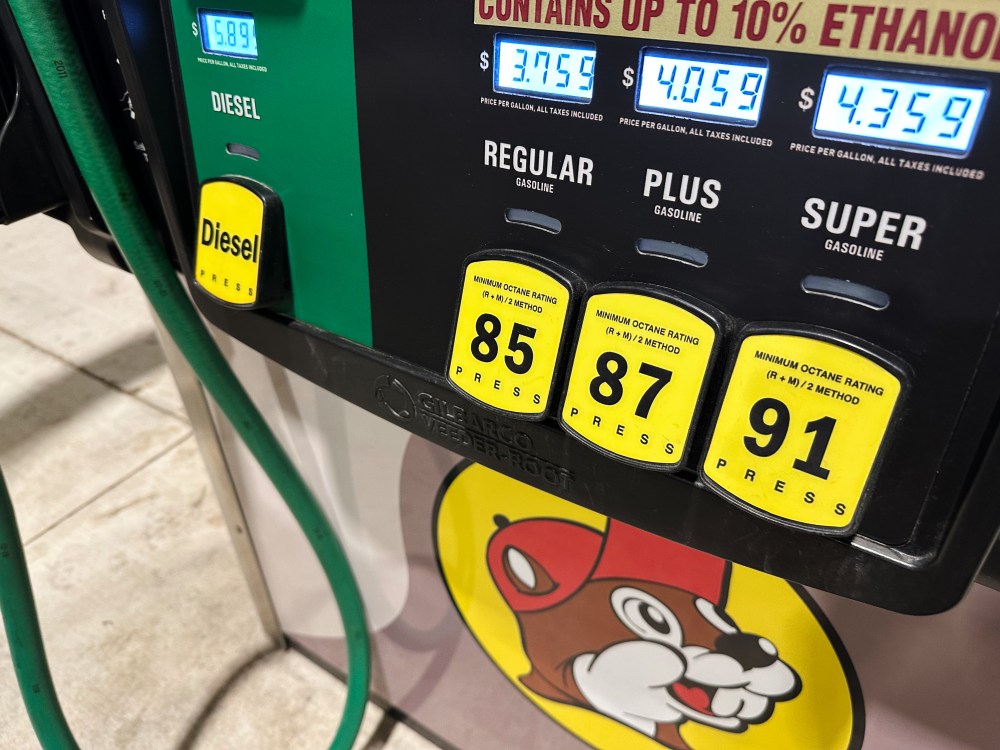
While gas prices in the U.S. have moved lower in recent weeks, they remain higher than a month ago. Gas prices averaged $4.33 per gallon on Wednesday, according to AAA, up slightly from a month ago.
Brent crude, the international standard, gained 0.6% to $106.37 a barrel Wednesday morning. Benchmark U.S. crude rose 1.2% to $95.30 a barrel.

Brent has been pinballing between $96 and nearly $110 over the last month on uncertainty about when the war with Iran will allow the global energy industry to return to normal.
On Friday, President Donald Trump announced that he had struck a deal with Russian President Vladimir Putin to immediately supply the U.S. more than 300,000 tons of diesel. That would be followed by an additional 500,000 tons in November, then 4 million more tons at some point after that. But energy policy experts say that the new pact is unlikely to make a dent in painfully high prices at the pump or elsewhere.
The price of diesel has shattered records in recent weeks, ratcheting up inflation for a broad swath of consumer goods.
Trump’s announcement came a week after the Group of Seven wealthy democracies said that they plan to release 100 million barrels of oil and fuel products in the coming weeks, starting with “substantial” amounts of diesel.
The release follows on from a March announcement that IEA member countries would release 426 million barrels of oil and products to stabilize the oil market. European Union countries committed about 92 million barrels, a promise weighted toward refined products made from crude such as diesel.