

New China-North Korea bridge opens after more than a decade of delay
Advertisement
Read this article for free:
or
Already have an account? Log in here »
To continue reading, please subscribe:

Digital Subscription
One year of digital access for only $205*
- Enjoy unlimited reading on winnipegfreepress.com
- Read the E-Edition, our digital replica newspaper
- Access News Break, our award-winning app
- Play interactive puzzles
*First annual payment billed as $205.00 + GST for one year. This annual subscription will automatically renew at $233.00 + GST every 52 weeks (10% off the regular annual price of $259.35). Offer available to new and qualified returning subscribers only. Cancel any time.
To continue reading, please subscribe:
Add Free Press access to your Brandon Sun subscription for only an additional
$1 for the first 4 weeks*
- Enjoy unlimited reading on winnipegfreepress.com
- Read the E-Edition, our digital replica newspaper
- Access News Break, our award-winning app
- Play interactive puzzles
*Your next Brandon Sun subscription payment will increase by $1.00 and you will be charged $17.95 plus GST for four weeks. After four weeks, your payment will increase to $24.95 plus GST every four weeks.
Read unlimited articles for free today:
or
Already have an account? Log in here »
BEIJING (AP) — A new bridge linking China and North Korea opened Thursday after more than a decade of delay, signaling deeper ties between the two countries.
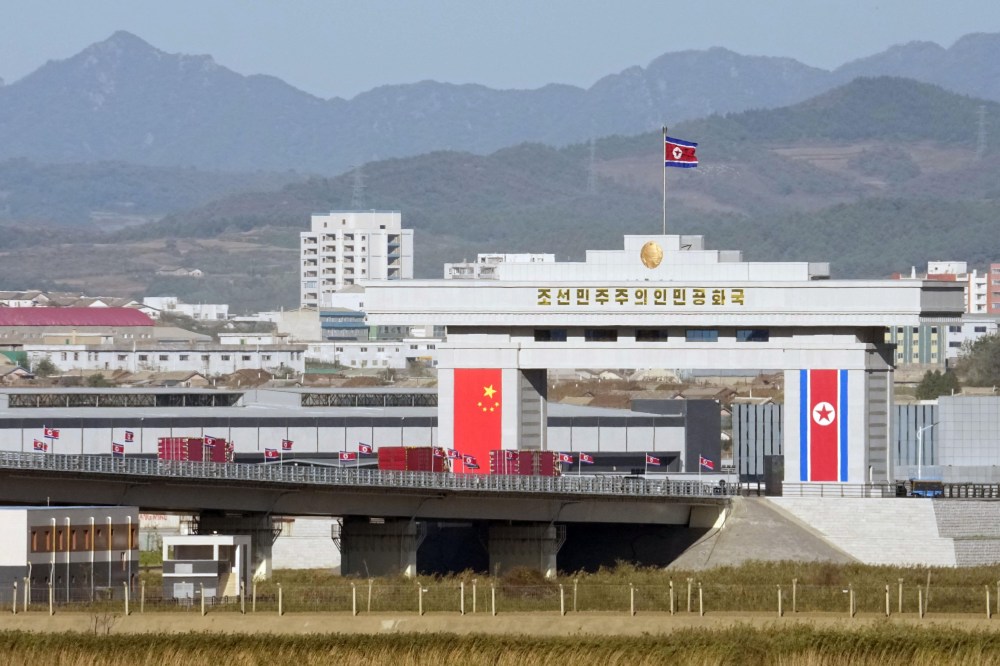
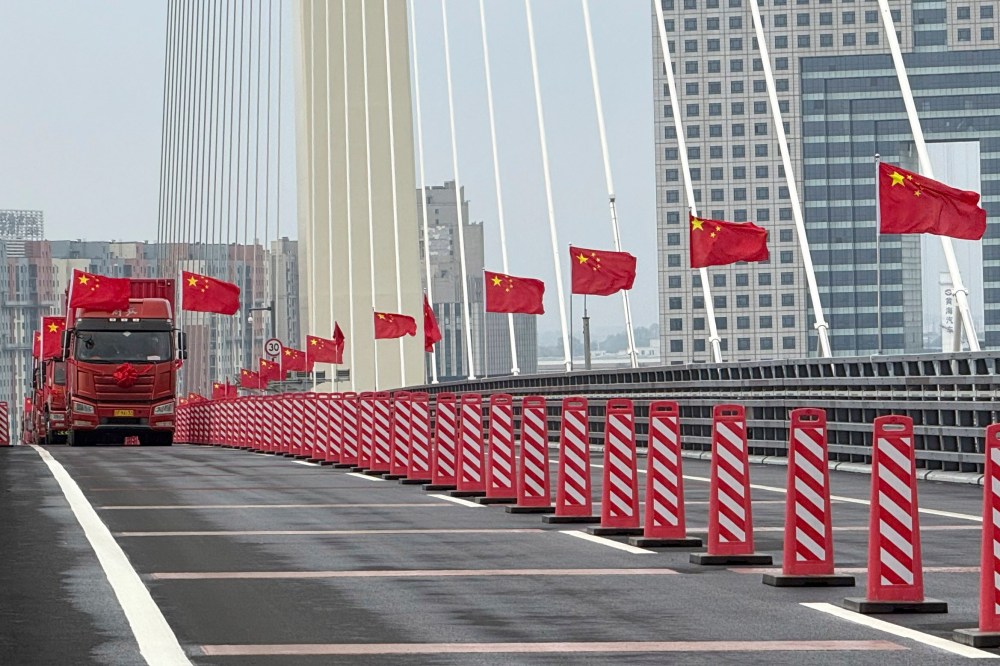
Officials from the two countries attended a ribbon-cutting ceremony for the launch of the New Yalu River Bridge, with trucks adorned with the national flags of China and North Korea waiting on the bridge.
Both countries said they expected that the four-lane, 3-kilometer (1.8-mile) crossing, which connects the northeastern Chinese city of Dandong to the North Korean city of Sinuiju, would further promote economic, trade and “people-to-people” exchanges.
“The relations between China and North Korea have entered a new stage, embarking on a new chapter,” Chinese Premier Li Qiang said in a video address at the ceremony, according to China’s official Xinhua News Agency.
Li said that the crossing would become a new landmark symbolizing the two nations’ traditional friendship. He hoped both sides would seize the opportunity of the opening to continue to enhance connectivity and explore potential for cooperation in border areas, Xinhua said.
North Korean Premier Pak Thae Song said in his video address that he was confident the bridge would “accelerate the advance for the prosperity of the two countries and the well-being of the peoples,” according to the North’s official Korean Central News Agency.
Bridge opens after a 12-year delay
The bridge initially was expected to enter use in 2014, when China had apparently completed construction on its side. But North Korea had not done corresponding work on its side at the time.
The absence of substantial work in Sinuiju fueled speculation that Pyongyang was wary of becoming more economically dependent on China or displeased with Beijing voting for United Nations resolutions toughening international sanctions on the North over its nuclear program. Some observers suggested North Korea and China also differed over the bridge’s location.
The setback over the bridge prompted an unusually sharp report in the Global Times, a newspaper affiliated with the ruling Chinese Communist Party, which quoted Dandong residents expressing frustration over delays in what they had hoped would be an economic boon for their border city.
New link opens a month after launch of Russia-North Korea bridge
Observers said the new bridge would likely boost bilateral trade and enhance logistical efficiency. It is expected to lessen the burden on an aging bridge on the Dandong-Sinuiju route, which handles more than 70% of official trade between the two countries. That decades-old bridge carries a railway line as well as cars and trucks, but vehicle traffic can move only one way at a time.
“The new bridge could facilitate trade that violates U.N. sanctions, but traffic across it could be more transparent and subject to customs than cross-border smuggling,” said Leif-Eric Easley, a professor at Ewha University in Seoul.
The new bridge’s launch came about a month after North Korea and Russia opened a road bridge as part of their efforts to cement relations.

Experts say Chinese officials likely felt uneasy about that opening.
China has long been North Korea’s biggest trading partner and economic pipeline. But in recent years North Korean leader Kim Jong Un has prioritized Moscow, sending thousands of troops and conventional weapons to support Russian President Vladimir Putin’s war in Ukraine, apparently in exchange for military and economic assistance.
Kim has recently drawn closer to China with the apparent intent to improve his country’s economy and build a front against the United States. China, for its part, wants to restore its unique influence over North Korea.
About 98% of North Korea’s external trade was with China in 2025. The South Korean government said last year there were at least 17 active road and rail links across the porous North Korea-China border, which stretches more than 1,400 kilometers (870 miles).
“China remains economically indispensable to North Korea in ways that Russia cannot replace, and the bridge may offer an inadvertent window into bilateral relations if flows are visibly interrupted in the future,” Easley said.