

Wall Street muscles higher despite more swings for AI stocks
Advertisement
Read this article for free:
or
Already have an account? Log in here »
To continue reading, please subscribe:
Digital Subscription
One year of digital access for only $1.44 a week*
- Enjoy unlimited reading on winnipegfreepress.com
- Read the E-Edition, our digital replica newspaper
- Access News Break, our award-winning app
- Play interactive puzzles
*Billed as $5.77 plus GST every four weeks. After 52 weeks, price increases to the regular rate of $19.95 plus GST every four weeks. Offer available to new and qualified returning subscribers only. Cancel any time.
To continue reading, please subscribe:
Add Free Press access to your Brandon Sun subscription for only an additional
$1 for the first 4 weeks*
- Enjoy unlimited reading on winnipegfreepress.com
- Read the E-Edition, our digital replica newspaper
- Access News Break, our award-winning app
- Play interactive puzzles
*Your next Brandon Sun subscription payment will increase by $1.00 and you will be charged $17.95 plus GST for four weeks. After four weeks, your payment will increase to $24.95 plus GST every four weeks.
Read unlimited articles for free today:
or
Already have an account? Log in here »
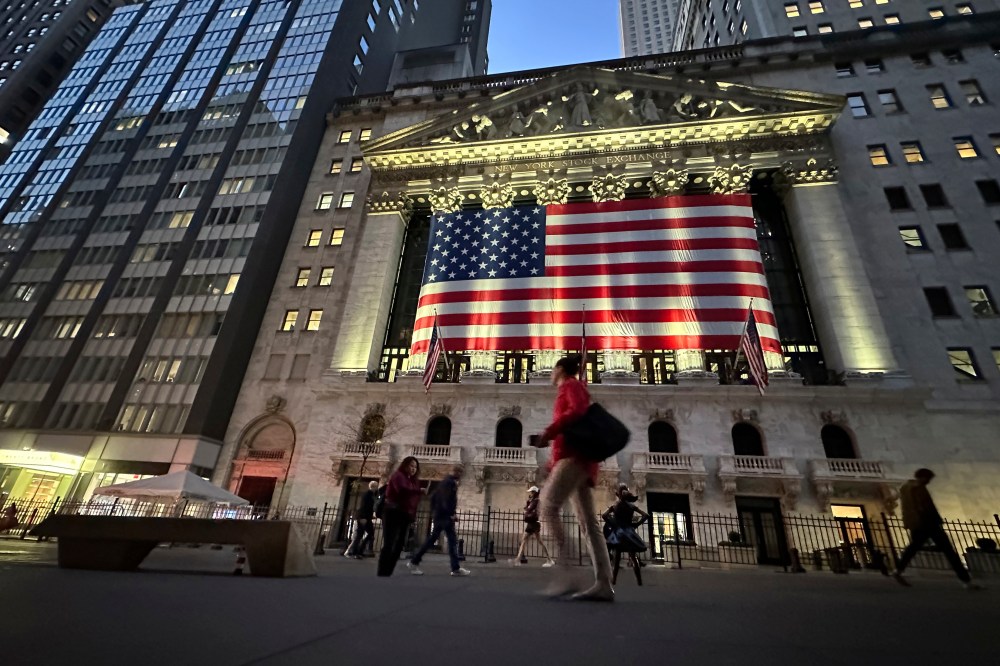
NEW YORK (AP) — U.S. stock indexes muscled higher Thursday, led by companies delivering bigger profits. They pulled closer to their records even as stocks in the artificial-intelligence industry kept swinging on worries about how much longer their boom will last.
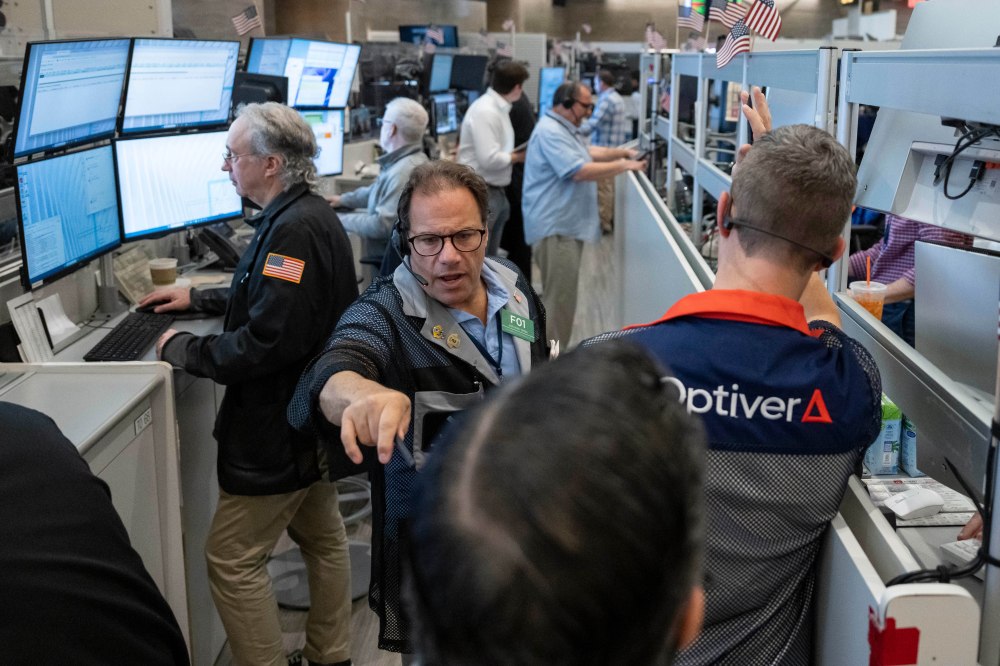
The S&P 500 rose 0.3% after erasing an early-morning loss and pulled closer to its all-time high set last week. The Dow Jones Industrial Average jumped 556 points, or 1.1%, while the Nasdaq composite added 0.1%.
Marsh & McLennan helped lead the way and rallied 4.6% after the insurance and professional services firm that updated its brand name to Marsh reported a stronger profit for the summer than analysts expected.
Expectations are high for growth in profits from all kinds of companies this reporting season, which began in earnest this week. That’s what’s allowed U.S. stocks to set records despite high inflation and the many other worries weighing on Wall Street.
Kimberly-Clark climbed 4.7% after the company behind Huggies, Kleenex and Kotex said it expects to report revenue and profit for the latest quarter above what analysts had been expecting. Bank of New York Mellon rose 3.2% after reporting a stronger profit than analysts expected, and CEO Robin Vince said BNY saw strength across its regions.
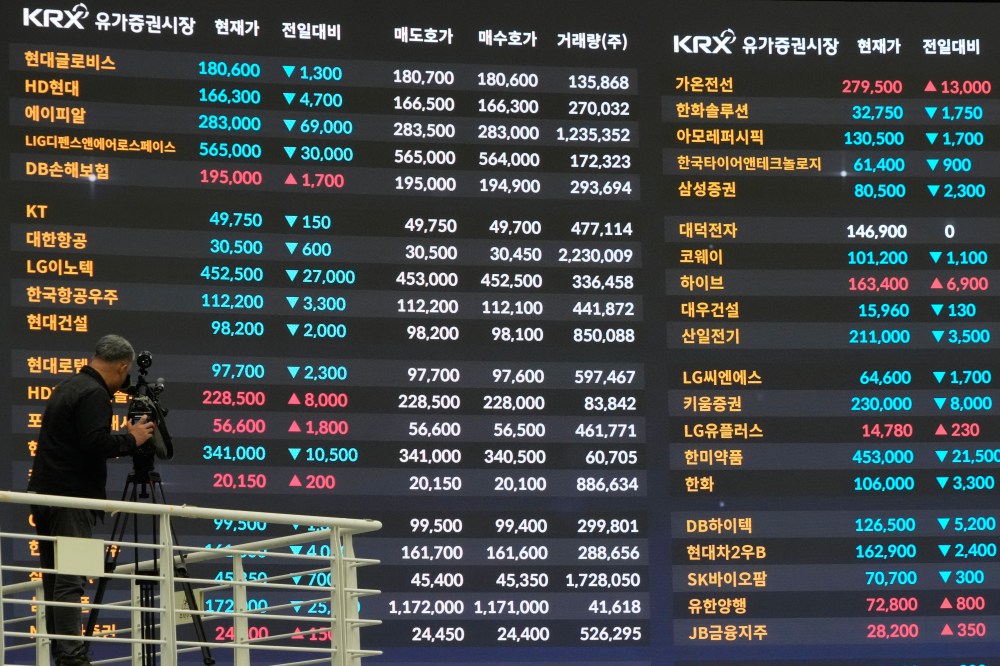
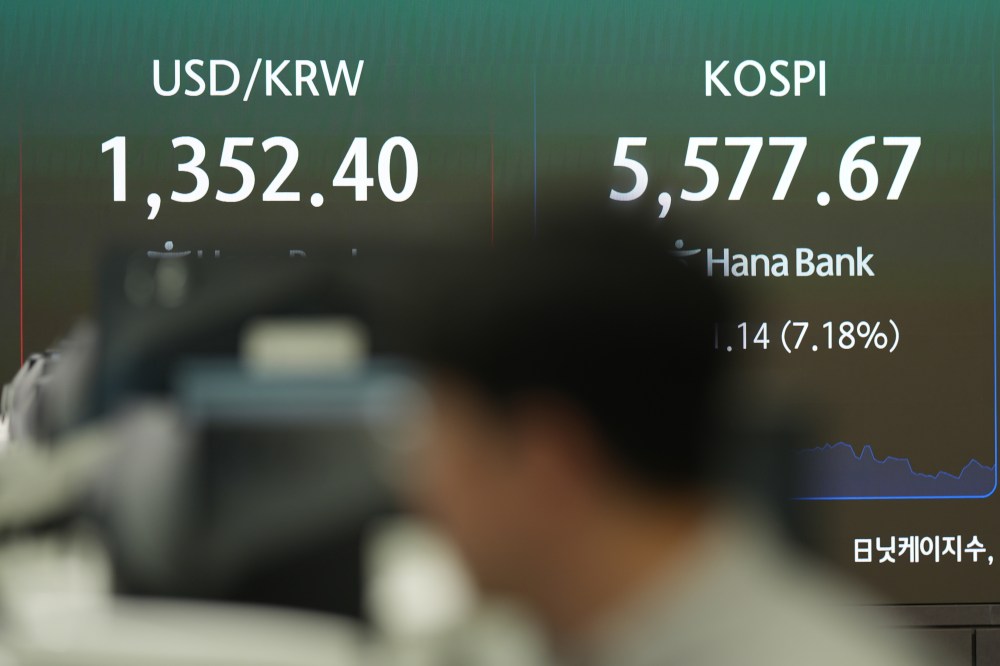
Markets had been much shakier earlier in the day. A sell-off for AI stocks that began on Wall Street Wednesday whipped around the world and sent South Korea’s Kospi stock index down 7.6% and Japan’s Nikkei 225 down 4.9% before knocking the S&P 500 lower at the start of Thursday’s trading.
They’re the latest jarring moves for AI stocks after they led the market for years. Companies are pouring money into the technology in hopes of bigger profits and improved productivity. But data centers and AI chips cost money, and many companies have been borrowing the cash to get them.
Now, after yields in bond markets worldwide hit their highest levels in years and made borrowing money more expensive, worries are rising about how resilient that boom in spending can be. High yields in the bond market also generally make investors less willing to pay high prices for stocks, particularly those seen as the most expensive.
Nvidia, the chip company that’s ridden the AI boom to become Wall Street’s most valuable company, fell 1.8% and was the heaviest weight on the S&P 500. It came into the day with a nearly 1,415% gain since the end of 2022.
But the losses for AI stocks moderated as the day progressed, which helped broad U.S. indexes to steady. Nvidia more than halved an early-morning loss that had reached 3.8%.
Taiwan Semiconductor Manufacturing Co. ’s stock that trades in the United States dropped as much as 5.3% in the morning before finishing with a more modest loss of 1.8%. The bellwether for the AI industry reported a profit for the latest quarter that topped analysts’ high expectations, and Chief Financial Officer Wendell Huang said it expects strong demand to continue in the final three months of 2026.
CoreWeave, which offers AI computing power to customers over the cloud, fell as much as 9.5% in the morning after tumbling 15.5% a day earlier. It later flipped to a gain and finished 5.9% higher.
All told, the S&P 500 rose 25.12 points to 7,744.06. The Dow Jones Industrial Average jumped 556.21 to 52,177.69, and the Nasdaq composite added 20.16 to 26,713.03.
In the bond market, Treasury yields fell, which means investors were willing to pay higher prices to buy U.S. government bonds. Treasurys have a reputation as a safer investment, and investors often flock to them when feeling nervous.
The yield on the 10-year Treasury sank to 5.09% from 5.19% late Wednesday. It had topped 5.30% earlier this month and touched its highest level since 2002 because of worries about high inflation, signals of a strong U.S. economy and other factors.
The drop in yields came even though another report signaled inflation has worsened in the United States by more than economists expected.

Several reports on the U.S. economy also came in stronger than economists expected, which typically pushes yields upward. One report said U.S. retailers made more money last month than economists expected, while another said fewer U.S. workers applied for unemployment benefits last week than expected.
In stock markets abroad, South Korea’s loss was the headliner. Its Kospi index is dominated by two chip companies, Samsung Electronics and SK Hynix, and it fell to its worst day since July. It has dropped 39% since setting a record in June.
Indexes were stronger in Europe, which has less of a dependence on tech stocks. London’s FTSE 100 rallied 1.1% for one of the world’s biggest gains.
___
AP Business Writers Chan Ho-him and Matt Ott contributed to this report.