

Hydro to power down old infrastructure
Dozens of electrical substations to be replaced over 20 years to combat outages

Advertisement
Read this article for free:
or
Already have an account? Log in here »
To continue reading, please subscribe:
Digital Subscription
One year of digital access for only $1.44 a week*
- Enjoy unlimited reading on winnipegfreepress.com
- Read the E-Edition, our digital replica newspaper
- Access News Break, our award-winning app
- Play interactive puzzles
*Billed as $5.77 plus GST every four weeks. After 52 weeks, price increases to the regular rate of $19.95 plus GST every four weeks. Offer available to new and qualified returning subscribers only. Cancel any time.
To continue reading, please subscribe:
Add Free Press access to your Brandon Sun subscription for only an additional
$1 for the first 4 weeks*
- Enjoy unlimited reading on winnipegfreepress.com
- Read the E-Edition, our digital replica newspaper
- Access News Break, our award-winning app
- Play interactive puzzles
*Your next Brandon Sun subscription payment will increase by $1.00 and you will be charged $17.95 plus GST for four weeks. After four weeks, your payment will increase to $24.95 plus GST every four weeks.
Read unlimited articles for free today:
or
Already have an account? Log in here »
Manitoba Hydro is promising fewer power outages in Winnipeg once it replaces or converts 41 electrical substations in a project the utility says will last up to 20 years and cost as much as $1.2 billion.
Spokesman Peter Chura said upgrades to the electrical distribution system will improve safety, reliability and resiliency, and reduce maintenance costs.
“We’ve been clear for a few years now that aging infrastructure is a challenge for the province going forward, so our programs like this are solving that problem incrementally,” he said Friday.
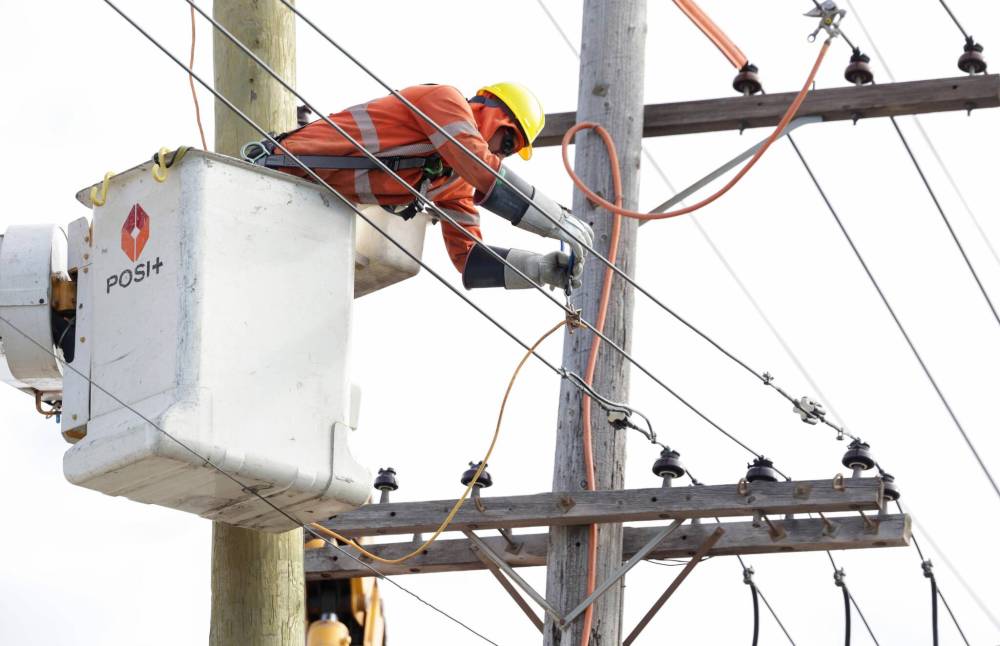
(Ruth Bonneville / Free Press)
Many substations in Winnipeg are nearing the end of their service life or operating close to capacity.
Many substations in Winnipeg are nearing the end of their service life or operating close to capacity. The upgrades will increase capacity, said Craig Sambrooke, Hydro’s construction community liaison.
“It’s not just today, but it’s into the future as electrical demand from our various customers increases over the years,” he said.
Spring and summer storms resulted in many outages — some lasting days — in Winnipeg and other parts of Manitoba. Uprooted trees or fallen branches took out power lines in many cases.
“When a tree falls on a line it’s probably going to result in damage and probably a power outage no matter what, but more modern infrastructure will withstand damage a little bit better and be less complicated to repair,” Chura said.
In addition to aging infrastructure, Hydro is facing a debt of $26.5 billion and projecting an electricity shortfall by the end of 2030. Drought has hurt Hydro’s finances.
The Crown corporation is waiting for the Public Utilities Board to deliver recommendations on a proposal to generate more power by installing three proposed natural gas-powered turbines in Brandon at an estimated cost of $3 billion. Other plans include Indigenous-led wind farms.
Hydro is also searching for a new CEO, after Allan Danroth departed in August.
The cost of the substation upgrades is expected to be between $600 million and $1.2 billion.
As for whether the cost could influence Hydro rates, which are set by the Public Utilities Board, Chura said the work is being done within existing budgets.
Chura and Sambrooke spoke to reporters while crews worked on new poles, power lines and other equipment on Sargent Avenue, west of Berry Street.

(Ruth Bonneville / Free Press)
'It’s not just today, but it’s into the future as electrical demand from our various customers increases over the years,' said Craig Sambrooke, Hydro's construction community liaison.
About 320 poles and related equipment are being replaced in the area as part of the decommissioning of a substation on Berry, which is expected to wrap up next spring. A newer substation on Madison Street will take over the electrical load for the area.
Similar modernization work will take place in and around substations across the city over the next 15 to 20 years.
Some equipment in and around Manitoba Hydro’s substations was installed in the 1960s.
Residents can expect temporary power outages — possibly lasting a few hours — and lane closures in areas where upgrades take place. Chura said customers will be notified in advance.
Sambrooke said Hydro will co-ordinate with health-care facilities and large commercial or industrial power users to help them prepare for temporary outages and minimize impacts. Some have backup generators.
The Crown corporation has about 300 substations in Manitoba, including about 100 in Winnipeg. They connect high-voltage transmission lines to the local distribution network that serves homes and businesses.
Manitoba Hydro’s latest annual report said the corporation plans to spend nearly $17 billion over the next decade to maintain, renew and expand infrastructure.
Capital spending on additions, improvements and replacements of existing infrastructure amounted to $742 million in 2025-26, an increase of $97 million year-over-year.
University of Winnipeg political sciences Prof. Malcolm Bird, who studies Crown corporations, said Hydro’s aging infrastructure extends to hydroelectric generating stations and transmission equipment.
“It’s a problem on a number of levels. One is that old infrastructure breaks more and is less efficient,” he said, noting sophisticated “smart grid” technology is needed to further modernize Hydro’s operations.
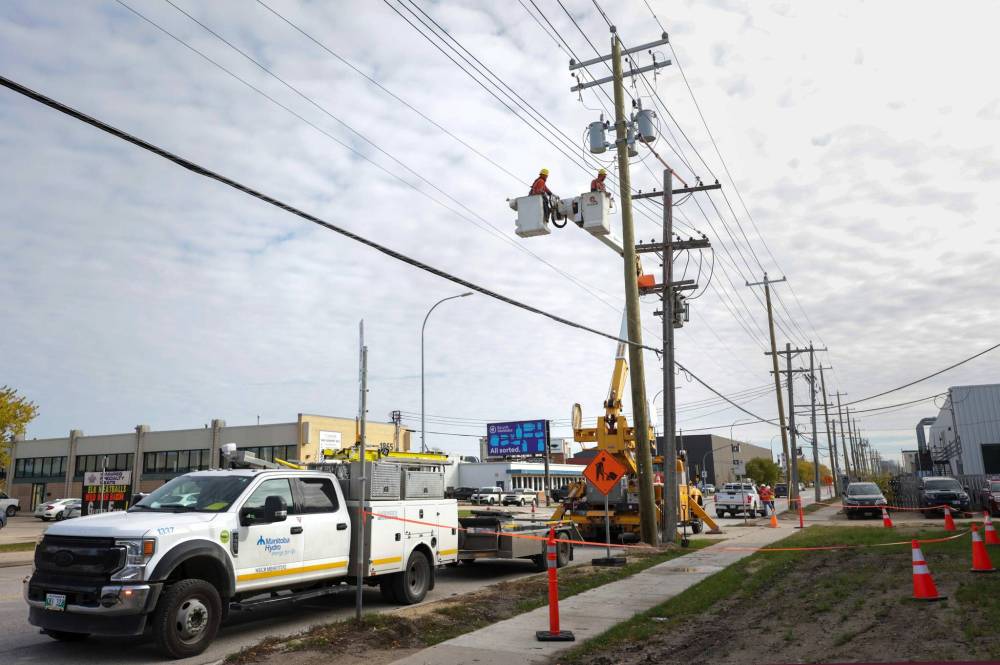
(Ruth Bonneville / Free Press)
Manitoba Hydro employees work on a line on Sargent Avenue.
Bird said some infrastructure upgrades could have been pursued sooner. Increased capital spending can result in rate hikes, which governments try to avoid, or reduce the amount of money that flows to the province, he noted.

“This comes back to low (electricity) prices and the allocation of surpluses when Hydro has produced surpluses,” Bird said. “Where do those surpluses go? Do they go to the government, do they go into general revenue or do they go into the company to pay off the debt or invest in the grid?”
Byron Williams, a lawyer with the Public Interest Law Centre, said the PUB, with the support of his client, the Consumers Coalition, has urged Hydro for the past decade to modernize its day-to-day capital expenditure planning to provide better value to ratepayers while continuing to deliver “superior” quality of service.
Ratepayers are facing ongoing pressures from a recent four per cent rate increase and the potential for future increases at or near the same level, he said.
“It is important for Manitoba Hydro to invest in maintaining superior quality of service,” Williams said in a statement. “But the record of PUB decisions over the past decade makes it clear that Manitoba Hydro continues to lag behind good practice, prudence standards in cost-effectively managing and prioritizing its day-to-day capital expenditures.”
chris.kitching@winnipegfreepress.com
Chris Kitching is a general assignment reporter at the Free Press. He began his newspaper career in 2001, with stops in Winnipeg, Toronto and London, England, along the way. After returning to Winnipeg, he joined the Free Press in 2021, and now covers a little bit of everything for the newspaper. Read more about Chris.
Every piece of reporting Chris produces is reviewed by an editing team before it is posted online or published in print — part of the Free Press‘s tradition, since 1872, of producing reliable independent journalism. Read more about Free Press’s history and mandate, and learn how our newsroom operates.
Our newsroom depends on a growing audience of readers to power our journalism. If you are not a paid reader, please consider becoming a subscriber.
Our newsroom depends on its audience of readers to power our journalism. Thank you for your support.
Chris Kitching is a general assignment reporter at the Free Press. He began his newspaper career in 2001, with stops in Winnipeg, Toronto and London, England, along the way. After returning to Winnipeg, he joined the Free Press in 2021, and now covers a little bit of everything for the newspaper. Read more about Chris.
Every piece of reporting Chris produces is reviewed by an editing team before it is posted online or published in print — part of the Free Press‘s tradition, since 1872, of producing reliable independent journalism. Read more about Free Press’s history and mandate, and learn how our newsroom operates.
Our newsroom depends on a growing audience of readers to power our journalism. If you are not a paid reader, please consider becoming a subscriber.
Our newsroom depends on its audience of readers to power our journalism. Thank you for your support.
Advertisement Advertise With Us
Advertisement Advertise With Us
History
Updated on Friday, October 16, 2026 3:33 PM CDT: Updates headline
Updated on Friday, October 16, 2026 4:33 PM CDT: Adds quotes