

New chapter for Yellowquill University College

Advertisement
Read this article for free:
or
Already have an account? Log in here »
To continue reading, please subscribe:
Digital Subscription
One year of digital access for only $1.44 a week*
- Enjoy unlimited reading on winnipegfreepress.com
- Read the E-Edition, our digital replica newspaper
- Access News Break, our award-winning app
- Play interactive puzzles
*Billed as $5.77 plus GST every four weeks. After 52 weeks, price increases to the regular rate of $19.95 plus GST every four weeks. Offer available to new and qualified returning subscribers only. Cancel any time.
To continue reading, please subscribe:
Add Free Press access to your Brandon Sun subscription for only an additional
$1 for the first 4 weeks*
- Enjoy unlimited reading on winnipegfreepress.com
- Read the E-Edition, our digital replica newspaper
- Access News Break, our award-winning app
- Play interactive puzzles
*Your next Brandon Sun subscription payment will increase by $1.00 and you will be charged $17.95 plus GST for four weeks. After four weeks, your payment will increase to $24.95 plus GST every four weeks.
Read unlimited articles for free today:
or
Already have an account? Log in here »
Sometimes, a milestone is about much more than a degree. It is about opportunity, recognition and the doors that open for the people who come next.
Yellowquill University College reached a historic milestone on Oct. 1, when new Manitoba legislation came into effect formally recognizing the institution within the province’s post-secondary education system and granting it authority to award degrees.
Established in 1984, Yellowquill is now Manitoba’s first fully recognized First Nations-owned and operated post-secondary institution with degree-granting authority.
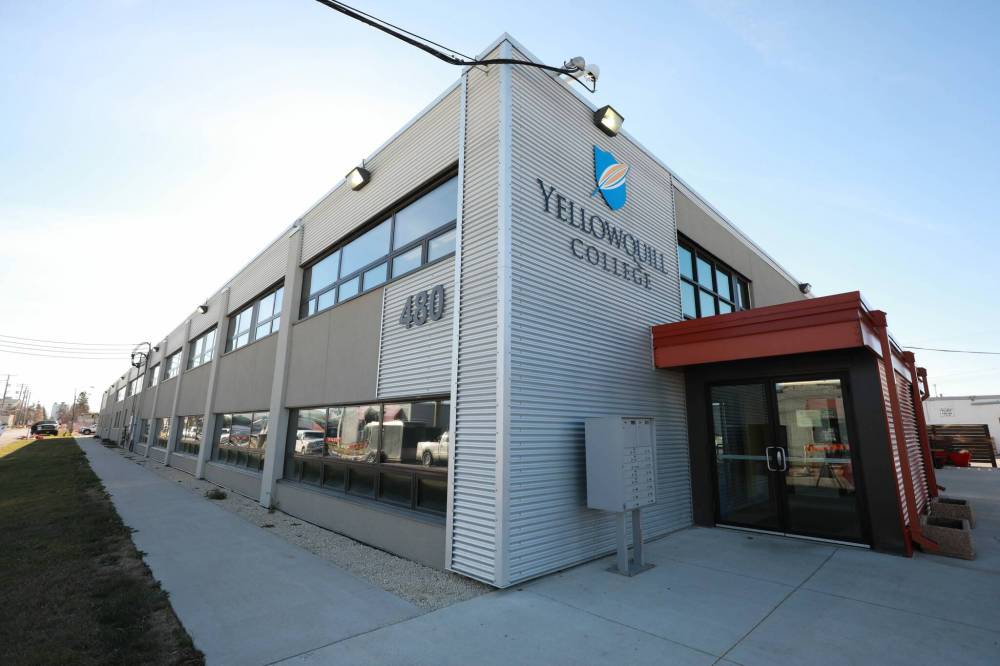
RUTH BONNEVILLE / FREE PRESS files
Yellowquill University College in Winnipeg has provided post-secondary education grounded in First Nations knowledge, cultures and community needs for more than 40 years. As of Oct. 1, it now has the authority to grant degrees.
It is an achievement worth celebrating, not only for Yellowquill and the communities it serves, but also for what it represents about education, career development and the future of Manitoba’s workforce.
Recognition creates opportunity
For more than four decades, Yellowquill University College has provided education grounded in First Nations knowledge, cultures and community needs. Located on Madison Street in Winnipeg, on the Long Plain First Nation urban reserve, the institution also delivers programs in First Nations communities.
Despite its long-standing work, Yellowquill previously lacked the comprehensive legislative recognition now established under the Yellowquill University College Act. The new legislation removes important barriers to its ability to grant degrees, expand its academic offerings and access supports available within Manitoba’s post-secondary education system.
The change is significant because recognition matters. For an educational institution, it establishes a clearer foundation for growth, collaboration and the development of new opportunities for students.
For learners, expanded degree-granting authority can create new possibilities for academic progression and career development. It also strengthens the role of an institution that has spent decades working to provide education shaped by the priorities and perspectives of First Nations.
This milestone did not happen overnight. It reflects years of commitment, leadership and persistence. Yellowquill’s achievement is a reminder that meaningful progress often begins long before it receives formal recognition.
Education path to meaningful career
Education is frequently described as an investment in the future. It can help people develop knowledge, strengthen their skills and prepare for opportunities that might otherwise remain out of reach.
But career development is not simply about obtaining a credential. It is also about finding an educational environment where people can build confidence, develop their abilities and see a connection between what they learn and the contributions they want to make.
Yellowquill’s approach offers an important perspective on that relationship.
The institution’s legislated mandate includes providing university- and college-level instruction, training and preparatory education in areas aligned with the needs of First Nations. Its objectives also include supporting students’ intellectual, spiritual, physical and emotional development while fostering community.
That broader vision matters when we consider how people prepare for their working lives.
A successful career can involve much more than technical knowledge. Communication, critical thinking, cultural understanding, collaboration and a sense of purpose can all influence how people contribute in their professions and communities.
An educational model that respects culture and community can help students connect their learning with the realities, responsibilities and aspirations of their lives. For some learners, that connection may be an important part of building a foundation for future study, employment or leadership.
As Yellowquill develops its opportunities under the new legislation, it has greater scope to build on its established work and respond to the educational priorities of the communities it serves.
Lesson for employers, workplace leaders
There is also a valuable lesson here for employers.
Organizations often talk about attracting talent, developing employees and building inclusive workplaces. Yet these goals require more than simply opening a door. People need opportunities to learn, demonstrate their abilities and progress in environments where their contributions are respected.
Yellowquill’s milestone invites us to consider how institutions and employers can recognize different experiences, perspectives and pathways to achievement.
A workforce is strengthened when people have meaningful access to education and opportunities to apply their knowledge. Employers benefit when they can draw on a broad range of skills and perspectives, while communities benefit when people are supported in developing their capabilities and contributing their expertise.
For workplace leaders, this means thinking carefully about how career opportunities are designed.
Are employees encouraged to continue learning? Are recruitment and advancement processes fair? Do workplace cultures allow people with different backgrounds and experiences to contribute fully? Are organizations building genuine pathways for professional growth?
These questions are relevant across industries and throughout Manitoba.
Yellowquill’s story also reminds employers inclusion is not about expecting everyone to follow the same path.
It is about recognizing talent, removing unnecessary barriers and creating conditions in which people can succeed.
That principle applies to education, recruitment, leadership development and career advancement alike.
Preserving culture, building for future
One of the most important aspects of this milestone is formal recognition does not require Yellowquill to surrender the cultural foundations of its education.
The institution retains the exclusive right to determine the traditions, teachings, languages, cultural values, practices and knowledge content of its programs and courses. Its academic affairs are overseen by the Knowledge Circle, whose mandate includes culturally appropriate teaching and learning and the advancement of educational sovereignty.
This is an important distinction. Progress does not have to mean abandoning what makes an institution distinctive.
For students, the opportunity to pursue education in a setting that respects their cultural knowledge and identity can be meaningful in its own right. For communities, Indigenous-led education can support the continuation of knowledge and strengthen the connection between learning and community priorities.
The college is open to First Nations, Inuit, Métis and non-Indigenous students, creating opportunities for learners from different backgrounds to benefit from its educational approach.
In a world of changing workplace expectations and increasingly complex career paths, the ability to learn from different perspectives is valuable. Respectful learning environments can help people develop a deeper understanding of the communities and colleagues with whom they work.
Looking ahead with optimism
The new legislation creates opportunities for Yellowquill to expand its programs and strengthen its place in Manitoba’s post-secondary education system.
What that growth will look like over time will depend on the institution’s priorities, resources, partnerships and the needs of its students and communities.
There is still work to be done to ensure educational opportunities translate into accessible career pathways and meaningful outcomes.
A degree is an important achievement, but students also need support, relevant learning opportunities and connections that help them take the next steps in their professional lives.
Nevertheless, this is a moment to recognize how far Yellowquill has come.
For more than 40 years, the institution has continued its work, building educational opportunities while remaining grounded in First Nations leadership and perspectives.

The provincial legislation now gives that work a stronger formal foundation and opens a new chapter for the students and communities who will shape its future.
Congratulations to Yellowquill University College, its leadership, educators, students, graduates and the communities that have supported its journey.
This milestone is about more than the authority to grant degrees. It is about recognizing the value of Indigenous-led education, expanding possibilities for career development and creating opportunities for future generations to learn, lead and contribute.
And that is something worth celebrating.
Tory McNally, CPHR, BSc., vice-president, professional services at TIPI Legacy HR+ (formerly Legacy Bowes), is a human resource consultant, relationship builder and problem solver. She can be reached at tmcnally@tipipartners.com
Tory McNally, CPHR, BSc., vice-president, professional services at TIPI Legacy HR+ (formerly Legacy Bowes), is a human resource consultant, strategic thinker and problem solver. Read more about Tory.
Our newsroom depends on a growing audience of readers to power our journalism. If you are not a paid reader, please consider becoming a subscriber.
Our newsroom depends on its audience of readers to power our journalism. Thank you for your support.
Tory McNally, CPHR, BSc., vice-president, professional services at TIPI Legacy HR+ (formerly Legacy Bowes), is a human resource consultant, strategic thinker and problem solver. Read more about Tory.
Our newsroom depends on a growing audience of readers to power our journalism. If you are not a paid reader, please consider becoming a subscriber.
Our newsroom depends on its audience of readers to power our journalism. Thank you for your support.
Advertisement Advertise With Us
Advertisement Advertise With Us