

Hydro eyes EV charging mitigation amid electricity shortfall forecast

Advertisement
Read this article for free:
or
Already have an account? Log in here »
To continue reading, please subscribe:
Digital Subscription
One year of digital access for only $1.44 a week*
- Enjoy unlimited reading on winnipegfreepress.com
- Read the E-Edition, our digital replica newspaper
- Access News Break, our award-winning app
- Play interactive puzzles
*Billed as $5.77 plus GST every four weeks. After 52 weeks, price increases to the regular rate of $19.95 plus GST every four weeks. Offer available to new and qualified returning subscribers only. Cancel any time.
To continue reading, please subscribe:
Add Free Press access to your Brandon Sun subscription for only an additional
$1 for the first 4 weeks*
- Enjoy unlimited reading on winnipegfreepress.com
- Read the E-Edition, our digital replica newspaper
- Access News Break, our award-winning app
- Play interactive puzzles
*Your next Brandon Sun subscription payment will increase by $1.00 and you will be charged $17.95 plus GST for four weeks. After four weeks, your payment will increase to $24.95 plus GST every four weeks.
Read unlimited articles for free today:
or
Already have an account? Log in here »
Manitoba Hydro is looking to stagger electric vehicle charging as it anticipates future electricity shortages.
The Crown corporation is considering “managed charging” pilot projects. Details aren’t available; Hydro is in exploratory phases, spokesman Peter Chura wrote in a statement.
Alex Chiang, Hydro’s vice-president of customer solutions and experience, addressed dozens of electric vehicle industry members during a national conference at The Fort Garry Hotel on Wednesday.
RUTH BONNEVILLE / FREE PRESS FILES
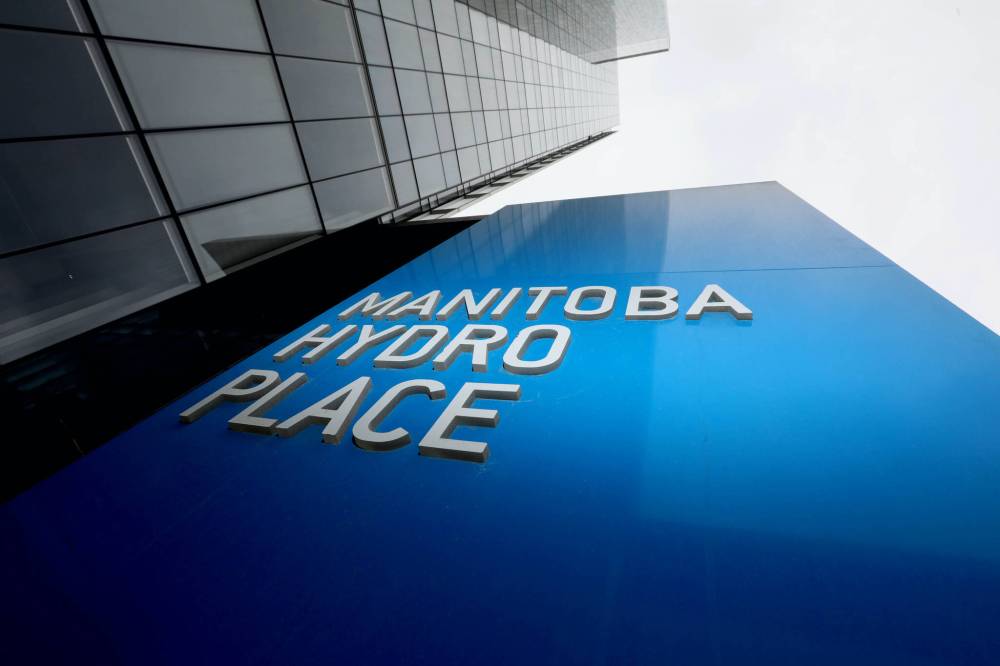
In anticipation of future electricity shortages, Manitoba Hydro is considering staggering electric vehicle charging.
Around 300 people registered for the conference, hosted by Electric Mobility Canada.
Manitoba Hydro has forecast an electricity capacity deficit — possibly reaching 600 megawatts — by the end of 2030. Last February, it released a 10-year plan showcasing ways to build capacity. Half of the solutions are customer-based, Chiang said.
“Unmanaged electrification could … create several gigawatts of additional peak demand,” he told the crowd. “How and when electricity is used matters almost as much as how much electricity is used.”
Hydro may offer customers incentives for “flexible control” of EV charging, and water and space heating, Chiang said.
Hydro will study other jurisdictions’ actions before piloting projects in Manitoba, he said.
He highlighted Octopus Energy, a United Kingdom company that co-ordinates devices, including EV chargers, to shift energy use.
In California, Pacific Gas & Electric Company (PG&E) and GM Energy are testing EVs’ ability to supply power back to homes during outages.
Con Edison has a demand management program in New York City, Chiang shared.
“Customer flexibility will scale only if participation is simple, voluntary, transparent and worthwhile,” he said.
Electric vehicle sales in Manitoba have surged, in part, because of federal and provincial rebates. The province’s version launched in 2024.
Higher gas prices, more charging availability and comparable electric and non-electric vehicle prices have also contributed to the trend, said Daniel Breton, president of Electric Mobility Canada.
“Manitoba is catching up,” he continued, noting the province still lags behind British Columbia and Quebec.
Light-duty EVs make up 8.7 per cent of vehicles in Manitoba. The type consumes 20.8 and 19.7 per cent in B.C. and Quebec, respectively, Transport Canada data show.
James Hart, Manitoba Electric Vehicle Association’s president, says he’s supportive of Hydro’s push for staggered charging.
“Our goal is to electrify the province,” Hart said.
“If that means we need to adjust possibly how we do it, we’re fine with that. Most of our vehicles are quite capable of running around without using the whole battery in a day.”
He’s been “actively” pushing the Crown corporation and provincial government for EV energy management systems in older homes where the community’s power may not be conducive for EV chargers.
“It would hook in to the same circuit as, let’s say, your dryer or your electric stove,” Hart said. “If your stove is on, your electric vehicle charger is not on.”
Such systems are common in British Columbia and Quebec.
Swtch installs electric vehicle chargers across the country. It uses monitoring technology in some multi-family buildings, said Jason Cruickshank, the company’s director of customer experience. “I think the sooner (Manitoba Hydro) gets started, the better.”
That way, chargers being installed now will be compatible with future provincial standards, he said.
Investigation of various systems is currently taking place, said Environment Minister Mike Moyes.

New technologies to manage load will be “critically important for Manitoba Hydro,” Moyes said: “We’re looking at all these new technologies, and we’re going to evaluate them as they come up.”
Manitoba had issued 7,269 EV rebates, with payments exceeding $27.6 million, as of Oct. 19.
The provincial government counts approximately 300 public EV charging locations and around 600 to 700 operational public charging ports.
Most EV owners have private chargers at home.
gabrielle.piche@winnipegfreepress.com
Gabrielle Piché reports on business for the Free Press. She interned at the Free Press and worked for its sister outlet, Canstar Community News, before entering the business beat in 2021. Read more about Gabrielle.
Every piece of reporting Gabrielle produces is reviewed by an editing team before it is posted online or published in print — part of the Free Press‘s tradition, since 1872, of producing reliable independent journalism. Read more about Free Press’s history and mandate, and learn how our newsroom operates.
Our newsroom depends on a growing audience of readers to power our journalism. If you are not a paid reader, please consider becoming a subscriber.
Our newsroom depends on its audience of readers to power our journalism. Thank you for your support.
Advertisement Advertise With Us
Advertisement Advertise With Us