

Processing potential long way from reality

Advertisement
Read this article for free:
or
Already have an account? Log in here »
To continue reading, please subscribe:
Digital Subscription
One year of digital access for only $1.44 a week*
- Enjoy unlimited reading on winnipegfreepress.com
- Read the E-Edition, our digital replica newspaper
- Access News Break, our award-winning app
- Play interactive puzzles
*Billed as $5.77 plus GST every four weeks. After 52 weeks, price increases to the regular rate of $19.95 plus GST every four weeks. Offer available to new and qualified returning subscribers only. Cancel any time.
To continue reading, please subscribe:
Add Free Press access to your Brandon Sun subscription for only an additional
$1 for the first 4 weeks*
- Enjoy unlimited reading on winnipegfreepress.com
- Read the E-Edition, our digital replica newspaper
- Access News Break, our award-winning app
- Play interactive puzzles
*Your next Brandon Sun subscription payment will increase by $1.00 and you will be charged $17.95 plus GST for four weeks. After four weeks, your payment will increase to $24.95 plus GST every four weeks.
Read unlimited articles for free today:
or
Already have an account? Log in here »
There are times in life when you want to be wrong — like when you walk into the doctor’s office believing your ailment will be the death of you.
It’s the same sort of feeling I get wading through the pile of newly released reports extolling the unrealized “potential” for more value-added processing in Canadian agriculture. There’s this little voice inside my head saying: “I’m from Manitoba. Show me.”
There are jaw-dropping numbers bandied about in various reports from Food and Beverage Canada, the Canadian Chambers of Commerce/PwC and the Canadian Agri-Food Policy Institute. For example, more processing could add $75 billion on top of the $188 billion the sector already generates, create hundreds of thousands more jobs and a bigger domestic market for farmers. The list goes on.
GRAHAM HUGHES / THE CANADIAN PRESS FILES
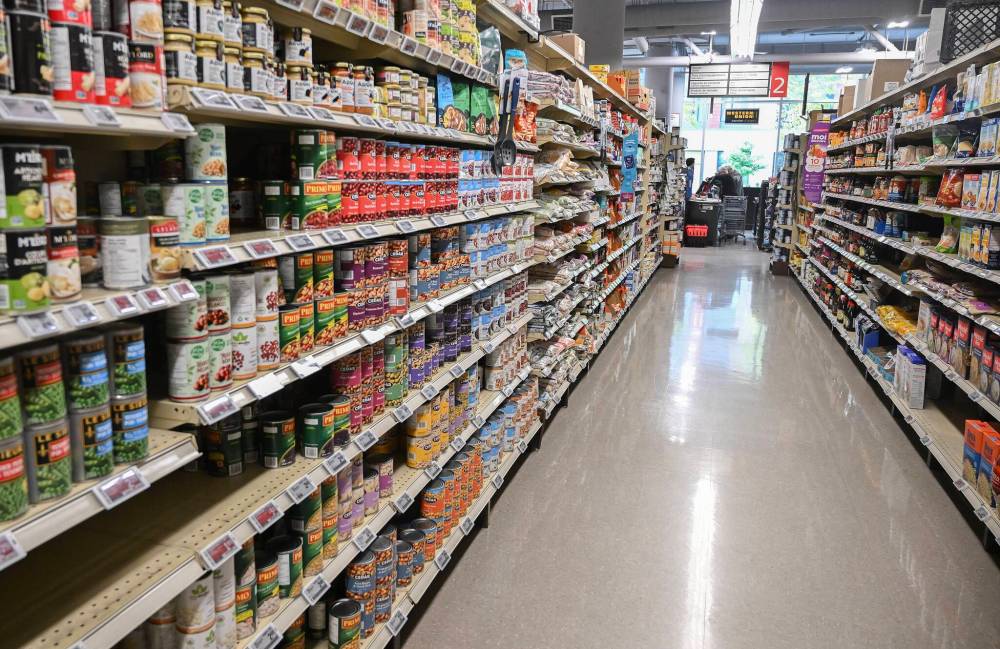
The lack of cohesive programs, funding and mandate leaves gaps that hamper small Canadian food processors’ ability to scale up.
Not to discount the solid analysis behind these efforts. Overall, it all sounds great, although notably missing is any mention of the growing concerns over ultra-processed foods and how that might affect future market growth.
Maybe it’s because I’m still waiting for all those food factories that were supposed to spring up across the West when the federal government axed the Crow Benefit, which until 1995 subsidized rail freight on shipping grain out of Western Canada, and later in 2012, when the Canadian Wheat Board’s single desk for wheat and barley ended.
There were lots of reasons for those changes, but more value-added diversification ranked high among the utopian promises.
True, there have been important developments in secondary processing.
Canola crushing is perhaps the sector’s biggest success story, with capacity tripling over the past two decades.
But many investments haven’t succeeded, despite huge injections of public dollars. And many processors simply never came, finding it more economical to buy raw commodities and process them closer to where they will be consumed.
That’s one of the fundamental holes in the logic behind the value-added processing mantra that if you build it, they will come. Raw commodities are typically cheaper to transport than processed products. Western Canada is a long way from its markets and transportation costs aren’t going down.
Canada’s food-processing sector is chronically short of labour to work in the facilities that exist today. It must export most of what it does process because there aren’t enough Canadians to eat it.
Both problems could be solved by importing more people to grow domestic consumption and the national labour pool — but you need only to look at a few headlines to see how that’s going.
Canada has a vibrant food business, boasting 9,000 processing establishments across the country. However, 91 per cent of them are small.
And despite its status as Canada’s largest manufacturing sector, and its role as Canadian farmers’ biggest customer, food and beverage processing has received substantially less federal support than auto, aerospace, EV batteries and critical mineral sectors relative to its contribution to GDP.
“Value-added processing was a stated priority but not a funded one,” was how the CAPI analysis summed things up.
That discrepancy needs addressing.
The funds the sector does get come from a variety of private and public sources, including government programs with specific mandates such as job creation, innovation or tax incentives. The lack of cohesiveness leaves gaps that hamper smallish processors’ ability to scale up to better compete globally.
So, I’m left wondering, what’s changed? Well, there are some differences in the context of these times.

For one thing, proximity to the U.S. market was until recently a Canadian food exporter’s biggest asset. It is now their biggest vulnerability. Alternatives that didn’t make sense before are now worth a second look.
Secondly, Canada now has a National Food Security Strategy, which expands the scope of this country’s interest in agriculture and food beyond economics to national security. It brings a wide swath of commitments and new funds to the processing table.
Funds alone aren’t enough. These reports call for an overarching strategy to modernize the industry, collect robust data to help identify weak spots, attract new investors and develop more workers.
That’s a lot to chew on for governments with a short mandate. I hope I’m wrong, but it’s a long drive from potential to reality.
Laura Rance-Unger is editor emeritus for Glacier FarmMedia. She can be reached at lrance@farmmedia.com
Laura Rance is editorial director at Farm Business Communications.
Our newsroom depends on a growing audience of readers to power our journalism. If you are not a paid reader, please consider becoming a subscriber.
Our newsroom depends on its audience of readers to power our journalism. Thank you for your support.
Advertisement Advertise With Us
Advertisement Advertise With Us