California, New Zealand announce climate change partnership
Advertisement
Read this article for free:
or
Already have an account? Log in here »
To continue reading, please subscribe:

Digital Subscription
One year of digital access for only $205*
- Enjoy unlimited reading on winnipegfreepress.com
- Read the E-Edition, our digital replica newspaper
- Access News Break, our award-winning app
- Play interactive puzzles
*First annual payment billed as $205.00 + GST for one year. This annual subscription will automatically renew at $233.00 + GST every 52 weeks (10% off the regular annual price of $259.35). Offer available to new and qualified returning subscribers only. Cancel any time.
To continue reading, please subscribe:
Add Free Press access to your Brandon Sun subscription for only an additional
$1 for the first 4 weeks*
- Enjoy unlimited reading on winnipegfreepress.com
- Read the E-Edition, our digital replica newspaper
- Access News Break, our award-winning app
- Play interactive puzzles
*Your next Brandon Sun subscription payment will increase by $1.00 and you will be charged $17.95 plus GST for four weeks. After four weeks, your payment will increase to $24.95 plus GST every four weeks.
Read unlimited articles for free today:
or
Already have an account? Log in here »
Hey there, time traveller!
This article was published 27/05/2022 (1583 days ago), so information in it may no longer be current.
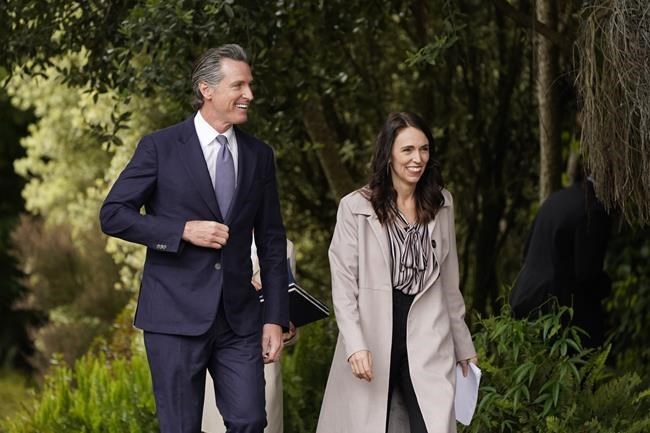
SAN FRANCISCO (AP) — Top officials from California and New Zealand signed a pledge Friday agreeing to help fight climate change by sharing ideas and best practices, including how to put millions more electric vehicles on the road.
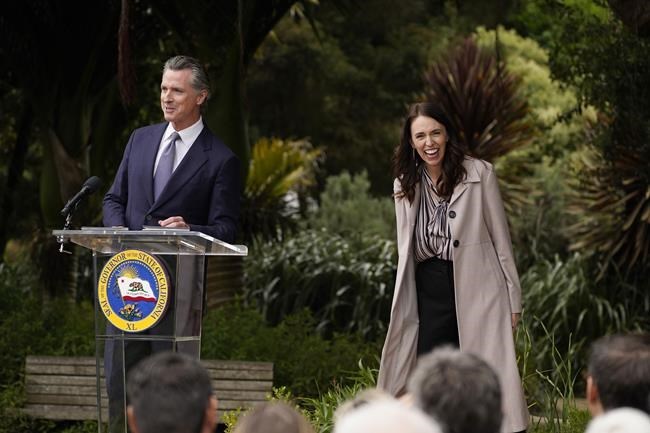
Gov. Gavin Newsom, a Democrat, and New Zealand Prime Minister Jacinda Ardern spoke about the agreement at San Francisco’s Golden Gate Park. The agreement doesn’t commit either government to specific policies but outlines broad areas for cooperation.
“We have a natural connection and I’m so pleased we’ve put pen to paper today to confirm that and continue our cooperation on one of the great challenges from our generation,” Ardern said.
Cars, trucks and other parts of the transportation sector are California’s biggest contributor of greenhouse gas emissions, and New Zealand’s second largest behind agriculture, Ardern said. California is moving to ban sales of new gas-powered cars in the state by 2035. New Zealand wants 30% of all car sales to be electric by that year.
Newsom said he expects competition to grow in the electric vehicle market, which Tesla currently dominates, likening it to when Netflix started facing competition from other streaming services. Ardern said her government will talk with California officials about programs that offer incentives for people to get rid of older, gas-guzzling cars.
New Zealand is home to 5 million people compared to California’s population of 39 million and has a much smaller economy. Both are experiencing the effects of climate change. California just recorded its driest winter on record as a drought grips the state. New Zealand’s most recent winter, which takes place from June to August, was the hottest on record.
New Zealand is heavily focused on reducing emissions from its vital agriculture industry. Beef and dairy dominate the nation’s farming sector and milk products are its largest export. Worldwide, cattle are a major source of emissions of methane, a potent greenhouse gas.
California is also home to a major farming industry that produces many of the world’s fruits and vegetables. The agreement says the two governments may engage in joint projects to expand farming practices that build soil health, reduce methane emissions and boost water efficiency.
The memorandum of cooperation was signed by Jared Blumenfeld, secretary of the California Environmental Protection Agency, and Jeremy Clarke-Watson, New Zealand’s consul-general in Los Angeles.
California already has climate-focused agreements with many other nations, including China, Canada, and Mexico.
Former California Gov. Jerry Brown, also a Democrat, helped launch a coalition of 270 subnational governments, aimed at keeping an increase in emissions to below 2 degrees Celsius.
At last year’s global climate change conference in Scotland, California signed a brief joint declaration with New Zealand and the Canadian province of Quebec to share information on climate policies including carbon markets.
Because of Ardern’s high-profile role in the wake of the 2019 massacre of 51 worshippers at two mosques in Christchurch, the issue of gun control was also expected to come up.

Newsom is pressuring the state Legislature to send him a package of gun reform bills in the wake of this week’s killing of 19 children and two teachers at a Texas elementary school.
Less than a month after the Christchurch shootings, New Zealand’s parliament voted to outlaw most automatic and semi-automatic weapons.
Newsom and Ardern did not publicly discuss gun control, though Ardern addressed her country’s actions on the issue in response to a question about the “shared values” between California and New Zealand.
“It was clear that the New Zealand public expected its politicians to find solutions and quickly,” Ardern said. “Now are they the answer to all of our issues as they relate to weapons in New Zealand? No, but they were practical steps that we believe were necessary, and that would make a difference. And so we made them.”
Investigators say an 18-year-old gunman who shot and killed 10 shoppers at a supermarket in Buffalo, New York, targeting Black people, had researched the racist Christchurch shooting and also livestreamed the attack as the Christchurch shooter did.