

Canadians must be better stewards of food
Advertisement
Read this article for free:
or
Already have an account? Log in here »
To continue reading, please subscribe:

Digital Subscription
One year of digital access for only $205*
- Enjoy unlimited reading on winnipegfreepress.com
- Read the E-Edition, our digital replica newspaper
- Access News Break, our award-winning app
- Play interactive puzzles
*First annual payment billed as $205.00 + GST for one year. This annual subscription will automatically renew at $233.00 + GST every 52 weeks (10% off the regular annual price of $259.35). Offer available to new and qualified returning subscribers only. Cancel any time.
To continue reading, please subscribe:
Add Free Press access to your Brandon Sun subscription for only an additional
$1 for the first 4 weeks*
- Enjoy unlimited reading on winnipegfreepress.com
- Read the E-Edition, our digital replica newspaper
- Access News Break, our award-winning app
- Play interactive puzzles
*Your next Brandon Sun subscription payment will increase by $1.00 and you will be charged $17.95 plus GST for four weeks. After four weeks, your payment will increase to $24.95 plus GST every four weeks.
Read unlimited articles for free today:
or
Already have an account? Log in here »
Hey there, time traveller!
This article was published 02/02/2019 (2784 days ago), so information in it may no longer be current.
When asked to name the qualities that define Canadian culture, you might expect to hear things like our love of hockey, cold-weather hardiness and our penchant for politeness.
A recently released study has now identified another quality that defines Canadians: our culture of waste, particularly as it applies to food.
Second Harvest, a food-rescue charity based in Toronto, teamed up with Value Chain Management International to conduct a yearlong analysis of why and how food is wasted in the Canadian food system. It is the first study on food waste in the world to use a standardized system to measure the weight of food lost, conducting a whole-chain analysis from production to end of life.
Gathering the data involved consulting with more than 700 food industry representatives to identify the root causes of the problem.
The results suggest the amount of food lost in the production phases and wasted during distribution and marketing is much higher than previously thought.
Whereas global numbers put out by the Food and Agriculture Organization of the United Nations say approximately one-third of all food produced is wasted, this analysis says the actual loss here in Canada is closer to 58 per cent, or 35.5 million tonnes, of the food produced annually.
The total value of that loss is just shy of $50 billion, which equates to approximately three per cent of Canada’s GDP.
Of course, some loss is unavoidable, such as the inedible parts of plants and animals. The good news and the bad news, however, is 32 per cent of those losses could be avoided by implementing a better mix of attitudes, leadership and policy.
“The overarching driver of FLW (food loss waste) in Canada is a cultural acceptance of waste,” the report says. “This culture ultimately emanates from the true costs of waste not being internalized by industry. This, in turn, affects consumers’ attitudes and behaviour.”
It comes from living in a land of plenty. For the vast majority of Canadians, dinner is about deciding what to eat, rather than whether there is something to eat. That said, there are four million Canadians who are food insecure.
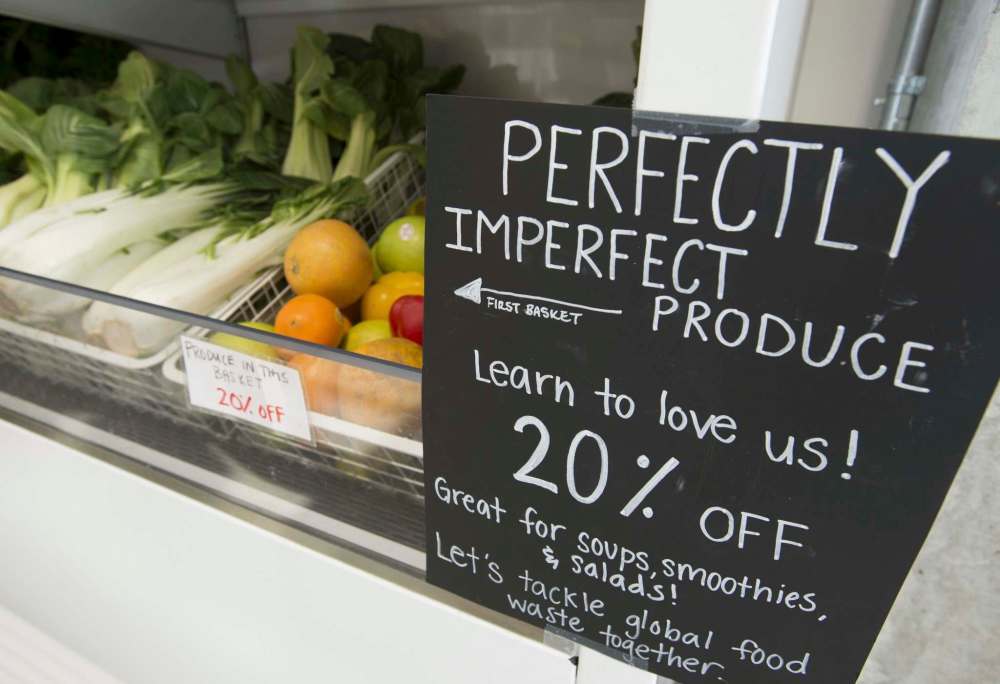
Researchers found evidence of this “food waste culture” at every step of the value chain — from the fields where food commodities are left to rot because they are uneconomical to harvest, and grading standards that discard vegetables or fruits because they are the wrong size or shape, to retailers and consumers who interpret “best before” dates as “bad after.”
Many are not aware there are only five foods in Canada that require expiry dates on the label: nutritional supplements, meal replacements, baby formulas, foods sold in pharmacies for low-energy diets and formulated liquid diets.
In the food-service sector, buffet tables are cited as a leading contributor, partly because much of that food can’t be reused, but also because they encourage people to load up with more than they can eat.
Food processors quite simply consider waste a “cost of doing business,” with expediency more often the driver than conservation.
The report says food loss waste is responsible for 60 per cent of the food industry’s environmental footprint. Food that is sent to landfills produces methane gas as it decomposes, which is 25 times more damaging than carbon dioxide.

“All of us — from farmers to manufacturers, from producers to distributors, from stores to homes — need to rethink how we view excess food and change our habits, so that people can benefit and an environmental crisis can be avoided,” the report says.
It identifies multiple places in the food supply chain where small changes can add up to big differences, starting with standardized methods for measuring the true costs of loss and waste, and ensuring those costs are paid up front rather than externalized.
Changing producer, processor and consumer behaviours requires leadership from business, as well as policy-makers, and strategies that foster collaboration in ways that break with convention.
The problem of food waste is owned by all of us. Our challenge is to make fixing it a Canadian thing to do.
Laura Rance is editorial director at Glacier FarmMedia. She can be reached at lrance@farmmedia.com.