

Dust-busters
EarthZyme, a Manitoba-made product, cuts maintenance costs, reduces dust from gravel roads by 90 per cent
Advertisement
Read this article for free:
or
Already have an account? Log in here »
To continue reading, please subscribe:

Digital Subscription
One year of digital access for only $205*
- Enjoy unlimited reading on winnipegfreepress.com
- Read the E-Edition, our digital replica newspaper
- Access News Break, our award-winning app
- Play interactive puzzles
*First annual payment billed as $205.00 + GST for one year. This annual subscription will automatically renew at $233.00 + GST every 52 weeks (10% off the regular annual price of $259.35). Offer available to new and qualified returning subscribers only. Cancel any time.
To continue reading, please subscribe:
Add Free Press access to your Brandon Sun subscription for only an additional
$1 for the first 4 weeks*
- Enjoy unlimited reading on winnipegfreepress.com
- Read the E-Edition, our digital replica newspaper
- Access News Break, our award-winning app
- Play interactive puzzles
*Your next Brandon Sun subscription payment will increase by $1.00 and you will be charged $17.95 plus GST for four weeks. After four weeks, your payment will increase to $24.95 plus GST every four weeks.
Read unlimited articles for free today:
or
Already have an account? Log in here »
Hey there, time traveller!
This article was published 10/05/2019 (2712 days ago), so information in it may no longer be current.
When the prehistoric Assiniboine River — the one that actually filled its present valley walls — slammed into Lake Agassiz 13,000 years ago on the east side of Brandon, it carried massive amounts of sediment.
The sediments were gravel, sand, silt and clay but gravel was heaviest so it fell first, creating an enormous gravel industry on the edge of Brandon that helped build modern southwestern Manitoba.
Even today, 150 to 200 trucks per day haul gravel out of an area extending 12 kilometres east of Brandon.
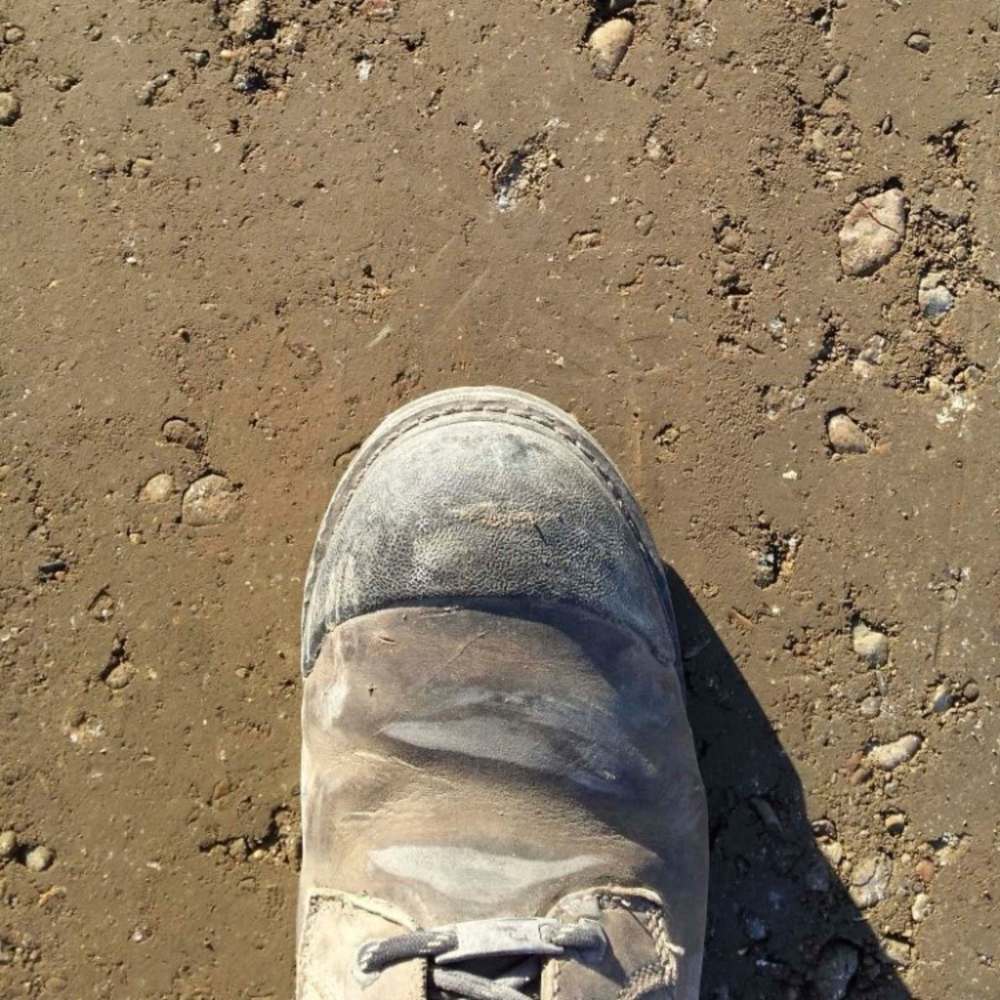
That’s been a tax revenue boon for the RM of Cornwallis but it’s also been hellacious for its network of municipal gravel roads. The truck-hauling roads need to be constantly graded as well as watered up to three times daily to keep down the dust.
So five years ago, the Cornwallis council led by then-reeve Heather Dalgleish tried a new product developed by Brandon University and Cypher Environmental in Winnipeg that promised to slash maintenance costs and reduce dust on gravel roads by 90 per cent.
“I don’t know exactly the dollar figure we saved but I know it is significant,” said Dalgleish. For example, grading was reduced to once a year versus almost daily.
Another benefit involved the smoothing out of Currie’s Landing Road, which was a terrible washboard and the source of complaints from residents in a growing residential area. As well, farmers reported improved yields along those stretches that were constantly being coated in dust.
There are tens of thousands of kilometres of gravel roads in Manitoba that spew dust into your car, your clothes, your pores, and coat many acres of surrounding vegetation in dust. EarthZyme, the Manitoba-made product used in Cornwallis, is proving to be a solution, at least one for gravel roads heavily used by industry.
“It’s a noxious, terrible problem for anyone who lives and works anywhere near gravel roads,” said Brandon University geology Prof. Hamid Mumin, who directed the research project from the university’s side.
The university’s breakthrough was to find a clay base that Cypher Environmental’s EarthZyme product could adhere to. Not all clays are alike. What Mumin found is a very sticky clay, the kind used in pottery but which is normally terrible for construction, worked best as a road cover. Then the researchers had to find a ratio for the clay and aggregate and EarthZyme product that made the strongest cover.
The formula is laid down six to eight inches thick on an existing roadbed and compacted into an almost smooth surface.
“The sticky clay acts as a cementing agent and becomes a very strong binder,” Mumin said. As well, it has plasticity and will not crack and break like cement or asphalt. If a crack does form it can “re-heal” within a week, Mumin said.
The cost is about $75,000 per mile of road. About 12 kilometres of road have been done so far. Paving would cost $1 million per kilometre and isn’t a practical alternative.
A cost of $75,000 may sound high but for Cornwallis the long-term savings have been greater, said Dalgleish.
The RM was spending $40,000 per year just on water. Mumin doubted the RM of Cornwallis would have tried the process if not for the Dalgleish-led council because it requires spending two to three years of municipal budget up front.
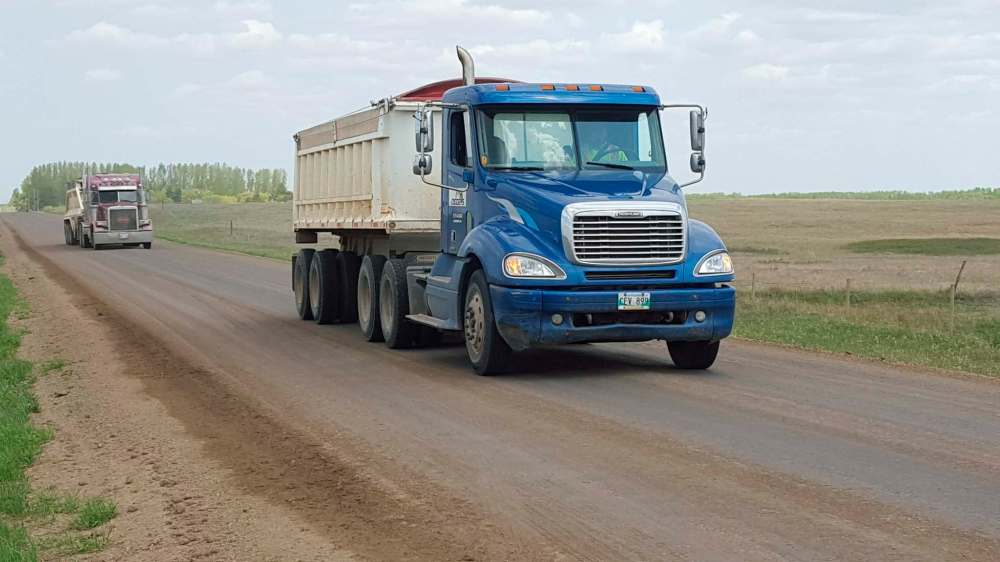
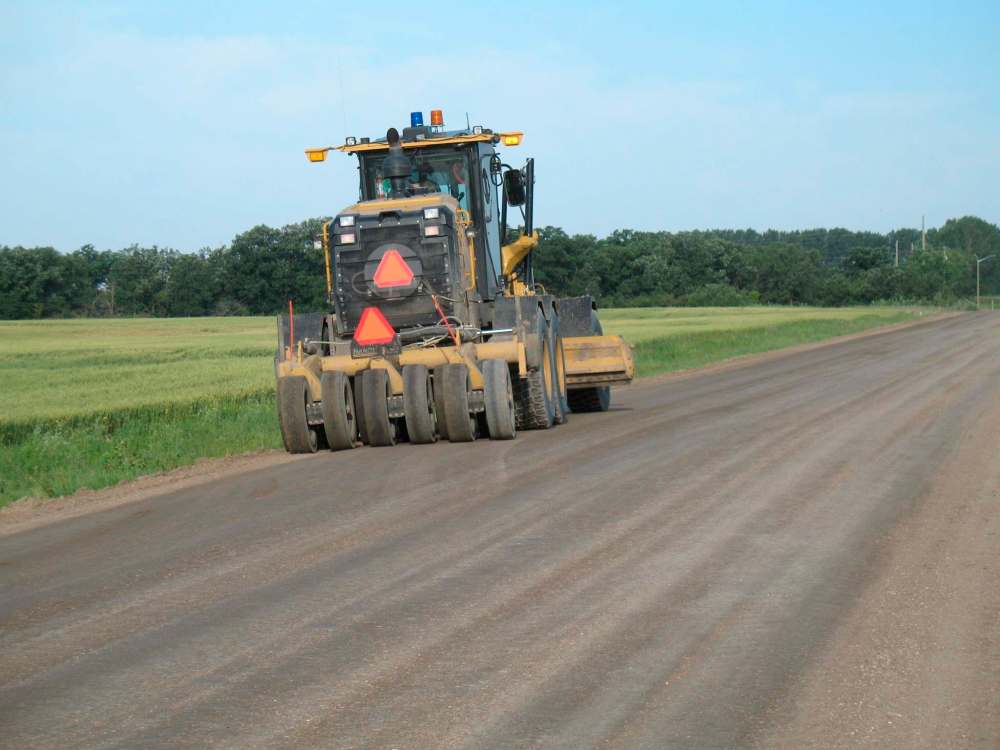
The EarthZyme treatment eliminated watering, grading (where a grader fork penetrates two inches into the gravel bed, followed by watering and compacting), as well as re-graveling.
It also eliminated the use of salts, magnesium chloride and calcium chloride, that are commonly used to suppress road dust but are corrosive to vehicle metals. The other problem with salts is they are water-soluble and run off into the ditch after it rains.
The EarthZyme roads were slick after a rain because of their clay content but that issue disappears two to four weeks after installation.

Brandon University is researching treatment that could make the process economic for lower-volume gravel roads, too, Mumin said.
How long the resurfacing will last will determine the ultimate cost-benefit but after five years the roads look like they will last at least another five years “because nothing has changed,” Mumin said.
Cypher is in talks with Springfield about using the product around its gravel quarries.
The development team included BU civil engineering technologist Greg Gaboury, and BU geotechnical specialist Riley Cram, working under Mitacs, a not-for-profit organization that connects industry with postsecondary researchers.
bill.redekop@freepress.mb.ca
History
Updated on Saturday, May 11, 2019 11:33 AM CDT: Final
Updated on Friday, May 17, 2019 8:59 AM CDT: Corrects that cost is about $75,000 per mile, not per kilometre