

Economic disruption drives growth of training firm
Advertisement
Read this article for free:
or
Already have an account? Log in here »
To continue reading, please subscribe:
Digital Subscription
One year of digital access for only $1.44 a week*
- Enjoy unlimited reading on winnipegfreepress.com
- Read the E-Edition, our digital replica newspaper
- Access News Break, our award-winning app
- Play interactive puzzles
*Billed as $5.77 plus GST every four weeks. After 52 weeks, price increases to the regular rate of $19.95 plus GST every four weeks. Offer available to new and qualified returning subscribers only. Cancel any time.
To continue reading, please subscribe:
Add Free Press access to your Brandon Sun subscription for only an additional
$1 for the first 4 weeks*
- Enjoy unlimited reading on winnipegfreepress.com
- Read the E-Edition, our digital replica newspaper
- Access News Break, our award-winning app
- Play interactive puzzles
*Your next Brandon Sun subscription payment will increase by $1.00 and you will be charged $17.95 plus GST for four weeks. After four weeks, your payment will increase to $24.95 plus GST every four weeks.
Read unlimited articles for free today:
or
Already have an account? Log in here »
Hey there, time traveller!
This article was published 11/12/2020 (2137 days ago), so information in it may no longer be current.
A succinct report this week from RBC called Navigating 2021 sketches out the likely issues the Canadian economy will face post-pandemic.
A central theme is decentralization driven by technology and the opportunities and challenges that will create.
“The shocks have varied across industries and regions. Some sectors, including manufacturing, have shown their models still work. Other sectors, notably retail, are accelerating into a new period of growth and innovation. Others are discovering their legacy models may not get another chance,” said the report.
In addition to stressing the crucial importance for Canadian businesses to invest in technology, the other fundamental and probably more challenging issue that the country will have to address is the wreckage caused to the labour force by the crisis.
The report notes, “The COVID crisis has triggered some of the most unequal consequences for Canadian workers of any recession. Those at the bottom end of the wage scale, earning less than $800 a week, have borne the brunt of job cuts.”
In an interview, John Stackhouse, senior vice-president, office of the CEO at RBC and one the co-authors of the report, said, “That is among the most acute short and long-term challenges staring us in the face.”
The amount of long-term unemployment – people who are out of work more than 27 weeks – is up 250 per cent. They are at risk of dropping out of the labour market.
“Those folks come back less easily the longer they are unemployed. The longer you are unemployed the harder it is to retrain,” he said.
Some may go back to school, but the report notes that historically few laid-off workers seek retraining and low-skill workers are less likely to receive job-related training than high-skill workers.
“All that is to say… we need a different approach to skills training and we need it very quickly,” Stackhouse said.
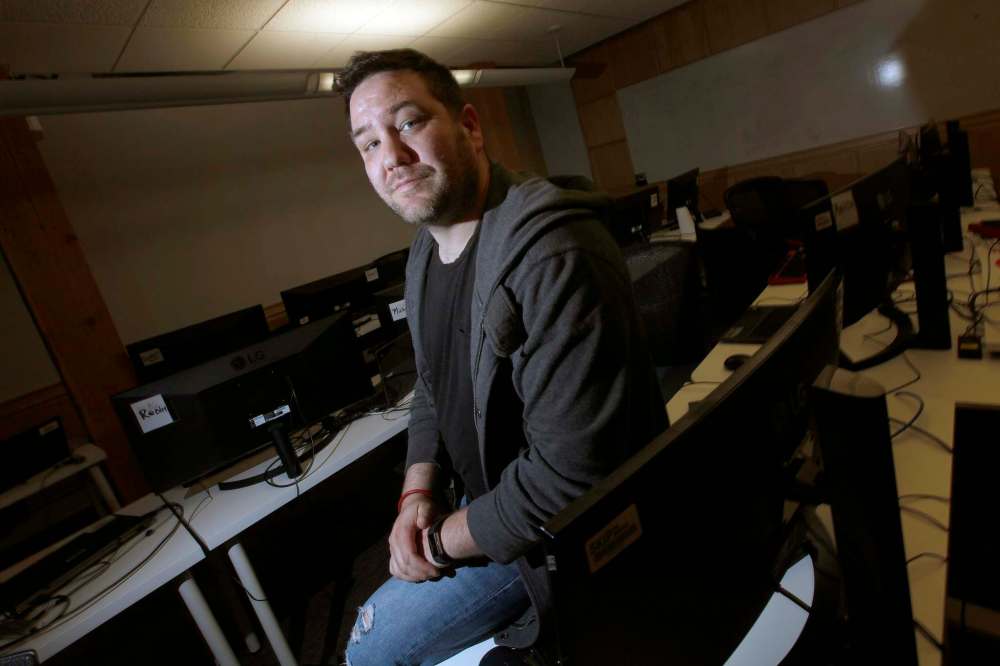
In that regard, RBC and many others, need to speak with Pablo Listingart, the founder and CEO of ComIT, a Winnipeg-based training organization that has been delivering short, micro-credential IT courses to new immigrants and others marginalized from the labour force for the past five years.
Within days of the release of the RBC report, ComIT announced a $250,000 partnership with Google Canada to train 450 Indigenous students in a one-month intensive program.
There is no other prerequisite than that applicants be Indigenous and at least 15 years old.
The course is delivered virtually, and while Listingart understands that may exclude folks who don’t have access to broadband, it does allow it to capture people from all across the country.
The one month training is followed by three months of intensive job preparedness training something that ComIT has become expert at over the five years it has been operating.
Last year, it received close to $1 million from Western Economic Diversification to operate programs for three years across the Prairies.
“That’s how we grew from seven courses per year to 19 that we will do this year,” said.
Last year ComIT trained 500 people and with the Google-supported program for Indigenous people, called Recoding Futures, it will probably be up to close to 900 next year.
Listingart has attracted funding support from other tech companies in the past. And most importantly he has an amazing track record of seeing his graduates get hired by top employers like Skip the Dishes.
Even before it was made public this week, there was already 300 registrants after partners like Assembly of Manitoba Chiefs, the Indigenous HR firm Amik and First Peoples Economic Growth Fund put the word out.
The course is free to participants but there is no stipends or living costs covered.
“I want people who are motivated to change their careers,” he said. “One of the reasons for the success of ComIT so far… is because the people who participate are motivated.”
It is not hard to imagine that the ComIT model will start to become even more in demand.
The RBC report lays out in stark, dispassionate banker’s language that the deep division in workers’ experiences through the pandemic raises concerns about a starkly uneven recovery — or the K-shaped recovery where higher-income knowledge workers continue to do well and lower-skilled workers often in jobs that require close proximity to others are left out.

The report state, “Past history suggests engaging and reskilling those workers could be a challenge. What’s more, many workers may be unable to move to centres or regions where new jobs may emerge.”
Stackhouse said, “We need to ensure there are rapidly delivered easily accessible micro-credential, focused skills training for people who are currently out of work and they have to be delivered through different channels than we have typically relied on.”
He’s basically describing how ComIT operates.
ComIT has proven to be a jewel in the past. This could be its time to really sparkle.
martin.cash@freepress.mb.ca