

Economic loss would have exceeded gains if Edmonton had held World Cup games: expert
Advertisement
Read this article for free:
or
Already have an account? Log in here »
To continue reading, please subscribe:
Digital Subscription
One year of digital access for only $1.44 a week*
- Enjoy unlimited reading on winnipegfreepress.com
- Read the E-Edition, our digital replica newspaper
- Access News Break, our award-winning app
- Play interactive puzzles
*Billed as $5.77 plus GST every four weeks. After 52 weeks, price increases to the regular rate of $19.95 plus GST every four weeks. Offer available to new and qualified returning subscribers only. Cancel any time.
To continue reading, please subscribe:
Add Free Press access to your Brandon Sun subscription for only an additional
$1 for the first 4 weeks*
- Enjoy unlimited reading on winnipegfreepress.com
- Read the E-Edition, our digital replica newspaper
- Access News Break, our award-winning app
- Play interactive puzzles
*Your next Brandon Sun subscription payment will increase by $1.00 and you will be charged $17.95 plus GST for four weeks. After four weeks, your payment will increase to $24.95 plus GST every four weeks.
Read unlimited articles for free today:
or
Already have an account? Log in here »
Hey there, time traveller!
This article was published 17/06/2022 (1584 days ago), so information in it may no longer be current.
EDMONTON – An economics professor says Edmonton should be happy it was not selected to host games for the 2026 FIFA World Cup because the cost would have exceeded the economic benefits.
“Edmonton can focus its money on (light rail transit) security, linking up to the airport, building some tighter infrastructure in the city, continuing its growth in the downtown core and things like that,” Moshe Lander of Concordia University said Friday.
“That’s probably going to give long-term benefits and for that they should be happy.”
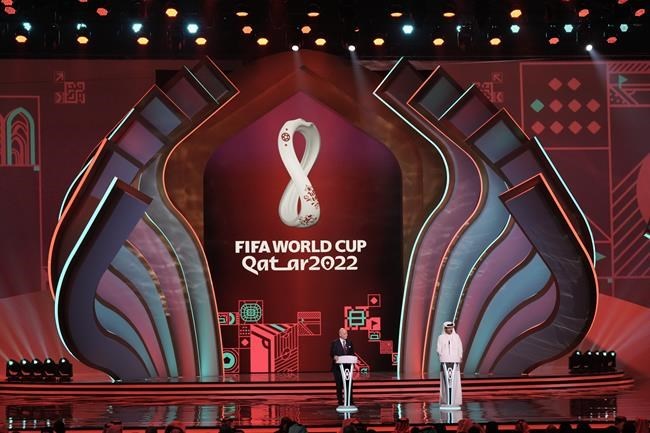
FIFA announced on Thursday that the 48-team tournament would see games played in 16 cities across North America, including Vancouver and Toronto. Eleven cities in the United States are to have games and three will be played in Mexico.
The Alberta government announced $110 million in funding for the bid earlier this year with a condition that five games be played in Edmonton. Although Mayor Amarjeet Sohi called the move compelling, Lander says he believes one of the reasons the city was not selected was because of that condition.
“FIFA has a long history of playing by its own rules. When you have a potential host city that comes in and starts dictating the rules to FIFA, they’re going to disregard it.”
Lander said the condition could have also been a shrewd political move by the Alberta government to offer a large sum of money with conditions that were never going to be met.
“At least now the government can shrug its shoulders and say: ‘Well, we tried.'”
Lander also said FIFA looks for large soccer fan bases, diverse populations and world-class facilities when it decides on host cities.

“Edmonton maybe is lacking in some of those things. Commonwealth Stadium is old and in the need a lot of retrofits because FIFA is extremely demanding. Vancouver ticks the boxes a little bit better than Edmonton.”
If not FIFA, Lander said Edmonton can and has hosted other sporting events. In 2018, it hosted the Grey Cup and is to host the 2022 world junior hockey championship in August.
This report by The Canadian Press was first published June 17, 2022.
—
This story was produced with the financial assistance of the Meta and Canadian Press News Fellowship.