

April flurries… last-minute tax worries
Deadline looming, consider this pep talk — that’s you, procrastinators — to file your 2021 return
Advertisement
Read this article for free:
or
Already have an account? Log in here »
To continue reading, please subscribe:

Digital Subscription
One year of digital access for only $205*
- Enjoy unlimited reading on winnipegfreepress.com
- Read the E-Edition, our digital replica newspaper
- Access News Break, our award-winning app
- Play interactive puzzles
*First annual payment billed as $205.00 + GST for one year. This annual subscription will automatically renew at $233.00 + GST every 52 weeks (10% off the regular annual price of $259.35). Offer available to new and qualified returning subscribers only. Cancel any time.
To continue reading, please subscribe:
Add Free Press access to your Brandon Sun subscription for only an additional
$1 for the first 4 weeks*
- Enjoy unlimited reading on winnipegfreepress.com
- Read the E-Edition, our digital replica newspaper
- Access News Break, our award-winning app
- Play interactive puzzles
*Your next Brandon Sun subscription payment will increase by $1.00 and you will be charged $17.95 plus GST for four weeks. After four weeks, your payment will increase to $24.95 plus GST every four weeks.
Read unlimited articles for free today:
or
Already have an account? Log in here »
Hey there, time traveller!
This article was published 16/04/2022 (1624 days ago), so information in it may no longer be current.
Spring is here; the calendar says so.
Except snow is the sloppy guest at the party that just won’t leave. Same with coronavirus.
To complete the vibe — that is, a hanging-by-a-thread level of exasperation — it’s also tax filing season.
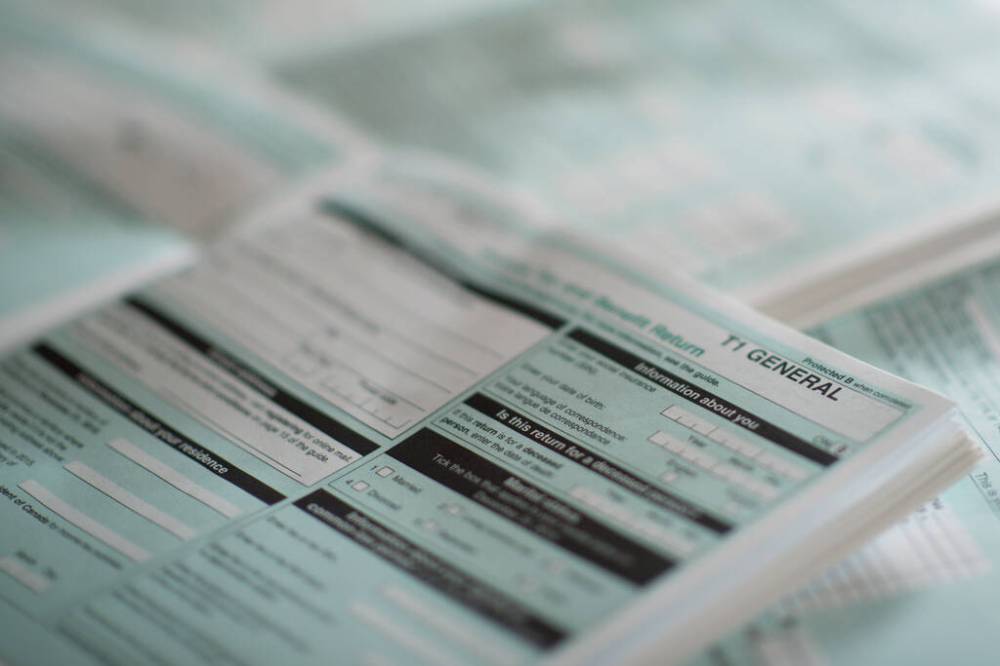
May 2 is this year’s deadline for filing your 2021 return.
That’s a Monday because April 30, the traditional “get’r done” day for filing returns, falls on Saturday. (Even the tax man rests on the sabbath.)
If you’ve filed already, please… by all means, go back to shovelling snow — or whatever it is folks are doing this most inauspicious spring.
For those who haven’t, the following is not a primer on the tax rule changes made in the last 365 days affecting your 2021 return.
Well, there is some of that, but really, this is your pep talk to get started.
That’s because, while filing a tax return has the appeal of a dental visit (only without the free toothbrush), not doing so may lead to something more painful than toothaches: high-interest penalties.
First, let’s throw a little shade to the politicians and bureaucrats with a hand in creating a federal and provincial income tax system that constantly expands like the universe… only with more incomprehensible complexity.
Even experts find keeping up challenging.
“It’s so complicated,” says Evelyn Jacks, president of the Knowledge Bureau.
Jacks has got some bona fide tax chops. She is an author of several books on taxes, the latest being Make Sure It’s Deductible: Little-Known Tax Tips for Your Canadian Small Business (ideal for small biz owners and gig workers).
“For the average person, it can be really challenging to understand what credits or benefits you might be eligible for.”
Part of the fun is some changes in 2021 seem to be made for no obviously good reason, like the Manitoba Seniors School Tax Rebate and Seniors Education Property Tax Credit.
These have changed — slightly.
The Manitoba Seniors School Tax Rebate is now calculated as $353 minus 1.5 per cent of family net income over $40,000. That’s compared with the 2020 year when it was $470 minus 2 per cent of family net income over $40,000.
Same deal with the Seniors Education Property Tax Credit. It is now calculated as $300 minus 0.75 per cent of family net income (rather than $400 minus 1 per cent of family net income).
“That doesn’t mean people will receive less,” says Yannick Lemay, tax advisor at H&R Block Canada
“It depends on the net family income, so in the cases of low income, they might receive more.”
Of course, just reading about those changes induces brain fog — COVID positive or not.
Thankfully, most changes from one year to the next are incorporated into your return and calculated behind the scenes by tax prep software.
“Tax software does it a lot faster and mathematically correctly,” says Jacks, adding more than nine in 10 taxpayers file electronically.
“But the trick is to do your family’s returns to the very best for your situation… to get the most in benefits like the GST/HST credit or Canada child benefit that you may qualify for.”
These days, you can go to the Government of Canada website for a list of free tax preparation software with more than a dozen options.

Using software, or hiring a tax professional, will help you figure out, for instance, the expenses you can deduct if you worked from home last year.
The temporary flat rate method — in place because of COVID-19 since 2020 — has been increased from a $400 to a $500 maximum deduction for 2021.
The calculation is still $2 per day worked from home to a maximum of 250 days to get the full deduction. To claim it, you must have worked from home more than 50 per cent of the time for four consecutive weeks.
Managing director of tax and estate planning Jamie Golombek at CIBC Private Wealth says most people will have had to work the entire year from home to get the maximum deduction.
“I don’t even know if there are that many working days in a year if you count three weeks’ vacation, statutory holidays and weekends.”
He adds if you feel you could end up with a larger deduction than $500, you can use the detailed method — which involves listing expenses, more math and potential emotional hardship trying to find the necessary receipts.
The long method is certainly worth exploring if you rent instead of owning a home.
“In almost every scenario I’ve seen, a renter is better off because a portion of the rent, even if it’s 10 per cent of the rent, it’s likely going to be more than $500,” Golombek says.
Other provisions to be aware of are the digital news subscription, a $500 maximum tax credit — worth $75 in maximum tax savings — and the teaching expenses tax credit.
Manitoba now has its own version for 2021, a 15 per cent credit for Manitoba educators on expenses up to $1,000.
The pre-existing federal one is now worth 25 per cent on expenses up to $1,000, increasing from 15 per cent for 2020.
Jacks says these credits are particularly handy for teachers and early childhood educators (licensed ones) who may have purchased a tablet or other costly devices for remote learning.
Another change is the climate action incentive payment — which is the carbon tax rebate. It’s not calculated as part of your return this year like last year. Instead, it’s a payment you will receive in July, but only if you file your return.
And that’s really the most important tax tip: File, on time.

“There are a lot of income-tested benefits, like the Canada child benefit, in which you have to file to receive them,” Golombek adds.
Otherwise you could miss out on money from the government.
Even worse, if you owe the government money, failing to file on time not only incurs interest charges, but penalties too.
So a little tax awareness is indeed a good thing, Jacks says.
“The relationship between the taxpayer and the Canada Revenue Agency is a two-way street and, if you learn about your rights and responsibilities, you will find the tax system probably works a lot better for you.”