

‘Few and far between, and more pricey’
Pandemic-sparked shortage of automobiles has sent prices soaring amid demand so high lightly used cars are an appreciating asset
Advertisement
Read this article for free:
or
Already have an account? Log in here »
To continue reading, please subscribe:
Digital Subscription
One year of digital access for only $1.44 a week*
- Enjoy unlimited reading on winnipegfreepress.com
- Read the E-Edition, our digital replica newspaper
- Access News Break, our award-winning app
- Play interactive puzzles
*Billed as $5.77 plus GST every four weeks. After 52 weeks, price increases to the regular rate of $19.95 plus GST every four weeks. Offer available to new and qualified returning subscribers only. Cancel any time.
To continue reading, please subscribe:
Add Free Press access to your Brandon Sun subscription for only an additional
$1 for the first 4 weeks*
- Enjoy unlimited reading on winnipegfreepress.com
- Read the E-Edition, our digital replica newspaper
- Access News Break, our award-winning app
- Play interactive puzzles
*Your next Brandon Sun subscription payment will increase by $1.00 and you will be charged $17.95 plus GST for four weeks. After four weeks, your payment will increase to $24.95 plus GST every four weeks.
Read unlimited articles for free today:
or
Already have an account? Log in here »
Hey there, time traveller!
This article was published 18/06/2022 (1464 days ago), so information in it may no longer be current.
Buying a new car, or even a used one, had long been a losing financial proposition.
The general consensus, for example, for a new car is that it loses 20 per cent of its original value in the first year.
Not anymore.
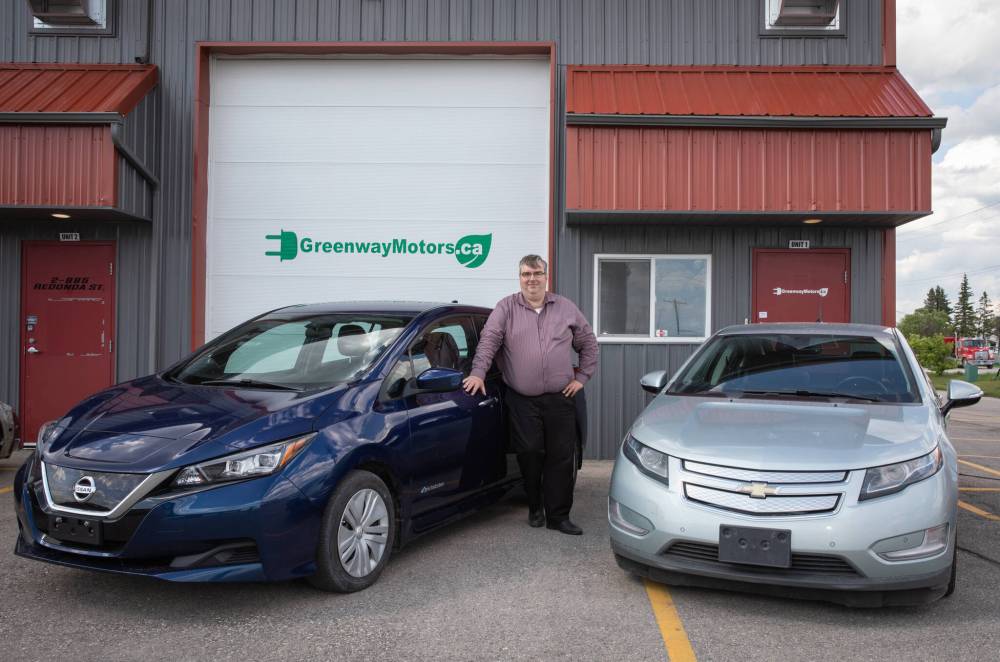
In the last few months, automobiles have done something largely unprecedented in the new pandemic-hued normal. They’ve become appreciating assets.
“I’ve never seen anything like this in my life,” says Micah Boisjoli, owner of Greenway Motors in Winnipeg, which trades in used electric vehicles (EVs).
Demand has been feverish for all vehicles, new and used, but EVs have seen a huge spike in suitors since gasoline prices skyrocketed.
“That lightly used one-year old vehicle is sometimes selling for more than a brand new vehicle that you have to wait a year for,” he says.
“New and used EVs are few and far between, and more pricey.”
It’s more than just surging EV demand. Supply of new cars is at the wheel of this economics 101 supply/demand imbalance, says James Hancock, director strategy and analytics at Canadian Black Book, which provides valuation data for the industry.
“It largely stems from the pandemic,” says the Markham-based auto industry analyst.
Automakers, fearing plummeting demand, stopped or limited production in spring 2020 while putting a pause on parts orders, including semiconductors — now abundant in new vehicles.
At the same time, “people were sitting around at home wanting smart TVs, new washers and robot vacuums — all kinds of stuff that takes semiconductors,” adds Ben Preston, New York-based autos reporter for Consumer Reports.
“So when demand came back in a big way, auto manufacturers fell to the back of the line.”
Due to ongoing production delays, supply is estimated to be roughly one million vehicles short of demand in Canada by the end of this year, Hancock says.
The shortage in the U.S. is even larger.
“Our new car inventory is down about 60 to 65 per cent, whereas theirs is down about 75 per cent,” Hancock says.
As a result, “people looking for new cars have shifted over to looking for nearly new cars.”
Prices across the board have jumped correspondingly.
Statistics Canada Consumer Price Index data show the purchase of a vehicle (new/used) cost 8.4 per cent more in this past May than May last year.
Preston says U.S. CPI data shows automobiles are up 22 per cent, year over year, and 48 per cent higher from just before the pandemic’s start.
“New cars are selling on average higher than list price.” Hancock further notes inflation is most acute with high-demand SUVs and pickups.
In many cases, “used-car prices are even more elevated,” he says. As a result, some automobiles less than three years old are selling higher than their original MSRP (manufacturer suggested retail price).
“If you need a car right now, you’re probably more likely to find a better deal in the new car market,” Preston says, noting by ‘deal’ that new vehicles sell more closely to MSRP.
Higher borrowing costs are another headwind. Pre-pandemic, zero per cent interest financing was commonplace from automaker’s financing arms.
Today, interest rates are in the three to five per cent range.
Holding off buying a new car — at least for a few months as supply recovers — may be an option for some, but for many, buying a vehicle is more need than want, says Enoch Omololu, blogger and founder of SavvyNewCanadians.com, which recently ran a piece on auto buying tips.
“I find newcomers need a car more than most other people,” he says.
That’s especially true for many international students with side hustles, like driving for Skip The Dishes and other delivery gigs.
“Buying a car is top of the list for them to help pay the bills,” he says, adding along with rising interest rates and gasoline prices, gig economy workers face a triple threat to their bottom line.
The high costs have driven Winnipeggers of all stripes to seek alternatives.
In turn, car-sharing outfits like Peg City Car Co-op have seen growing demand.
“In the last few months, we have seen some of our highest intake ever,” says Philip Mikulec, managing director of Peg City Car Co-op.
The cost to be a co-op member is far less than car ownership, which ranges from about $8,000 to $10,000 annually, he says.
Peg City’s 2,500 members’ costs are in the hundreds of dollars or less per year, depending on the number of times they use a car.
Yet even the co-op is facing challenges.
While it managed to get its order of 30 vehicles this spring, next year’s growth plan is less guaranteed.

“Manufacturers are telling us there will be issues, and we’re not the only ones in that boat,” Mikulec says.
Just when supply increases and demand revs down is a multi-billion-dollar question.
Hancock says prices have likely plateaued for used cars.
“We will start to see prices gradually decline over the next few years as new car production returns.” Still, used car prices are expected to remain above pre-pandemic levels into 2026, he adds.
“This is going to be with us for a while.”